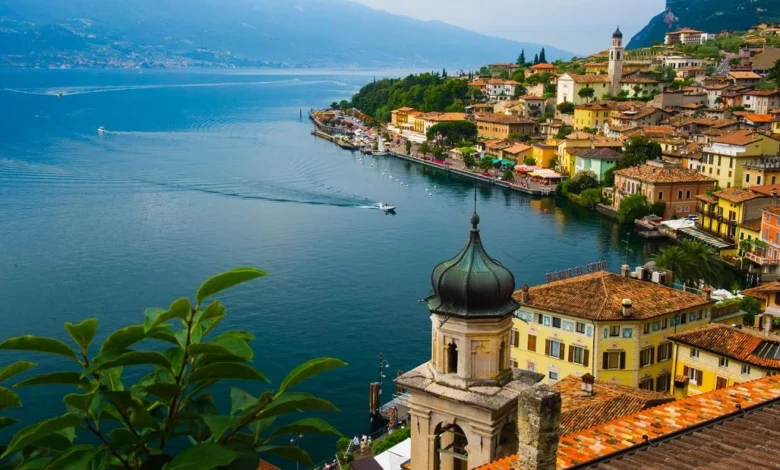
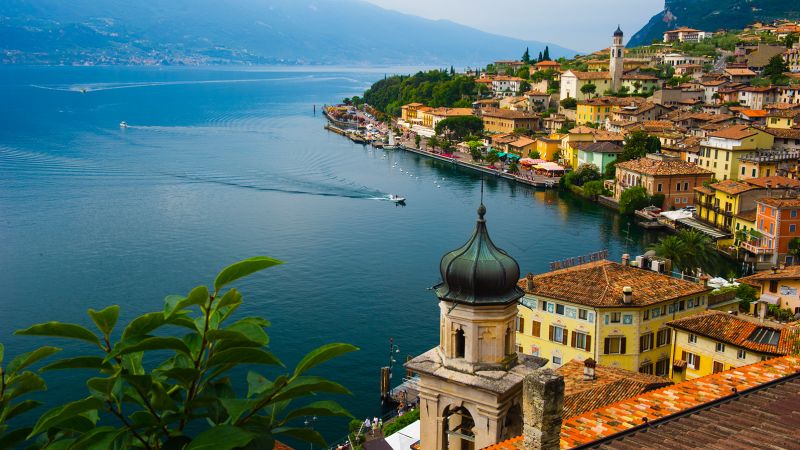
Tucked away on the northern shores of Italy’s Lake Garda, the fishing village of Limone sul Garda appears to be a quintessential Mediterranean postcard: a labyrinth of cobbled alleys, white-washed dwellings, and terraced lemon groves clinging to the precipitous slopes of the Lombardy Alps. However, beyond its aesthetic allure and historical significance as the northernmost point where citrus can naturally thrive, the village has become the subject of an intense, decades-long scientific investigation. A small cohort of its residents carries a rare genetic mutation that appears to provide a biological shield against cardiovascular disease, effectively allowing them to process fats and lipids with remarkable efficiency.
The Genesis of the A-1 Milano Mutation
The discovery of this phenomenon dates back to 1979, when a local train driver from Limone sul Garda was involved in a serious accident in Milan. Upon admission to the hospital, clinicians were baffled by his blood analysis. Despite the patient’s age and lifestyle, his lipid profile was extraordinary, characterized by levels of HDL—the so-called "good" cholesterol—that were significantly lower than the standard clinical range, yet he showed absolutely no signs of arterial plaque or vascular damage.
This encounter prompted Cesare Sirtori, a professor of clinical pharmacology at the Università degli Studi di Milano, to launch a comprehensive screening program in the village. Sirtori and his team identified a unique protein, which they named "A-1 Milano," resulting from a rare genetic mutation. In a standard human, low HDL cholesterol is typically a red flag for potential heart attacks and strokes. In the residents of Limone, however, the A-1 Milano protein functions as a molecular broom, rapidly clearing lipids from the bloodstream and preventing the accumulation of plaque in the arteries, regardless of dietary intake.
Four Decades of Clinical Observation
For over 40 years, the medical community has utilized the villagers of Limone as a longitudinal study group. Of the approximately 1,000 residents, roughly 500 are considered "native" to the village, and of that group, about 60 individuals are confirmed carriers of the A-1 Milano gene. The study has involved rigorous, often invasive, testing to determine how the gene behaves under metabolic stress.
Gianni Segala, a local shopkeeper and one of the identified carriers, has participated in these studies since his youth. He recalls early clinical trials where researchers monitored his blood chemistry after he consumed high-fat, high-sugar meals, such as bowls of whipped cream, in rapid succession. "They took my blood after each bite," Segala explains. "It was so sweet and greasy I felt nauseous, but even though I ate a lot of it, my blood instantly destroyed the fats without assimilating them."
These tests have provided invaluable data for researchers. The consistent finding across four decades is that carriers of the gene possess a dominant genetic trait that persists across generations, from children to the elderly. The 96-year-old mother of the Segala family, for instance, remains in robust health, a testament to the longevity often observed among the carriers.
Scientific Implications and Cardiovascular Research
The medical implications of the Limone gene extend far beyond the village borders. Atherosclerosis, the hardening and narrowing of the arteries due to plaque buildup, remains a leading cause of death globally. By isolating and synthesizing the A-1 Milano protein, researchers have sought to replicate its protective effects in laboratory settings.
In a landmark study published in the early 2000s, Sirtori’s team injected the synthesized protein into rabbits. The results were striking: the animals showed a significant reduction in arterial blood clots. This research suggests that the protein could potentially serve as a therapeutic agent for patients suffering from acute coronary syndromes or chronic vascular conditions. While the gene is unique to the population of Limone, the mechanism by which it operates—the modification of protein carriers to enhance lipid metabolism—offers a roadmap for future pharmacological interventions aimed at "dissolving" cardiovascular risk factors.
Environmental Factors: The "Limone" Micro-Climate
While the genetic mutation is the primary driver of the villagers’ cardiovascular health, local observers and some researchers suggest that environmental factors may play a supplementary role. Limone sul Garda sits in a unique topographical pocket. High mountain walls protect the village from the harsh northern winds, while the thermal mass of Lake Garda moderates temperatures, ensuring that the village remains relatively frost-free throughout the year.

Antonio Girardi, a local hotelier who has meticulously tracked the genealogy of the mutation back to the 18th century, points to the local diet as a possible catalyst for the long-term health of the residents. "It could be this warm climate year-round," Girardi notes. "Or perhaps it’s thanks to the extraordinary extra virgin olive oil we’re all weaned on, and the fresh lake fish we eat."
The combination of the Mediterranean diet, high in omega-3 fatty acids and antioxidants, paired with the intense physical activity necessitated by the village’s steep, rugged terrain, likely compounds the benefits of the genetic mutation. The residents, including the younger Segalas, are physically active, frequently hiking the mountain trails that overlook the water. This active lifestyle, combined with the "biological insurance" provided by their DNA, creates a health profile that is statistically anomalous in the modern world.
The Human Element: Living with a "Super" Gene
For the residents of Limone, the existence of the gene is a source of both pride and occasional annoyance. The villagers are well aware of their status as human subjects in a high-profile medical study. Giuliano Segala, Gianni’s son, describes the experience of being a carrier with a mixture of pragmatism and relief.
"The fact that I carry the gene gives me a sort of life insurance," he says. "I feel more shielded health-wise and confident I won’t have clogged arteries or die of a heart attack when I grow old." Despite his confidence, Giuliano maintains a balanced lifestyle, engaging in regular exercise to complement his genetic advantage. He is quick to clarify that the gene does not grant total immunity from all health issues; rather, it provides a specific, albeit powerful, defense against the vascular ailments that plague much of the modern population.
Future Research and Ethical Considerations
As the study of the Limone gene continues, researchers are looking toward the next phase of genetic analysis. A primary question remains: what happens when two carriers conceive a child? Current data has primarily tracked the transmission of the gene from one parent to a child, but the homozygous expression of the A-1 Milano mutation remains a topic of interest for geneticists studying the potential for "super-carriers."

Furthermore, the longevity of the study itself raises questions about the long-term effects of genetic surveillance on the community. The residents of Limone have essentially volunteered their medical data for forty years, a contribution to science that has been largely altruistic. The success of the research has transformed the village from a quiet agricultural outpost into a site of international scientific interest.
Broader Public Health Implications
The story of Limone sul Garda serves as a compelling intersection of genetics, lifestyle, and environment. While the village remains a unique case, the research conducted there challenges conventional wisdom regarding "good" and "bad" cholesterol. It demonstrates that biology is not a one-size-fits-all metric and that mutations, which are often viewed as the precursors to disease, can occasionally serve as protective mechanisms against the most common killers of the modern age.
As pharmaceutical companies continue to pursue the development of synthetic proteins modeled after A-1 Milano, the legacy of this small Italian fishing village may ultimately be felt in clinics and hospitals worldwide. For now, the people of Limone continue their lives, protected by their genetic heritage, as they have for centuries, amidst the lemon groves and the calm, blue waters of the lake. The village stands not only as a tourist destination but as a living laboratory, proving that sometimes, the most profound secrets to human longevity are hidden in the most unexpected places.