Trump Administration Dismantles Federal Auto Emissions Rules, Leaving California as the Last Regulatory Bastion

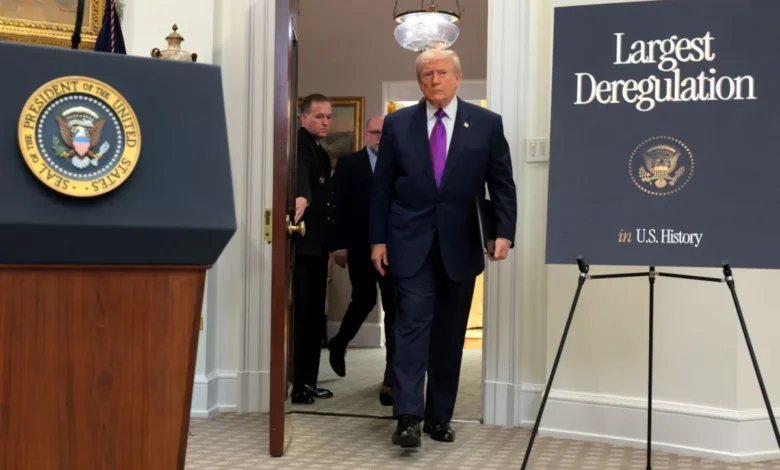
The Trump administration has finalized a sweeping policy to dismantle the federal government’s regulation of greenhouse gas emissions from passenger vehicles, effectively bringing an end to decades of national oversight on tailpipe pollution. Announced on Monday, the measure is the culmination of a multi-year effort by the administration to rollback climate-related federal authorities. However, because Congress had already eliminated financial penalties for automakers violating federal fuel-efficiency standards earlier in the term, the latest announcement is largely symbolic. Together with the revocation of the 2009 Endangerment Finding—the foundational scientific determination that allowed the Environmental Protection Agency (EPA) to regulate greenhouse gases—the federal government is now left with virtually no policy instruments to govern carbon pollution from cars and light trucks. Transportation accounts for approximately 16 percent of total U.S. greenhouse gas emissions, making the sudden vacuum in federal policy a significant turning point in American environmental governance.
With Washington stepping back, regulatory power has effectively shifted to the state level. California, armed with a unique half-century-old statutory exemption under the Clean Air Act, remains the single entity with sufficient market sway and regulatory authority to compel automakers toward greater fuel efficiency. Although the Trump administration has engaged in aggressive legal and legislative warfare against the Golden State’s climate policies, California’s emissions standards remain active. They establish an effective national baseline that automakers ignore at their financial peril, setting up a high-stakes constitutional and regulatory showdown between state and federal authorities.
Historical Roots and the Special California Exemption
The jurisdictional battle over vehicle emissions is rooted in the environmental history of the mid-20th century. During the 1950s, Southern California was plagued by severe, hazardous smog conditions driven by heavy industrial output and a rapidly expanding automobile culture. Recognizing the immediate public health crisis, the state developed its own vehicle emissions standards years before Congress established national benchmarks through the landmark Clean Air Act of 1970.
Acknowledging California’s unique geographic and atmospheric challenges, Congress granted the state a special waiver allowing it to enact tailpipe emissions rules stricter than federal standards, provided it receives continuous approval from the EPA. While the state is legally barred from directly mandating fuel-efficiency numbers—a power reserved exclusively for the federal government—it can regulate tailpipe emissions of greenhouse gases. Because the primary and practically only method for reducing carbon dioxide emissions from a gasoline-powered combustion engine is to burn less fuel, California’s emissions standards achieve the exact same functional outcome as federal fuel-economy mandates.
This dynamic gives California outsized influence over the domestic automotive market. Under Section 177 of the Clean Air Act, other states are legally permitted to adopt California’s stricter vehicle standards. Over the years, 19 states plus the District of Columbia have chosen to do so. Rather than manufacturing entirely different fleets to accommodate disparate regional rules—a logistical and financial nightmare for the auto industry—many major car companies have historically chosen to design their entire national lineups to comply with California’s more stringent baseline. According to data from the California Air Resources Board (CARB), states utilizing California’s vehicle emissions regulations accounted for roughly 40 percent of all new car sales in the United States as of 2022.
A Timeline of Confrontation: Legislation, Litigation, and Executive Retaliation
The current clash between the White House and Sacramento represents the escalation of a long-standing ideological and legal feud. The tension reached new heights when California, operating under its special waiver authority, pursued a landmark mandate to completely phase out the sale of new gasoline-powered passenger cars by 2035.
In response to the aggressive phase-out plan, the Trump administration’s EPA petitioned Congress to intervene. Utilizing a rarely invoked congressional review process, both houses of Congress voted last year to block California’s zero-emission vehicle waiver. California immediately retaliated by filing a comprehensive federal lawsuit against the administration.
“What we’re seeing is a thinly veiled attempt by the president to retaliate against California for choosing progress over regression,” declared California Attorney General Rob Bonta following the filing of the suit.
With its 2035 phase-out plan temporarily paralyzed by federal intervention, California shifted its legal and regulatory strategy toward enforcing its previous set of emissions standards, which were originally slated to sunset at the end of 2026. While these legacy standards do not force automakers to achieve deep new emissions cuts, they serve as a critical regulatory floor, preventing car manufacturers from backtracking on environmental gains already achieved. The Trump administration subsequently lobbied Congress to overturn these legacy standards as well, but a federal judge dealt the administration a setback in early September by blocking that legislative push.
Beyond the immediate legislative fights, the administration is pursuing a broader existential threat to California’s regulatory authority in the courts. In a separate, high-stakes lawsuit, the Justice Department is attempting to invalidate California’s underlying authority to regulate greenhouse gas emissions altogether, arguing that the state is unconstitutionally usurping federal fuel-economy powers through indirect means.
Legal experts note that while federal courts have historically ruled in favor of California on this jurisdictional question, the case could ultimately reach the U.S. Supreme Court. Because the current conservative high court has frequently sided with the executive branch on regulatory curtailment, analysts warn that this specific litigation could permanently reset the distribution of environmental power between the states and the federal government.
Market Realities, Economic Whiplash, and Shifting Consumer Demand
Automakers find themselves caught in a complex web of regulatory whiplash, navigating shifting mandates while simultaneously attempting to decode volatile consumer preferences. The aggressive emissions targets established during the Biden administration—which have now been systematically unwound by President Trump—pushed automakers to accelerate their capital investments into electric vehicle (EV) platforms. However, industry stakeholders argued that these regulatory timelines outpaced consumer demand.
Data from financial and automotive sectors indicate that despite heavy corporate investments—costing the domestic "Big Three" automakers tens of billions of dollars—consumers were initially slow to adopt pure battery-electric vehicles at the scale required to meet federal targets. This adoption friction was exacerbated when the Trump administration rescinded critical federal tax credits and consumer incentives designed to spur EV growth.
At the same time, broader geopolitical and macroeconomic factors are reshaping consumer behavior independently of Washington mandates. Spiked gasoline prices, driven in part by international conflicts and the Trump administration’s foreign policy stances, have forced consumers to seek out greater fuel efficiency regardless of federal rollbacks. Consequently, hybrid electric vehicles have surged in popularity, capturing a record 16 percent of the U.S. passenger vehicle market by the summer of 2026.
Major automakers have adopted a pragmatic, long-term view toward electrification, acknowledging that global markets are irreversibly shifting toward zero-emission technologies. During a transportation conference this week, General Motors President Mark Reuss addressed the shifting regulatory landscape, emphasizing that corporate strategy will not completely abandon the electric transition.
“We’re in for the long haul, and we’re maybe a little slower on EVs, for instance,” Reuss said. “That’s OK, but the whole world is moving that way, and so we invested in the platforms that are EV platforms.”
Industry Implications and Future Outlook
Despite corporate commitments to electric and hybrid platforms, independent analysts and environmental scientists agree that market forces alone will not drive the rapid, systemic emissions reductions required to meet global climate stabilization targets. California’s remaining regulatory baselines provide a vital backstop, but the ongoing legal battles leave the future of American environmental policy deeply uncertain.
Rebecca Higgins, vice president of policy at the Eno Center for Transportation, highlighted the profound instability currently facing the sector. “There are multiple levels of shenanigans, depending on your viewpoint, that are being litigated,” Higgins said. “That creates tremendous uncertainty.”
Much of the immediate future rests on how federal courts interpret the legality of congressional maneuvers used to revoke California’s waivers. While legal scholars point out that the Government Accountability Office and the Senate parliamentarian previously deemed certain congressional revocation tactics procedurally questionable, the ultimate resolution may hinge on future electoral outcomes or landmark Supreme Court rulings. For an automotive industry that thrives on long-term capital planning, the era of stable, predictable national emissions standards has been replaced by a fragmented landscape defined by persistent litigation, state-level resistance, and an uncertain regulatory horizon.