Justice Samuel Alito Recusal from Major Climate Case Highlights Ongoing Ethics Concerns at Supreme Court

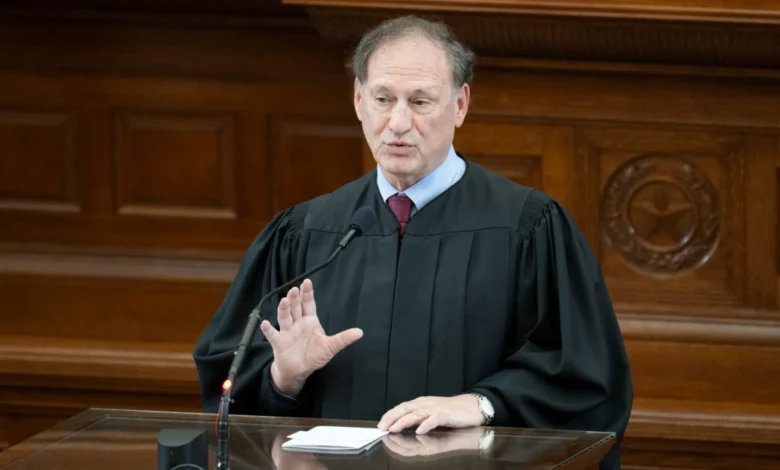
In a late-term development that has reignited national debates regarding judicial integrity and financial disclosure, Supreme Court Justice Samuel Alito announced on September 28, 2026, that he would recuse himself from a pivotal climate change case. The litigation, Suncor Energy v. Boulder, centers on a bid by the oil industry to block a lawsuit filed by the city and county of Boulder, Colorado, which seeks to hold fossil fuel giants accountable for the staggering costs associated with climate-related disasters. While the decision to step aside was lauded by environmental advocates, the move has prompted a deeper examination of the Supreme Court’s internal ethics standards and the uniquely extensive stock portfolio held by the Associate Justice.
The recusal comes just one week before the Supreme Court is scheduled to open its 2026-2027 term, adding a layer of procedural complexity to one of the most closely watched environmental dockets in recent history. The case itself represents a culmination of years of legal maneuvering by municipalities attempting to recover damages from ExxonMobil and the Canadian oil firm Suncor, which they argue have long known about the catastrophic risks posed by their products while simultaneously downplaying those dangers to the public.
A Chronology of Climate Litigation and Judicial Scrutiny
The roots of this legal battle trace back to 2018, when Boulder, alongside other Colorado communities, filed suit against major energy companies. The plaintiffs cited the 2013 historic flooding that destroyed nearly 1,800 homes and caused billions of dollars in infrastructure damage. Three years later, in 2021, the Marshall Fire—the most destructive in Colorado’s history—further devastated the region. Scientists and municipal leaders have pointed to these events as evidence of the localized, material costs of a changing climate, which they argue should be partially borne by the corporations that profited from the fossil fuels driving the phenomenon.
The timeline of the Supreme Court’s involvement has been marked by repeated denials and shifting legal strategies. Between 2023 and 2025, the high court rejected nine separate petitions from oil companies seeking to move similar climate cases from state to federal court, a maneuver intended to secure a more favorable legal environment or outright dismissal. Throughout these proceedings, Justice Alito’s participation was inconsistent, with the Justice recusing himself in several instances, though his reasoning remained largely private.
In February 2026, the Supreme Court signaled a shift in strategy by agreeing to hear the Suncor v. Boulder case. Justice Alito participated in the conference where this decision was made, raising concerns among legal observers about whether his vote was the deciding factor in granting the petition. Under the court’s "Rule of Four," only four justices are required to grant a writ of certiorari, meaning the participation of a single justice can be outcome-determinative for a case’s survival.
The Financial Portfolio and Ethical Implications
The controversy is inextricably linked to Justice Alito’s personal financial disclosures. Unlike his colleagues, who have largely moved toward diversified index funds or blind trusts to avoid conflicts of interest, Alito maintains an extensive portfolio of individual corporate stocks. According to his August 2026 financial disclosure, the Justice holds positions in more than 25 corporations, including seven within the fossil fuel sector.
Legal ethics experts, such as Professor Louis Virelli of Stetson University, have argued that the existence of these holdings creates an inherent conflict, regardless of whether a specific company is a named party in a suit. Because the Supreme Court’s rulings often set broad precedents for entire industries, a decision in Suncor v. Boulder—which could potentially grant the oil industry "blanket immunity" from climate liability—would have a direct, material impact on the value of the companies within Alito’s portfolio.
Research released by the watchdog group Consumer Watchdog has amplified these concerns, noting that the two largest oil companies in Alito’s portfolio, ConocoPhillips and Phillips 66, have explicitly warned their investors about the "material risk" posed by this specific wave of climate litigation. Furthermore, Alito holds stakes in companies involved in every major climate case currently stayed by lower courts pending the outcome of the Boulder case.
Institutional Responses and the Code of Conduct
The Supreme Court, under the leadership of Chief Justice John Roberts, has historically maintained that individual justices are the final arbiters of their own recusal decisions. In his 2011 year-end report, Chief Justice Roberts defended this decentralized system, expressing "complete confidence" in his colleagues’ ability to weigh their own conflicts.
However, the landscape changed in November 2023, when the Court adopted its first-ever formal Code of Conduct. While the code outlines circumstances requiring recusal—specifically regarding financial interests—it lacks an enforcement mechanism, leaving the responsibility of compliance entirely in the hands of the individual justice. Critics argue that this framework is insufficient, particularly when contrasted with the strict ethical requirements placed on lower-court judges.
In a 2023 memorandum, Justice Alito defended his participation in cases where his holdings were mentioned, arguing that frequent recusals would lead to a "less than a full bench" and "substantially disrupt and distort" the Court’s work. This defense has been met with skepticism by legal scholars, including Professor Emeritus Arthur Hellman of the University of Pittsburgh, who suggests that the "institutional duty" of maintaining public trust in the judiciary must outweigh the convenience of having all nine justices present.
Perspectives from Advocacy Groups and Legal Experts
The reaction from the legal and environmental advocacy community has been one of tempered relief, though many suggest the move is insufficient. Alexandra Nagy, organizing director of Consumer Watchdog, characterized the recusal as "the right decision, and one he should have made from the start," while emphasizing that the public should not be forced to speculate on the potential for personal financial gain influencing judicial outcomes.
Conversely, supporters of the Justice have pointed to the personal nature of the assets. In a biography published in 2026, author Mollie Hemingway noted that the stocks were largely inherited by the Justice’s wife, Martha-Ann, and hold "sentimental value," which has contributed to the family’s reluctance to divest. Yet, legal ethics experts contend that emotional or familial attachment does not negate the requirement to avoid the appearance of impropriety.
The Broader Impact on Judicial Legitimacy
The Suncor case is not merely a dispute over local damages; it is a gateway to a massive shift in how the American legal system handles corporate accountability for climate change. Should the Court rule in favor of the energy companies, it would effectively curtail dozens of similar lawsuits currently winding through state courts, potentially shielding the fossil fuel industry from billions of dollars in future liabilities.
As the Court prepares for the upcoming term, the lingering questions regarding Alito’s past participation in the case’s initial conference remain. While his recusal prevents him from casting a vote on the merits, the damage to the perception of the Court’s impartiality may already be solidified in the eyes of the public.
Ultimately, the incident has catalyzed a growing movement among legal scholars who advocate for a complete prohibition on Supreme Court justices holding individual corporate stocks. As Professor Virelli noted, the debate is shifting from "what is required of the justices" to "what is the right thing to do." Until the Court addresses the structural reality of its justices’ financial entanglements, the tension between personal wealth and judicial duty is likely to remain a central feature of the Court’s internal and external challenges. The decision to step aside, while belated, serves as a stark reminder of the delicate balance the high court must strike between its internal autonomy and its responsibility to a public increasingly cynical about the influence of private interests on the machinery of justice.