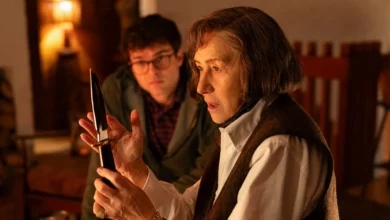
A Talent for Murder explores the complex, often dark, psyche of Patricia Highsmith through the lens of director Anton Corbijn

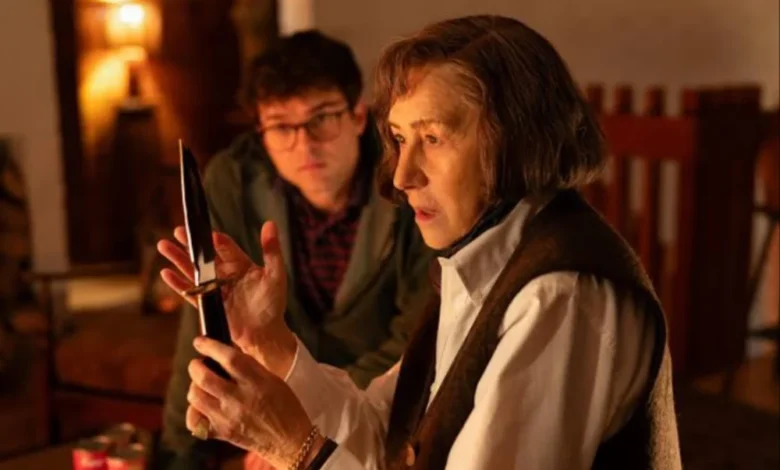
In his latest cinematic venture, A Talent for Murder, director Anton Corbijn turns his lens toward one of the most enigmatic and polarizing figures in 20th-century literature: Patricia Highsmith. Best known as the architect behind Tom Ripley—the iconic, sociopathic antihero of The Talented Mr. Ripley and its subsequent sequels—Highsmith lived a life as layered and elusive as her prose. By casting Helen Mirren as the legendary author, Corbijn aims to capture not only the literary genius of a woman who redefined the thriller genre but also the sharper, often abrasive edges of her personality, which frequently drew criticism during her lifetime.
A Portrait of a Controversial Literary Icon
Patricia Highsmith (1921–1995) remains a titan of suspense, yet her legacy is inextricably linked to the controversy surrounding her private views. Throughout her career, Highsmith was frequently cited for antisemitic and misanthropic remarks that alienated peers and critics alike. In A Talent for Murder, Corbijn does not seek to sanitize these facets of her character. Instead, he presents a raw, unflinching look at a woman who was famously difficult to others and arguably just as hard on herself.
"By all accounts, she was much worse than what we show in the film," Corbijn notes. "You don’t want her to be completely unlikable, but it is a challenge when you are working from a distance of time and relying on historical record. She was a deeply difficult woman, and she carried a self-destructive intensity that is vital to understanding her work."
The film, which was previously titled Switzerland—a nod to the Joanna Murray-Smith play upon which it is based—was renamed to avoid the pastoral connotations of the original title. Corbijn opted for a shift in nomenclature to ensure the audience focuses on the psychological tension rather than the scenic geography of the Swiss refuge where the narrative unfolds.
The Dynamics of Conflict: Mirren and Ehrenreich
The narrative core of A Talent for Murder centers on the encounter between Highsmith and a young, ambitious man named Edward, played by Alden Ehrenreich. In the isolated, icy environment of the Swiss Alps, Edward attempts to persuade the reclusive author to pen one final installment in the Tom Ripley saga. This central conflict is not merely a debate over literary output; it is a battle of wills.
"They are testing how bad people can be and how far they can go," Corbijn explains. "It is a reflection of human curiosity and the generational divide. Often, when people get curious, they go too far, and that is a theme that runs through Highsmith’s own work, particularly with Ripley."
The casting of Helen Mirren, who has carved out a storied career playing historical figures—from Queen Elizabeth II to Golda Meir—brings a gravitas to the role that elevates the material. Corbijn is particularly enthusiastic about Mirren’s willingness to inhabit a character who is intentionally abrasive. "She’s a great jerk," Corbijn says. "I think it’s healthy. It’s never too late to be a bitch. I’m referring to our Highsmith, of course. Luckily, she only killed fictional characters."
The Evolution of the Ripley Archetype
The character of Tom Ripley has undergone numerous iterations since his 1955 debut in The Talented Mr. Ripley. From Alain Delon in Purple Noon to Matt Damon in Anthony Minghella’s 1999 adaptation and Andrew Scott in the 2024 Netflix series, Ripley has remained a cultural touchstone. Corbijn emphasizes that the allure of Ripley lies in his deceptive normality.
"When evil is obvious, it’s not interesting because you know it’s coming," Corbijn observes. "Ripley’s strength—and the strength of the film—is the ambiguity. You don’t know if you should like him or not. Alden Ehrenreich brings a similar quality to the screen; he has this ability to shift between a nerdy, unassuming exterior and a cold, calculating gaze. We were very fortunate to have that level of nuance in the cast."
From Music Videos to Cinematic Biopics
Anton Corbijn’s transition from the world of high-profile music photography and video direction—working with legends like Depeche Mode and U2—to feature film directing has been defined by his interest in real-life subjects. His directorial breakthrough, Control (2007), provided a hauntingly intimate look at the life and suicide of Joy Division frontman Ian Curtis.
"I knew Ian, so I think it’s a very truthful film," Corbijn says. "With Life, the film about James Dean, it was different because I never met him; he died the same year I was born. In those cases, you have to fill in the gaps."
Corbijn acknowledges that playing real-life characters offers a unique challenge that fictional roles cannot replicate. "Even Helen remarked that there is something more mysterious about playing real-life characters. It is more complex, more interesting, and often more powerful. Now, when I think of Ian Curtis, I think of Sam Riley in the film. The performance becomes the reality."
Cultural Pessimism and the Technological Threat
Beyond the film’s narrative, Corbijn is vocal about the broader state of the creative industries. He expresses deep-seated concern regarding the encroachment of artificial intelligence in cinema and music.
"I get very depressed thinking about A.I. replacing so much in our culture," he states. "Whether it is films or the use of digital avatars in concerts, like the ABBA project, it feels dangerous. We are prioritizing comfort over substance, and I believe that will be our downfall. There is absolutely no A.I. in my film."
Corbijn suggests that the rapid pace of technological change is occurring faster than society can adapt. "I am quite pessimistic about the world. I think we will respond badly to these changes, and we will do so too late."
Why the World Still Needs Ripley
The enduring presence of the Ripley character in modern media, according to Corbijn, may be a reflection of the current geopolitical and social climate. As society grapples with increasing cynicism, the figure of the charismatic, remorseless survivor becomes increasingly relevant.
"It’s as if he returns when the world aligns with his thinking, which is a terrible thought," Corbijn muses. "Maybe people are more accepting of moral ambiguity today, or perhaps they find a strange comfort in the idea of someone who acts without conscience. Ripley is a mirror, and looking into that mirror is rarely a comfortable experience."
Historical and Cinematic Context
The release of A Talent for Murder arrives at a time when the "biopic" genre is undergoing a shift toward more psychological, less hagiographic storytelling. By focusing on the darker impulses of its subject, the film positions itself alongside recent entries that eschew standard cradle-to-grave narratives in favor of critical, character-defining moments.
Chronologically, the film serves as a bookend to a century of Highsmith’s influence. From the mid-century publication of her novels, which challenged the morality of the post-war era, to the modern-day streaming adaptations that have introduced her work to a new generation, the "Ripley effect" remains a dominant force in crime fiction.
Conclusion: A Study in Human Complexity
A Talent for Murder is not intended to be a biography in the traditional sense. It is a work of fiction that uses the specter of Patricia Highsmith to examine the thin line between creative brilliance and personal malice. Through the collaboration of Corbijn, Mirren, and Ehrenreich, the film promises to be a provocative addition to the cinematic landscape. It challenges the audience to confront the reality that humanity is often defined by the very people we find most difficult to understand. As the film prepares for its release, the focus remains on the central question: can we appreciate the work of an artist while acknowledging the profound flaws of the person who created it? According to Corbijn, the answer is not only yes—it is essential.