Estonia Dismisses Full-Scale Russian Invasion Fears While Warning of Sub-Threshold Hybrid Warfare and Border Provocations

NEW YORK — Amid rising anxieties across Europe over potential Russian aggression against the North Atlantic Treaty Organization, Estonia’s foreign minister has offered a measured assessment, stating that national intelligence operations detect no indication that Moscow is preparing a conventional, full-scale invasion of the Western military alliance.
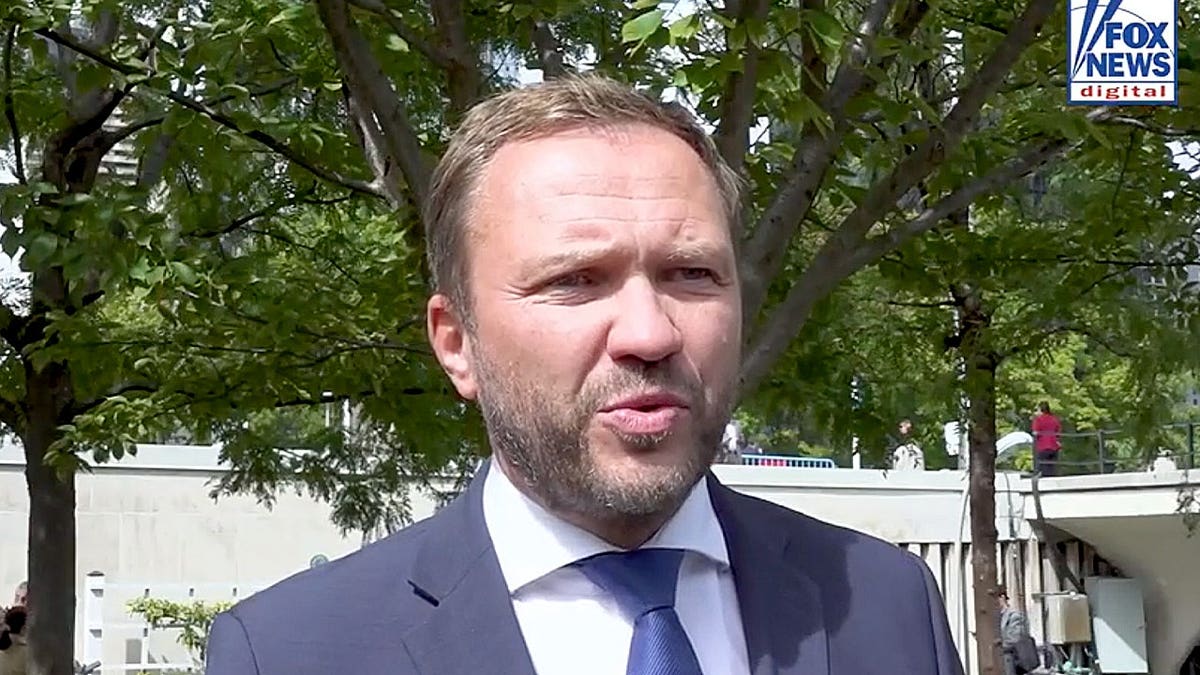
Speaking on the sidelines of the United Nations General Assembly in New York City, Estonian Foreign Minister Margus Tsahkna sought to calm mounting jitters among European allies. He distinguished between the panic surrounding a theoretical, all-out military assault and the active, everyday reality of Russia’s ongoing shadow war characterized by cyberattacks, sabotage, and localized airspace violations.
While Estonia shares an approximately 180-mile land border with Russia and has historically served as one of NATO’s most outspoken watchdogs regarding the regime of Russian President Vladimir Putin, Tsahkna emphasized that current observations on the ground do not point toward a mass mobilization for conventional warfare.
Intelligence Realities Along the Eastern Flank
Tsahkna pointed out that Estonia’s advanced intelligence apparatus maintains extensive visibility into Russian territory. "Our intelligence, we see very, very deep into Russia, we don’t see any change," Tsahkna said in an interview. "We don’t see that Russia is preparing a full-scale invasion or aggression. The other side of our borders is pretty empty."
Drawing on his past experience as Estonia’s defense minister from 2016 to 2017, Tsahkna compared the current climate with the military posture a decade ago. At that time, approximately 120,000 Russian troops were stationed in close proximity to the regional borders, maintaining a high state of readiness that could theoretically mobilize within 48 hours. Today, he noted, those immediate staging areas are significantly less populated as Moscow concentrates the bulk of its combat-ready forces on the front lines in Ukraine.
This assessment aligns broadly with findings published earlier in the year by Estonia’s Foreign Intelligence Service. While domestic intelligence agencies have repeatedly cautioned that Russia is successfully enacting long-term military reforms aimed at rebuilding and expanding its capabilities for future decades, they have consistently maintained that Moscow currently lacks the intent or immediate readiness to initiate a direct military conflict against a NATO member state.
The Shift Toward Sub-Threshold Hybrid Attacks
Even as a conventional invasion remains off the immediate horizon, European security officials are increasingly consumed by a different type of threat profile. Rather than testing NATO’s collective-defense framework enshrined under Article 5—which dictates that an attack on one member is an attack on all—Moscow has leaned heavily into a campaign of sub-threshold provocations.
These methods include frequent cyberespionage operations, critical infrastructure sabotage, GPS jamming, targeted disinformation campaigns, and persistent violations of European airspace. Recent incidents have kept the alliance on edge, including a Russian military helicopter briefly crossing into Polish airspace, an action military analysts described as a deliberate stress-test of regional air defense readiness.
For Estonia, a digitally advanced nation where nearly all public administration and civic services are integrated online, the digital front line is a daily reality. Tsahkna noted that Estonia registered roughly 40,000 distinct cyberattacks attributed to Russian-linked actors over the course of last year alone.
"We are witnessing already, yes, any kind of different level attacks," Tsahkna said. "Unfortunately, it’s already like normality."
The Strategy of Asymmetric Pressure
According to Estonian leadership, Vladimir Putin’s primary objective in deploying these asymmetric tactics is to exploit Western sensitivities regarding escalation. By maintaining a slow, incremental escalation curve, Moscow attempts to fracture the diplomatic consensus and unity among Western allies.
"What Russia is doing now is waging these attacks, which are not crossing Article 5," Tsahkna explained, categorizing the operations as sabotage and terror tactics. "The main purpose for Putin is to play with the Western part of the fear of escalation. He’s trying to divide the Western parts of the world. Divide the unity, divide this kind of consensus."
Tsahkna compared the phenomenon to the proverbial "boiling frog," warning that the continuous, piece-by-piece introduction of hostile acts is designed to numb Western responses and establish a dangerous new baseline of acceptable provocation.
Estonian officials point to a troubling precedent from the previous year, when three Russian fighter jets violated Estonian airspace for approximately 12 minutes. The incident prompted Tallinn to formally invoke Article 4 of the NATO treaty—which allows members to consult together whenever territorial integrity, political independence, or security is threatened—and to raise the matter at the UN Security Council.
While former U.S. President Donald Trump subsequently voiced strong rhetoric suggesting that unauthorized foreign aircraft violating allied airspace should be shot down, Tsahkna noted that direct fighter-jet incursions into Estonian airspace have since subsided, though the challenge has evolved to include frequent drone intrusions.
Chronology of Regional Escalation and Defense Adjustments
2016–2017: Margus Tsahkna serves as Estonia’s defense minister during a period of heightened regional tension, when roughly 120,000 Russian troops were positioned near the Baltic and Polish borders.
Recent Years: Estonia experiences an exponential increase in digital threats, culminating in approximately 40,000 state-linked cyberattacks annually, alongside ongoing GPS interference and localized airspace violations connected to the war in Ukraine.
Prior Year: Three Russian fighter jets breach Estonian airspace for 12 minutes, triggering formal consultations under NATO Article 4 and diplomatic interventions at the United Nations.
Recent Months: A succession of hybrid incidents across Europe, including suspected sabotage operations in Germany and a Russian military helicopter incursion into Polish airspace, underscores the expanding scope of Moscow’s shadow war.
Present Day: Estonian intelligence reports that the border regions opposite the Baltic states remain relatively sparse in terms of conventional invasion forces, even as NATO reassesses its posture against hybrid threats and plans for upcoming rotations of American troops.
Adapting NATO’s Response Mechanisms
In light of these evolving security dynamics, Tsahkna argued that the Atlantic alliance must adopt a more dynamic and flexible posture. Traditional military deterrence, designed primarily for major state-on-state conventional wars, must be supplemented by nimble tools capable of countering sub-threshold gray-zone tactics.
"NATO must be more flex and more dynamic, because these are the attacks which are not crossing Article 5," Tsahkna said. He advocated for a broader toolkit that includes rapid economic sanctions, transparent public attribution of hostile acts, and synchronized political responses to hold perpetrators accountable.
Furthermore, operational changes are required at the tactical level. As commercial and military-grade drones increasingly test border defenses, alliance members are being forced to rethink their air defense economics. Relying on multi-million-dollar fighter jets and high-end interceptor missiles to shoot down inexpensive, mass-produced unmanned aerial vehicles is financially and logistically unsustainable. Developing cost-effective counter-drone systems remains a top priority for eastern flank nations.
The War in Ukraine and Diplomatic Deadlocks
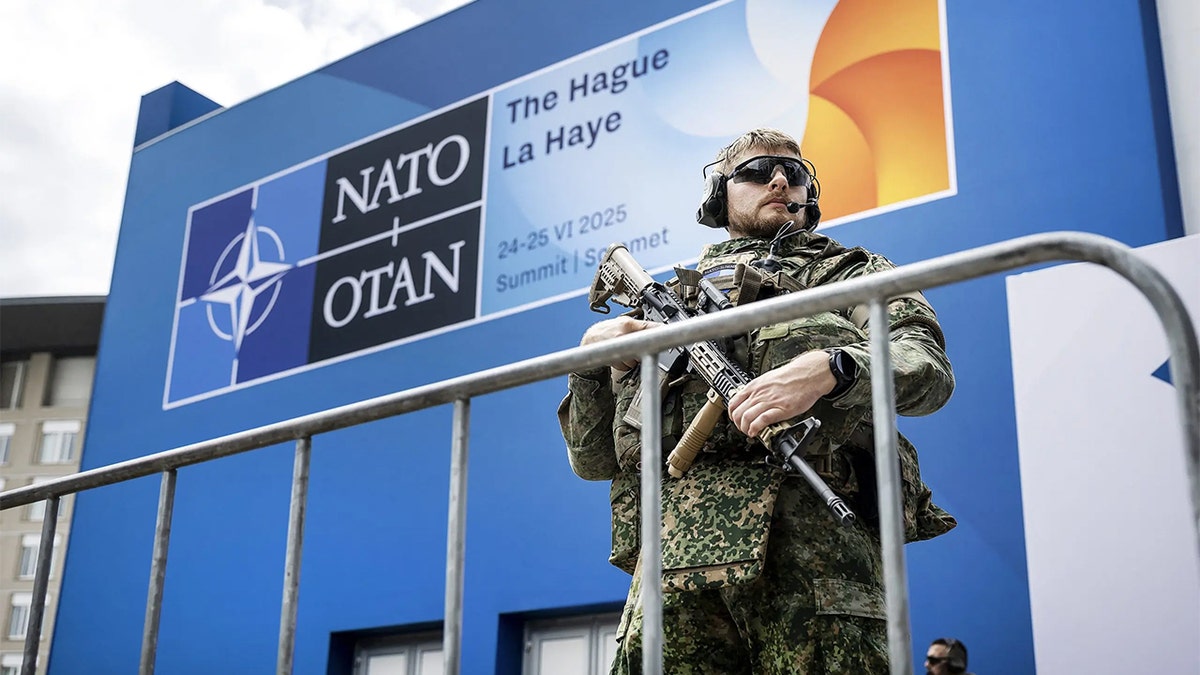
The security of the Baltic states remains inextricably linked to the outcome of the war in neighboring Ukraine. Tsahkna underscored that a decisive factor in containing Russian ambitions is maintaining relentless pressure on Moscow’s military and economic infrastructure.
Having visited Ukraine recently, Tsahkna asserted that the Kremlin responds solely to displays of strength. He highlighted Ukraine’s expanding domestic defense capabilities and long-range deep-strike operations targeting strategic infrastructure—such as energy hubs deep inside Russian territory—as vital mechanisms for altering Moscow’s calculus.
"If Putin is under heavier pressure, and also Ukraine is delivering more deep-strike capabilities and attacks, there will be a momentum when Putin may really start some kind of ceasefire or energy ceasefire, or real talks," he said.
While acknowledging the extensive diplomatic efforts undertaken by the United States and international partners over the past year to broker an end to hostilities, Tsahkna expressed skepticism regarding Moscow’s sincerity. He argued that the Russian leadership has utilized diplomatic channels primarily to buy time and reconstitute resources.
"President Trump has put lots of energy during the last year to find a way, but Putin has just played with him and also winning the time," Tsahkna said, adding that Ukrainian President Volodymyr Zelenskyy has repeatedly demonstrated a readiness to engage in genuine ceasefire discussions, a willingness not mirrored by the Kremlin.
Deterrence and the U.S. Military Footprint in Europe
As the Trump administration conducts broader reviews of the American military posture and force deployments across Europe, reassurance remains paramount for frontline states. Tsahkna confirmed that Estonia has received official assurances regarding the continued presence of U.S. forces in the region for upcoming rotations.
"We got the information that it will happen soon," Tsahkna said regarding the continuity of troop deployments.
The physical presence of allied personnel, particularly American service members, serves a vital psychological and strategic function on NATO’s eastern edge. Beyond their tactical capabilities, these forces represent an unambiguous political commitment that forms the core of Western deterrence.
"U.S. troops are keeping the peace in our region," Tsahkna concluded. "The flag of the troops is so important to give the message to President Putin" regarding the unyielding boundaries of Western defense.