Bannock County Idaho Faces a High Stakes Decision as Commissioners Revisit Controversial Renewable Energy Ban

The political and economic landscape of Bannock County, Idaho, is currently defined by a fundamental tension between traditional land-use autonomy and the encroaching necessities of a modern, decarbonizing power grid. As the county commission prepares to vote this autumn on a landmark ordinance that could overturn a long-standing ban on utility-scale wind and solar energy, the region has become a flashpoint for the broader national debate over how rural communities adapt to the clean energy transition.

The proposed policy shift would not only permit the development of solar and wind energy projects but would also integrate provisions for nuclear energy development, reflecting a strategic pivot by local leadership to address both regional power shortages and the economic stagnation of the county’s agricultural heartland. This legislative reconsideration arrives nearly three years after the commission’s initial, highly contentious decision to freeze renewable development—a move that effectively halted multimillion-dollar investments and deepened a divide between property-rights advocates and residents concerned about the transformation of their rural vistas.

A Chronology of the Conflict
The roots of the current impasse trace back to the autumn of 2023. Following a state-level conference of the Idaho Association of Counties in Boise, where the potential for industrial-scale energy development to overwhelm local infrastructure was a central theme, Bannock County Commissioner Jeff Hough identified a lack of clear regulatory frameworks within his jurisdiction. At that time, several renewable energy firms, including Hecate Energy and Balanced Rock Power, had begun engaging local landowners regarding potential solar leases.

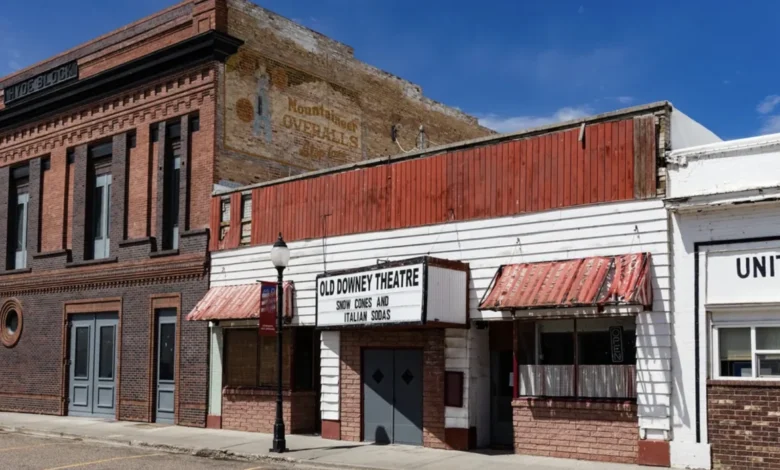
In October 2023, the commission, led by a cautious approach to uncontrolled development, enacted a six-month moratorium on large-scale energy projects. The stated intention was to establish a comprehensive ordinance that would govern land stewardship, potential fire risks, and economic benefits. However, the interval provided an opening for organized opposition. By March 2024, public sentiment in rural segments of the county, particularly in and around the town of Downey, had hardened against the prospect of utility-scale solar arrays. Despite a vocal appeal from Commissioner Hough—who invoked the foundational American principle of property rights—the commission voted 2–1 to maintain the ban.

The impact was immediate. Developers, including Hecate Energy, terminated pending contracts with local farmers and withdrew from the county. The ban remained in place throughout 2025, during which time roughly 25 percent of all U.S. counties implemented similar restrictions or moratoria, according to data from the Sabin Center for Climate Change Law at Columbia University.

The Economic and Energetic Imperative
The push to overturn the ban is driven by stark projections regarding Idaho’s energy future. Idaho Power, the state’s primary utility, has forecasted an electricity demand increase of approximately 1 gigawatt by 2030, representing a 26 percent surge over current consumption. In this context, the geographic positioning of Bannock County is significant. The presence of the Populus substation—a critical nexus for energy transmission across Idaho, Utah, Wyoming, and the Pacific Northwest—makes the county an ideal candidate for new power generation.

For proponents like Commissioner Hough, the argument is two-fold: energy security and economic revitalization. As drought conditions—worsened by long-term climatic shifts—have hampered agricultural output, many multigenerational farmers have found it increasingly difficult to sustain their operations. In nearby Power and Bingham counties, utility-scale renewable projects generated nearly $1.6 million in combined tax revenue in 2024 alone. Hough and his supporters argue that such revenue could stabilize rural budgets, fund essential services that have been lost over the decades—such as local pharmacies and grocery stores—and provide landowners with a diversified income stream that does not necessitate the sale of prime agricultural land.

The Opposition: A Question of Stewardship
Opposition to the solar ordinance remains robust, particularly among residents who view the industrialization of the landscape as an existential threat to the character of rural Bannock County. Critics of the projects, including long-term residents and local activists, frequently cite concerns regarding the visual impact of solar arrays, the potential for fire hazards associated with battery energy storage systems, and the long-term uncertainty of site decommissioning.

These concerns are not unique to Bannock County; they mirror a nationwide pattern of resistance to the land-use requirements of the energy transition. For residents like Rebecca Falcon and Dez Hauser, the fight against the solar ban is fundamentally about community control. They point to the fact that while they oppose solar, their resistance is not necessarily anti-development in a broader sense. This distinction was underscored by the results of a January 2026 survey, where 90 percent of over 700 respondents expressed favorable views toward the nuclear energy industry.

The Nuclear Pivot and the Role of Innovation
The emergence of nuclear energy as a preferred alternative has significantly altered the political calculus in Bannock County. With the Idaho National Laboratory (INL) nearby, the region is uniquely positioned to benefit from the current federal and state-level push for small modular reactors (SMRs) and microreactors. The potential for a "nuclear revival" has created a rare consensus among otherwise polarized groups. Even staunch opponents of solar development have signaled support for nuclear, viewing it as a more efficient use of land that offers a more permanent, high-tech economic future for the area.

However, analysts caution that the nuclear sector remains in its infancy. While firms like TerraPower are making strides in Wyoming, the deployment of commercial-scale SMRs faces significant engineering, regulatory, and supply-chain hurdles. Most projects remain in the prototype phase, and the cancellation of high-profile projects in other states due to cost overruns serves as a sobering reminder of the economic risks involved.

Implications of the Forthcoming Vote
As the commission nears its vote this fall on the new draft ordinance, the atmosphere is one of uneasy anticipation. The new language in the proposal attempts to address the specific grievances raised during the 2024 moratorium process. This includes stringent requirements for developers to post bonds for decommissioning, as well as mandates for training and equipment support for local fire departments to address potential battery storage emergencies.

The political shift is palpable. Even Commissioner Ernie Moser, who previously supported the ban, has indicated that his concerns have moderated following extensive education on the state’s energy requirements and site visits to existing solar facilities. Furthermore, the electoral success of proponents of energy development, even in the face of local opposition, suggests a growing acknowledgement that the county cannot remain an island of energy stagnation in a state that is rapidly growing.

The decision before the Bannock County Commission transcends a simple vote on land-use permits. It represents a test case for whether a community can effectively reconcile the preservation of its historical identity with the unavoidable pressures of the 21st-century energy landscape. Should the ordinance pass, it will likely trigger a surge in development interest, testing the county’s ability to enforce its new regulatory guardrails. If the ban remains, Bannock County will continue to serve as a stark example of the challenges inherent in the national energy transition, potentially missing out on the economic and infrastructure benefits that its neighbors have already begun to capitalize upon.

Ultimately, the commissioners must weigh the immediate, tangible needs of their constituents—many of whom are struggling to maintain their livelihoods—against the deeply held values of those who fear the irreversible alteration of their home. Regardless of the outcome, the events in Bannock County have provided a comprehensive roadmap of the difficulties that await other rural jurisdictions as they grapple with the multifaceted demands of the future power grid. The upcoming vote will not only determine the energy path of the county but will likely influence the regional conversation on infrastructure, economic development, and the very definition of responsible land stewardship for years to come.
Related posts: