
North Korea Reunification Policy
North Korea’s Reunification Policy: A Complex and Evolving Landscape
North Korea’s approach to Korean reunification is a cornerstone of its foreign policy and domestic ideology, a persistent aspiration articulated through various political strategies and historical narratives. Officially designated as the Democratic People’s Republic of Korea (DPRK), the state’s reunification policy is not a static doctrine but a dynamic construct shaped by evolving geopolitical realities, internal leadership pronouncements, and perceived threats or opportunities. At its core, the policy aims for the establishment of a unified Korean peninsula under the DPRK’s system, driven by a potent mix of nationalist fervor, anti-imperialist sentiment, and a desire to assert its sovereignty and unique identity. This ambition, however, is consistently juxtaposed with the pragmatic necessities of national survival, regime security, and navigating the complex international relations that define Northeast Asia.
Historically, North Korea’s reunification doctrine has undergone significant shifts, reflecting the leadership’s strategic imperatives. Initially, following the Korean War, the emphasis was on a forceful, military-led reunification, envisioning a direct confrontation with the South to establish a communist state across the entire peninsula. However, the failure of this approach and the subsequent rise of South Korea’s economic prowess necessitated a recalibration. The "Kukga-cheongnyon" (national youth) or "Kukga-jeongchi" (national politics) rhetoric, emphasizing national unity above ideological differences, began to gain traction. This was further refined into the concept of a "Koryo Federation" or "Confederal Republic of Koryo," a proposal suggesting a unified state with two autonomous regional governments, each retaining its own political and economic system. This model, first introduced by Kim Il-sung, was designed to address the ideological divide while preserving the DPRK’s core principles and preventing its absorption into the South. The emphasis on a single nation with two systems aimed to legitimize the DPRK’s continued existence and ensure its influence in any unified structure. This policy, while seemingly accommodating, was underpinned by the implicit understanding that the DPRK’s system would ultimately be the dominant one.
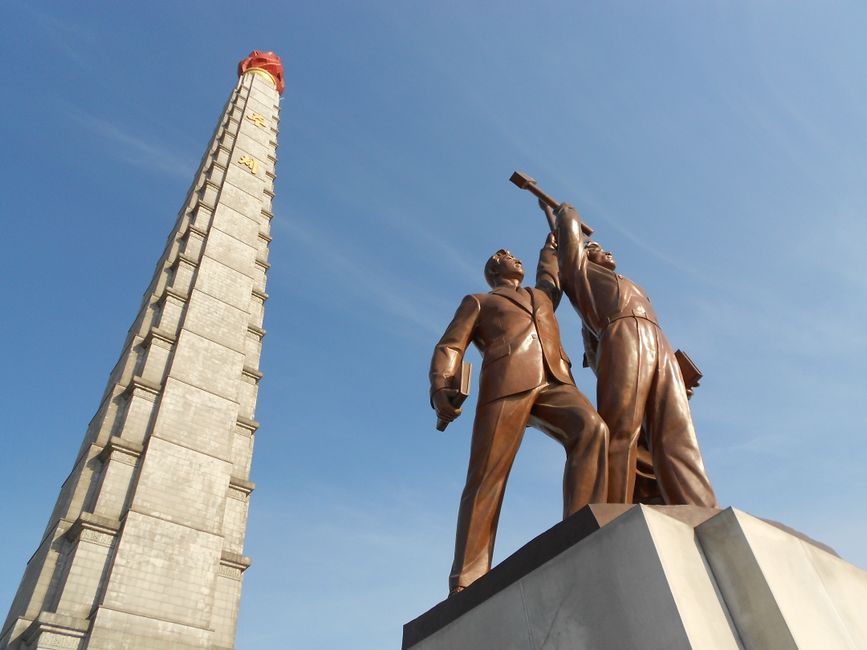
The ideological underpinnings of North Korea’s reunification policy are deeply rooted in its concept of Juche, or self-reliance, and its interpretation of Korean history. Juche ideology, championed by Kim Il-sung and further developed by his successors, emphasizes the Korean people’s unique national spirit and their ability to forge their own destiny, free from external interference. Reunification under the DPRK’s banner is presented not merely as a political objective but as a national imperative to overcome the historical “tragedy” of division, which is attributed to foreign intervention and colonial subjugation. The policy narrative frequently invokes historical narratives of a unified Korea, portraying the current division as an artificial construct imposed by external powers. This historical framing serves to legitimize the DPRK’s claims and mobilize domestic support for its reunification agenda, portraying the South Korean government as a puppet regime subservient to foreign interests. The anti-imperialist stance is a constant refrain, framing any attempt at peaceful integration that does not result in DPRK dominance as a veiled form of neo-colonialism or absorption.
The Koryo Federation model, despite its apparent flexibility, has consistently been presented with stringent preconditions by Pyongyang. These preconditions often include the withdrawal of U.S. forces from South Korea, the dismantling of the U.S.-ROK alliance, and the cessation of perceived hostile policies from the South. These demands are not merely negotiating points but reflect a fundamental distrust of the United States and a deep-seated belief that American military presence is the primary obstacle to Korean self-determination and reunification on North Korean terms. The DPRK views the U.S. as an impediment to its desired unified future, and its withdrawal is therefore a non-negotiable prerequisite for any substantial progress. This stance significantly complicates diplomatic efforts, as it directly challenges the security framework of the region and the interests of key international actors.
More recently, under Kim Jong-un, the rhetoric surrounding reunification has undergone subtle but significant shifts, reflecting a growing emphasis on consolidating the DPRK’s own strength and asserting its identity as a nuclear-armed state. While the ultimate goal of reunification remains, there has been a discernible hardening of the position, with less emphasis on dialogue and more on self-preservation and the enhancement of national power. Kim Jong-un has increasingly framed reunification within the context of national security and the DPRK’s status as a sovereign state. This has led to a more assertive posture, where the DPRK leverages its military capabilities, including its nuclear program, as a bargaining chip and a means to deter perceived threats from the South and its allies. The focus has shifted from a cooperative approach to one that prioritizes the DPRK’s own terms and conditions, often leading to a perceived increase in intransigence.
The DPRK’s reunification policy is also intrinsically linked to its economic development strategy. While the official policy prioritizes political and ideological unification, the economic realities of the Korean peninsula present a stark contrast. North Korea’s struggling economy and its reliance on external aid stand in sharp opposition to South Korea’s advanced industrial and technological base. Pyongyang’s reunification proposals, while theoretically suggesting a dual-system federation, are often designed to protect its socialist economic model from what it perceives as the disruptive influence of capitalism. The fear of being overwhelmed by the South’s economic might and the potential for internal instability arising from such a disparity are significant considerations that shape the DPRK’s approach. This inherent economic imbalance creates a practical hurdle that no reunification proposal, however theoretically sound, can easily overcome without significant external assistance and a radical shift in North Korea’s economic management.
The international dimension of North Korea’s reunification policy is crucial. The DPRK understands that any significant movement towards reunification would require the tacit or explicit approval of major regional powers, including China, the United States, Japan, and Russia. Pyongyang has historically sought to leverage its relationships with these powers, particularly China, to gain support for its reunification agenda and to counter perceived pressure from the West. China’s role as North Korea’s traditional ally and economic benefactor is particularly significant. While Beijing officially supports peaceful reunification, its strategic interests often lead to a nuanced approach that prioritizes regional stability and its own influence. The DPRK’s diplomatic maneuvers are often aimed at creating a regional environment conducive to its reunification objectives, using the Six-Party Talks and other multilateral forums as platforms for its proposals.
The ongoing military standoff and the persistent nuclear issue remain the most significant impediments to any reunification efforts guided by North Korea’s policy. The DPRK’s development of nuclear weapons and ballistic missile technology has transformed the security landscape of the Korean peninsula. For Pyongyang, these weapons are seen as essential for its survival and as a means to negotiate from a position of strength. However, for South Korea and its allies, particularly the United States, the nuclear program is a grave threat that necessitates a robust deterrence posture. This creates a vicious cycle where North Korea’s security concerns are met with increased military preparedness from the South, further entrenching the divide and making reunification on any terms increasingly difficult. The DPRK’s reunification policy, therefore, operates within a highly militarized context, where its security guarantees are inextricably linked to its offensive military capabilities.
The question of human rights in North Korea also presents a significant challenge to any reunification discourse. The stark contrast between the human rights situation in the North and the South makes integration a daunting prospect. International organizations and governments consistently highlight severe human rights abuses within the DPRK, including political prison camps, restrictions on freedom of expression, and widespread repression. Any process of reunification would inevitably bring these issues to the forefront, posing complex questions about accountability, justice, and the integration of populations with vastly different experiences and expectations regarding fundamental rights. The DPRK’s policy, while emphasizing national unity, often seeks to suppress or downplay these concerns, prioritizing regime security and its unique social-political order.
In conclusion, North Korea’s reunification policy is a multifaceted and deeply ingrained aspect of its national identity and strategic outlook. It is driven by a complex interplay of historical narratives, ideological convictions, geopolitical realities, and the pragmatic imperatives of regime survival. While the stated goal of establishing a unified Korean peninsula remains constant, the methods and preconditions have evolved, reflecting shifts in leadership and the international environment. The policy’s enduring aspiration for self-determination and a unified Korea under its own system, however, is continually challenged by the stark economic disparities, the persistent security threats, and the fundamental differences in political and human rights between the two Koreas, making the path towards reunification a long and uncertain one. The DPRK’s approach, characterized by its emphasis on national strength, its distrust of external influence, and its unwavering commitment to its own socio-political model, continues to shape the complex dynamics of inter-Korean relations and the broader security architecture of Northeast Asia.