President Donald Trump Delivers Fiery Address at Rescheduled White House Correspondents’ Dinner, Targeting Media and Political Foes

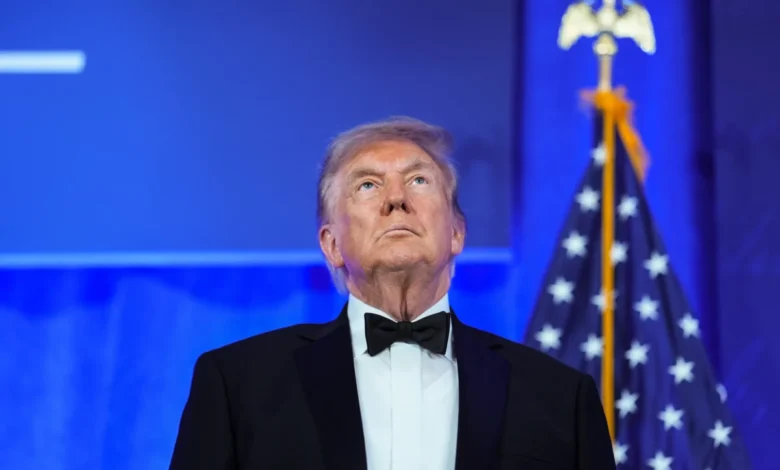
President Donald Trump made his inaugural appearance at the White House Correspondents’ Association (WHCA) Dinner, a highly anticipated event that had been postponed due to a security incident. Held on Friday evening in Washington D.C., the rescheduled gala saw Trump deliver a lengthy, often combative speech lasting over an hour, during which he leveled sharp criticisms at a wide array of journalists, politicians, and celebrities with whom he has publicly clashed.
"I am delighted to be here at the White House Correspondents’ Dinner. Amazing people, a lot of people that I like," Trump stated, acknowledging the assembled press corps. He quickly tempered this apparent magnanimity with a stark qualification: "Some I don’t like at all, but I respect most of them." This opening set a tone of duality that would characterize his address, oscillating between feigned camaraderie and pointed antagonism.
The President appeared to grapple with the intended tenor of his remarks, musing aloud about the nature of the event. He suggested that, in comparison to the barbs he had initially prepared for the dinner before its original disruption, he was "pulling his punches." "I said, ‘What do we do here? Is this supposed to be fun? Am I supposed to be serious? Am I supposed to be a comedian?’ So I guess you said, maybe a little bit of everything," Trump elaborated, underscoring his uncertainty regarding the traditional format of presidential engagement with the press at this particular function.
Escalating Attacks on the Press and Entertainment Industry
Trump’s initial hesitancy quickly evaporated, giving way to a direct assault on the media. "This evening it’s really all about the fake news media and your handling of prizes – writing and producing and performing made-up stories like the Academy Awards," he declared. He drew a parallel between journalistic reporting and the perceived decline in the prestige and viewership of the Academy Awards, asserting, "The Academy Awards used to be the the epitome of ratings outside of the Super Bowl… Now it’s down in the dumps. Nobody wants to watch it anymore because they took on Trump. They hit me all night long."
The President issued a stark economic forecast for the press should he no longer be a subject of their reporting. "When I’m gone. You’re all going to be broke. Your business model is going to be finished. No, it’s true. When I’m not around, you’re going to be broke. There’s not going to be anybody to report on. Nobody gives a damn about anybody else," he proclaimed. This statement reflects a long-standing contention by Trump that his presence drives media attention and, by extension, revenue for news organizations.
He further elaborated on his strategy of disengaging from traditional media, boasting about his success on alternative platforms. "Mostly, I’ve given up on you and the media, so that now I just gave up on you, and I’m number one on TikTok. Did you see that?… I gave up on you, people. I gave up on traditional press, and it obviously worked because we did win in a landline" (he appeared to misstate "landslide"). Trump also claimed credit for the sale of TikTok to American investors, stating, "I was able to get [TikTok] sold to a group of very wealthy people, mostly Americans."
Trump explained his past absences from WHCA dinners, citing a perceived pattern of unfair coverage. "I thought the press treated me very, very unfairly, and I don’t know. I think I made the right decision because they need to go where maybe you’re not wanted, but they did want me. They wanted me for ratings, and they wanted me for other reasons, but not for love. And I said, ‘You know, I’m not going to go.’ First time that ever happened… And I didn’t go for four years because I got treated terribly by the press."
The President also commented on the WHCA’s decision to forgo a comedian for the evening, a departure from tradition. He specifically disparaged well-known late-night hosts, stating, "They considered using Jimmy Kimmel, Jimmy Fallon… These guys – they’re terrible. They’re terrible. Stephen Colbert. These are people without talent… They have no talent, but they are not comedians. They’re not funny people. They’re angry people. They’re sick people." This critique aligns with his broader narrative of perceived bias within the entertainment and media sectors.
Trump took the stage at 9:33 p.m. and concluded his remarks approximately 64 minutes later, a considerably longer duration than typical speeches at the event.
Jokes, Accusations, and a Strained Relationship with Awards
Adding a layer of speculative ambition to his address, Trump referenced a conversation with Paramount CEO David Ellison, whose company owns CBS News. Ellison reportedly told Trump that he intended to rename the WHCA dinner "the Trump White House Correspondents’ Dinner" in the future. "He told me that, and I like that very much. We’re going to change the name of it, OK?" Trump said, drawing a parallel to his unsuccessful bid to have his name attached to the Kennedy Center.
In a moment that elicited a noticeable audience reaction, Trump expressed well wishes for Bari Weiss at CBS News, calling her "a wonderful woman." The murmur suggested surprise or perhaps disagreement from some attendees regarding the compliment.
He acknowledged the challenging role of White House Press Secretary Karoline Leavitt, stating she "may have one of the hardest jobs in the White House" due to the necessity of "deal[ing] with all of you all the time, and you can be very difficult. You can be very, very difficult people." He then added, "But I’m probably being a little bit oversensitive. Sometimes I really do think that some of you don’t like me."
Trump characterized the audience as "the largest group of Trump derangement syndrome people ever put together at one time, I suspect," a remark that drew a modest amount of laughter. His reference to "Trump derangement syndrome" suggests a belief in its validity as a medical condition, a notion often dismissed by medical professionals.
Targeting Specific Journalists and Public Figures
The President then turned his attention to specific individuals he has frequently criticized. He identified Don Lemon as the recipient of the award for "lowest ratings and the ‘lowest IQ on television’," labeling him "the dumbest man on television." Trump elaborated, "I said, you know, when you say some things, you never make a comeback. It’s not like, ‘Oh gee, hey Don, let’s have dinner some night.’"
CNN anchor Kaitlan Collins, a recipient of a 2026 WHCA broadcast award for her coverage of a confrontation between Trump and Ukrainian President Volodymyr Zelensky, was also a target. While congratulating her, Trump dismissed the award’s validity: "I want to personally congratulate CNN’s Kaitlan Collins on receiving her award… but it was all about me. It’s a fake, she shouldn’t get the award. It was a fake, but I didn’t mind." CNN Worldwide Chairman and CEO Mark Thompson issued a statement in response, affirming, "We stand by our journalists and the integrity and fair mindedness with which the CNN team reports the news. Honest, accurate journalism may sometimes irritate politicians, but our right to report and present that reporting to the public without government interference is fully protected by the U.S. Constitution. CNN will continue to exercise this right."
Trump’s commentary on Collins took an unusual turn as he described her as "a young, active woman" who "never smiles." He recounted urging her to smile, suggesting she "should be a happy person" given her position at "CNN fake news." He then veered into a tangent about a sponsorship, mistakenly linking Collins to a Bud Light campaign featuring Dylan Mulvaney, a transgender influencer whose association with the brand in 2023 led to significant backlash. Trump stated, "Dylan Mulvaney cost Bud like $35 million in market cap. It was the worst commercial ever made, by the way… I wouldn’t want to hire Dylan anytime soon."
Anderson Cooper, another CNN anchor, received a more nuanced critique. "I like Anderson actually because he’s covered me well for many years, and he went bad as soon as I went for politics. But for years, he loved interviews. I did so many interviews with him, and he was great. But you know, he’s got a little different persuasion than me, in many ways actually," Trump observed.
The President’s broadsides extended to a list of prominent figures, including California Governor Gavin Newsom, U.S. Representative Ilhan Omar, Senators Elizabeth Warren and Chuck Schumer, Rosie O’Donnell (described as a "sick older woman"), CNN’s Jake Tapper, and Bruce Springsteen. Regarding Springsteen, Trump questioned, "What the hell happened to that guy? He looks like hell… I’m sure he doesn’t like the way I look, but I don’t look so bad." He criticized Springsteen’s tour for incorporating "four political speeches in his three-hour show," quipping, "The tour has been renamed ‘Bored in the USA,’ and his new song was so bad."
Trump’s antagonistic relationship with the press is well-documented. Beyond labeling outlets as "fake news" and personally attacking journalists, he has initiated legal action against numerous news organizations, including The New York Times, The Wall Street Journal, CNN, ABC News, and CBS News’s "60 Minutes."
Confrontation Over Journalism Awards and Future Ambitions
Adding to the evening’s tension, reporters from The Wall Street Journal who authored a story concerning a purported birthday letter from Trump to Jeffrey Epstein were honored with the $10,000 Katharine Graham Award for Courage and Accountability. Trump, who has denied writing the letter, had previously filed a $20 billion defamation lawsuit over the report. Lawyers for The Journal characterized his lawsuit as "an affront to the First Amendment." While an initial suit was dismissed by a judge, Trump refiled the complaint in May 2026, and the case remains pending. Trump’s acknowledgment of the awardees involved an awkward handshake with the honorees, followed by a gesture of mock resignation. "This has not been an easy evening. All these awards… Do I get a say in those awards?" he quipped during his remarks.
Towards the conclusion of his lengthy address, Trump donned a "Trump 2028" hat and suggested he might run for a fourth term, reiterating unsubstantiated claims about the 2020 election results. He also expressed an intention to attend the correspondents’ dinner again in 2027.
A peculiar jest was directed at his Secretary of Health and Human Services, Robert F. Kennedy Jr., involving a fabricated scenario about a cow and raccoon roadkill. "Bobby Kennedy’s right here. He personally ran over the cow in his car… He brought it here for you to eat tonight," Trump stated. "So it’s very fresh. And Bobby also suggested an appetizer featuring his favorite cut of male raccoon roadkill. But we drew the line at that, Cheryl. We said, no, we’re not going to do that. We’re not doing that. We love Bobby."
Event Background and Security Concerns
Friday evening’s WHCA dinner was held at the Waldorf Astoria hotel in Washington D.C. The event featured a performance by mentalist Oz Pearlman, marking a departure from the traditional inclusion of a comedian to roast the sitting president.
The WHCA dinner’s rescheduling stemmed from a significant security incident on April 25th, when the initial gathering was disrupted by what was described as an apparent assassination attempt on President Trump. A gunman reportedly breached security at the Washington Hilton, leading to his apprehension and subsequent charges. Trump alluded to this attack during his speech, expressing gratitude to law enforcement officials involved in subduing the suspect.
Outgoing WHCA President Weijia Jiang, a senior White House correspondent for CBS News, delivered the opening remarks. She shared hosting duties with Fox News’s Jacqui Heinrich, who is slated to assume the role of WHCA president for the 2026-27 term. This year’s event, marked by the President’s unsparing commentary, underscored the enduringly complex and often contentious relationship between the American presidency and the nation’s news media.
Related posts: