Khosla Ventures Breaks Decades-Long Tradition by Expanding Beyond Silicon Valley with New York City Hub


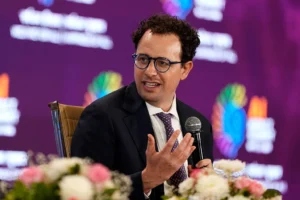
For over a decade, venture capital stalwart Khosla Ventures has been synonymous with the leafy confines of Menlo Park, California, steadfastly maintaining its operations within the traditional geographic boundaries of Sand Hill Road. However, that era is coming to a close. Speaking on Thursday evening at TechCrunch’s StrictlyVC event in the West Village of Manhattan, prominent venture capitalist and Khosla Ventures partner Keith Rabois confirmed that the prestigious firm is officially establishing its very first office outside of the San Francisco Bay Area.
The new operational outpost, situated on 14th Street in New York City, is slated to open its doors this fall, marking a watershed moment for a firm that has historically eschewed even a San Francisco presence, let alone a bi-coastal footprint.
While the physical construction of the Manhattan office is currently underway, Rabois maintained a pragmatic skepticism regarding the timeline. "It’s actually allegedly being built out now," Rabois remarked to the audience, drawing knowing laughs from a crowd well-acquainted with commercial real estate delays. "We’ll see. This fall opening date is very vague in my mind."
This expansion represents far more than a simple change of address; it is a strategic repositioning that reflects shifting tectonic plates in the American technology and venture capital landscapes.
A Novel Approach: The Executive Briefing Center
The newly minted New York office will house a select group of Khosla investors, including Rabois, who recently relocated to the East Coast to be closer to his family. However, the most distinctive feature of the 14th Street hub will not be traditional partner desks, but rather an innovative facility Rabois termed an "executive briefing center."
Designed to act as an aggressive growth engine for early- and mid-stage startups, the briefing center will operate four days a week, rotating groups of 10 to 12 portfolio companies through the space to pitch and network directly with Fortune 500 enterprises.
"The portfolio companies love this," Rabois explained during his panel appearance. "They get pilots and customers, and so it’s going to be a very vibrant office because of that."
By serving as a physical bridge between nimble venture-backed technology startups and legacy corporate giants, Khosla Ventures aims to weaponize New York City’s unique commercial ecosystem. Unlike Silicon Valley, which is heavily saturated with pure-play technology companies and consumer internet startups, New York offers immediate, localized proximity to traditional powerhouses in finance, media, advertising, healthcare, and retail—prime buyers for enterprise software and artificial intelligence solutions.
The Personal Catalyst and Talent Dynamics
The announcement of the Manhattan office closely follows Rabois’s personal relocation to the East Coast. Rabois moved to be closer to his husband, Jacob Helberg, the Under Secretary of State for Economic Growth, Energy, and the Environment, and their children, who are based in Washington, D.C.
This lifestyle transition naturally raised questions regarding how the talent pool in New York stacks up against the storied engineering and entrepreneurial density of the Bay Area—a region Rabois has successfully mined for talent throughout his 13-year venture career.
According to Rabois, the answer depends heavily on the seniority of the talent in question. At the entry level, his endorsement of New York’s talent ecosystem is absolute. Pointing to Ramp, the fast-growing corporate card and spend management platform that he has backed extensively, Rabois highlighted how easily companies can tap into top-tier graduates.
"Individual contributor level, right out of school, absolutely," Rabois stated. He noted that Ramp and other portfolio companies have successfully tapped into recent graduates to create an extraordinary "critical density of talent from the intern class [onward]."
However, senior technical talent tells a different story. "Senior engineers, architect-level — no, I think that’s a challenge," Rabois admitted. He added an important caveat regarding modern software development: "Fortunately, maybe in the modern age, you need less of these people per company than you have historically."
The most formidable bottleneck for New York-based companies, according to the veteran investor, lies in recruiting senior executives. Rabois attributes this hurdle primarily to geography, real estate economics, and commuting realities. Drawing on his own upbringing in a New York commuter suburb—where his family lived a 32-minute express train ride from the city—Rabois noted that many seasoned professionals live far further out.
"If you have an in-office culture, most of the more senior people that live and reside in the New York area live outside the city, and the commute in and out of the city for an office environment can be very painful," he said. "When you need to recruit proven executive talent, and you really believe in an in-office culture, [that has] been very challenging."
For companies like Ramp, the strategic workaround has been to sidestep the executive recruitment headache entirely. "We don’t hire senior people. We just build from the bottom up, ground up. It’s been a very conscious strategy, very intentionally, for the last three years," Rabois noted. "That can work. But if you need a CFO, a SVP of sales, someone who’s got a lot of gravitas and experience, it’s really hard to have them in the office five days a week, because unless they’re very independently wealthy, they really can’t afford to raise a family right in the middle of the city."
A Growing Trend Among West Coast VC Giants
Khosla Ventures’ move into Manhattan places the firm within an increasingly prominent, albeit exclusive, club of West Coast venture capital heavyweights establishing a formal East Coast presence. While legacy firms like Sequoia Capital and Andreessen Horowitz have maintained New York outposts for years, those footprints have traditionally been modest, often consisting of a small handful of resident partners servicing local portfolios.
Khosla’s decision to build an operational hub complete with an executive briefing center signals a deeper, more aggressive commitment to the East Coast market. This strategic pivot aligns with broader economic shifts documented in the technology and real estate sectors.
A notable report released by commercial real estate services firm CBRE found that New York City has narrowly overtaken the San Francisco Bay Area in total tech talent headcount for the first time in the 13 years CBRE has tracked the metric. This historic shift has been propelled largely by traditional finance institutions and Wall Street firms aggressively recruiting artificial intelligence and technical talent, even as traditional technology employers in the Bay Area underwent workforce reductions and cost-cutting measures.
Despite hard data from commercial real estate analyses, skepticism remains palpable among legacy tech and venture circles. During Thursday night’s StrictlyVC event, the CBRE report was met with raised eyebrows from local attendees. "I heard about that study," one participant remarked. "I don’t buy it."
Broader Implications for the Venture Capital Landscape
The expansion of Khosla Ventures into New York highlights the ongoing decentralization of the American venture capital apparatus. For decades, the implicit rule of institutional venture investing dictated that founders had to make the pilgrimage to Sand Hill Road to secure tier-one funding. By planting a flag on 14th Street, Khosla is acknowledging that capital must increasingly meet founders and enterprise customers where they operate.
As artificial intelligence reshapes industries ranging from Wall Street finance to healthcare, the convergence of capital, top-tier engineering talent, and legacy enterprise buyers in New York City creates a compounding flywheel effect. Whether Khosla’s fall opening date holds firm or faces the typical trials of urban construction, the firm’s strategic pivot underscores a permanent evolution in how venture capital views geography in the post-pandemic, AI-driven economy.