President Trump initiates aggressive fiscal overhaul by canceling one billion dollars in congressionally approved domestic spending

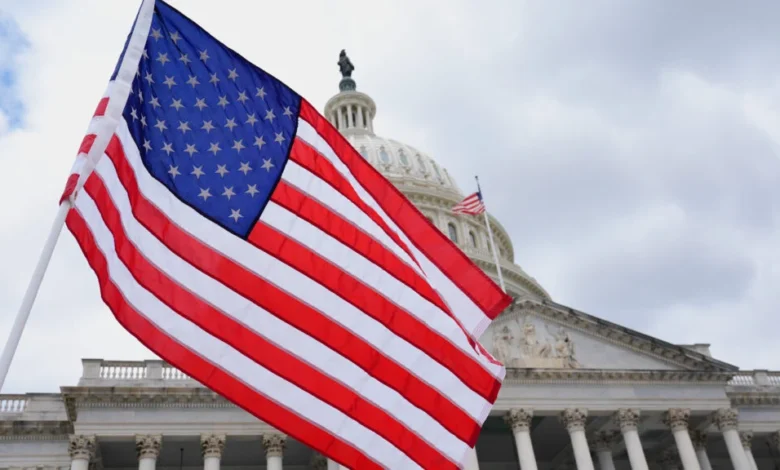
The White House announced a sweeping fiscal maneuver on Friday, confirming that President Donald Trump has moved to cancel nearly $1 billion in federal spending previously authorized by Congress. This executive action targets a diverse array of programs, ranging from immigrant services and housing counseling to initiatives focused on racial equity and minority entrepreneurship. By leveraging a controversial fiscal instrument known as a "pocket rescission," the administration is once again challenging the boundaries of executive authority, setting the stage for a constitutional showdown over the legislative branch’s long-standing "power of the purse."
The Office of Management and Budget (OMB) characterized the move as a necessary step to eliminate what it termed "the most harmful and wasteful government spending." The administration justifies the clawback by citing a significant decline in illegal border crossings, arguing that funds previously earmarked for the Department of Health and Human Services (HHS) to support refugees and unaccompanied minors are no longer required. However, the scope of the cuts extends far beyond immigration, impacting Department of Justice offices dedicated to social cohesion, Department of Education programs for migrant students, and various HHS research grants deemed "ideological" by the White House.
A Chronology of Fiscal Executive Action
The current maneuver marks a significant escalation in the ongoing tension between the executive and legislative branches. To understand the gravity of the situation, one must look at the historical context of presidential rescission powers.
The legal framework governing this action is rooted in the Congressional Budget and Impoundment Control Act of 1974. Under this law, a president must notify Congress of any intent to rescind funds, and the legislature is afforded 45 days of continuous session to review and potentially reject the proposal. By announcing these cuts with only five days remaining in the federal fiscal year—and with the House of Representatives out of session until after the November elections—the administration has effectively prevented Congress from exercising its statutory review period.
This is not the first time the Trump administration has employed such tactics. One year ago, the White House successfully blocked $4.9 billion in foreign aid through a similar pocket rescission. While that move faced immediate legal scrutiny, the Supreme Court ultimately declined to intervene, largely citing the president’s broad constitutional authority over foreign policy. The administration is now attempting to apply that precedent to domestic policy, a move that legal scholars warn lacks the same constitutional cover. The last significant attempt at a pocket rescission prior to the current term occurred in 1977 under President Jimmy Carter, though that instance differed significantly in its adherence to the 45-day notice requirement.
Analysis of Targeted Programs and Budgetary Impact
The administration’s "wasteful spending" classification targets several key areas of the federal budget. According to official briefings, the cuts include:
- Immigrant and Refugee Services: A substantial portion of the $1 billion reduction is derived from HHS programs tasked with the care and processing of unaccompanied minors and refugees. The administration asserts that reduced border volume renders this specific allocation redundant.
- Minority and Social Equity Initiatives: The cuts include $10 million from minority business development programs and funding for a Department of Justice office focused on reducing racial tensions.
- Education and Housing: Significant reductions are being applied to Department of Education programs designed to support migrant students, alongside housing counseling services managed by the Department of Housing and Urban Development (HUD).
- International and Research Grants: The White House has rescinded $70 million for international education programs and $28 million in HHS research grants, citing concerns over ideological bias. Additionally, $9 million in debt relief for foreign nations—specifically those with climate change policies—was eliminated.
Data from the Government Accountability Office (GAO) suggests that while executive departments often seek to streamline operations, the unilateral cancellation of congressionally mandated spending represents a fundamental departure from the separation of powers established in Article I of the Constitution. The GAO has previously signaled that "pocket rescissions" are legally indefensible, as they bypass the legislative check that ensures the president cannot unilaterally dismantle programs that have received broad bipartisan support.
Official Responses and Congressional Fallout
The reaction from Capitol Hill has been swift and deeply polarized. Senator Susan Collins (R-Maine), who chairs the powerful Senate Appropriations Committee, issued a stinging rebuke of the administration’s actions. In a statement, she condemned the lack of warning or consultation, characterizing the move as an "illegal action" and a direct usurpation of Congress’s constitutional authority.
"OMB is an agency of the executive branch," Collins stated. "It does not get to decide which programs are worth funding. This is an impoundment that was not reported to Congress, and it undermines the very foundations of the appropriations process."
Senator Patty Murray (D-Washington), the ranking member on the Senate Appropriations Committee, went further, labeling the action as "theft from the American people." Murray highlighted the bipartisan nature of the affected programs, noting that Democrats had attempted to include legislative safeguards in recent spending bills to prevent such executive overreach, though those measures were ultimately rejected by Republican leadership.
"While the president focuses on self-promotion, he is actively stripping resources from families and communities that need them most," Murray said. "Congress delivered these funds to serve the public interest, and it is imperative that we reassert our legislative power to ensure these resources reach their intended destinations."
The Constitutional and Political Implications
The implications of this move extend well beyond the immediate budget cycle. By forcing the judicial branch to define the limits of the "pocket rescission," the administration is accelerating a trend toward a stronger, more centralized executive. This is consistent with other recent actions, including the widespread termination of federal civil servants, the imposition of historic tariffs without traditional legislative debate, and the authorization of military action in Iran outside of a formal Congressional War Powers declaration.
Legal experts suggest that the judiciary is now the final arbiter of whether the Trump administration’s approach to domestic fiscal control is sustainable. If the courts permit the use of pocket rescissions for domestic spending—as they did for foreign aid—it would effectively grant the president the power to unilaterally dismantle entire federal agencies or programs by simply withholding the funds necessary to operate them.
From a political standpoint, the timing of these cuts—occurring mere weeks before the national election—is not incidental. The administration is clearly signaling a commitment to a "pro-growth, anti-bureaucracy" platform, even at the cost of alienating moderate members of its own party. For voters, the issue presents a stark choice regarding the structure of the federal government: one that prioritizes executive efficiency and the rapid implementation of an ideological agenda, or one that upholds the slow, consensus-based legislative process that has defined American governance for centuries.
As the fiscal year draws to a close, the standoff over these funds is likely to dominate the discourse in Washington. With the House out of session, the administration’s maneuver remains in effect, leaving the legislative branch in a state of suspended frustration. Whether Congress can successfully challenge the legality of these rescissions in court—or whether the move sets a new, permanent precedent for executive power—remains the most pressing constitutional question of the current term.
As the legal and political battle lines are drawn, the ultimate victims of this administrative tug-of-war remain the domestic programs and the populations they serve, as the uncertainty surrounding their funding creates immediate instability for NGOs, educators, and local government partners across the country. The saga of the $1 billion rescission is, in many ways, a microcosm of the current American political climate: a system straining under the pressure of competing visions for power, accountability, and the role of the state in modern life.
Related posts: