Trump administration repeals Biden-era power plant carbon rules as energy policy landscape shifts

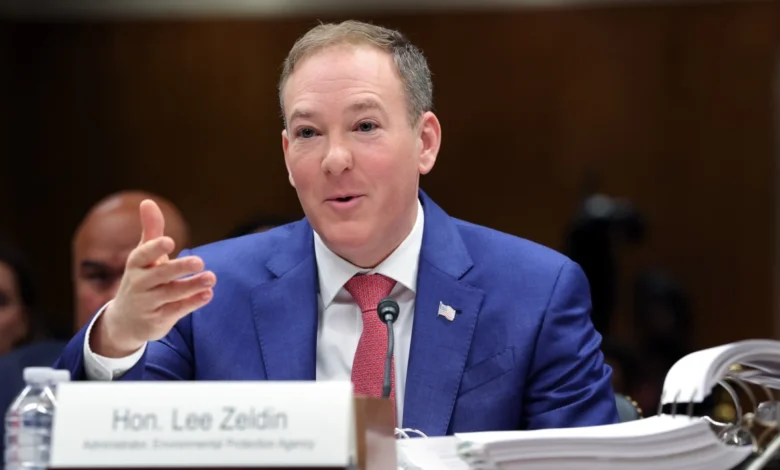
The Environmental Protection Agency (EPA), under the direction of Administrator Lee Zeldin, has officially moved to repeal the Biden administration’s 2024 regulations aimed at curbing carbon emissions from the nation’s coal-fired power plants. This decision represents a significant pivot in federal energy policy, effectively dismantling the primary regulatory framework designed to force a transition toward cleaner energy sources. The move signals a broader Trump administration effort to prioritize domestic energy production, "unleash" fossil fuel capacity, and reduce perceived regulatory burdens on electric utilities.
The repeal comes at a time of profound tension in the American energy sector, driven by a confluence of rising electricity demand, the rapid expansion of artificial intelligence data centers, and an ongoing legal tug-of-war between state and federal authorities. By removing these mandates, the EPA has essentially cleared the path for utilities to extend the operational lifespan of aging coal assets, despite persistent climate concerns.
A Chronology of Regulatory Whiplash
To understand the current repeal, one must examine the volatility of American energy policy over the last two decades. The regulatory landscape has been defined by a cycle of aggressive executive action followed by immediate litigation and legislative or judicial reversal.
- 2015: The Obama administration introduces the Clean Power Plan, which sought to establish the first national limits on carbon dioxide emissions from existing power plants. It faced immediate legal challenges from states and industry groups.
- 2016: The Supreme Court issues an unprecedented stay on the Clean Power Plan, preventing it from taking effect while litigation proceeds.
- 2019: The Trump administration officially repeals the Clean Power Plan, replacing it with the Affordable Clean Energy (ACE) rule, which focused on efficiency improvements at existing plants rather than shifting to renewable energy.
- 2022: In West Virginia v. EPA, the Supreme Court rules that the EPA does not have the authority to force a shift in the national energy grid away from fossil fuels, significantly limiting the agency’s regulatory reach.
- 2024: The Biden administration finalizes new rules that circumvent the West Virginia decision by providing utilities with a choice: retire plants by the mid-2030s or install carbon capture and sequestration (CCS) technology.
- 2026: The Trump administration initiates the formal repeal of the 2024 standards, arguing that such mandates impede economic growth and threaten grid reliability.
The Economic and Environmental Stakes
Coal remains the most carbon-intensive energy source in the global portfolio. Historically, coal-fired power has been responsible for nearly half of all cumulative industrial carbon emissions. Per unit of electricity produced, coal generates significantly more carbon dioxide than natural gas, oil, or nuclear energy.
The Biden-era rule was estimated by the EPA to yield substantial public health benefits. Projections indicated that the regulation would have prevented over 1,200 premature deaths annually by 2035, while simultaneously reducing the frequency of asthma attacks and emergency room visits associated with particulate matter and mercury pollution. Economic models estimated that the rule would have saved approximately $370 billion in long-term health and climate-related damages.
Conversely, the Trump administration maintains that these regulations impose an unfair financial burden on consumers. Administrator Lee Zeldin has repeatedly framed the transition away from coal as a "war on reliable and affordable energy." At a recent energy summit in Texas, Zeldin emphasized that the repeal is intended to stabilize energy prices and bolster American jobs. "Realizing the full potential of American energy means more jobs, lower prices, and a more prosperous America," Zeldin stated.
The Role of Data Centers and the AI Boom
One of the most complex variables in this policy shift is the sudden, unprecedented surge in electricity demand caused by the proliferation of data centers. As companies race to develop and deploy large-scale artificial intelligence models, the demand for high-density computing power has placed an unexpected strain on the national grid.
This demand has fundamentally altered the retirement schedules of coal plants. Utilities that had previously scheduled the decommissioning of coal facilities—such as Southern Company in the American South—are now citing the need for "baseload power" to support AI infrastructure as a justification for keeping these plants operational well into the 2030s.
This trend has complicated the transition to renewables. While wind and solar power continue to grow in terms of total capacity, they often lack the "always-on" reliability required by massive data centers. As a result, the market incentives for keeping coal online have become stronger, even as the plants themselves grow older and more expensive to maintain.
Analytical Perspective: Can Regulation Keep Up?
Experts in environmental economics, such as Kenneth Gillingham of Yale University, note that while the regulatory "stick" has been blunted, the underlying market forces are still pushing against coal. The shale fracking boom of the last decade provided a cheaper alternative to coal in the form of natural gas, which has caused coal’s market share to plummet regardless of federal mandates.
"The reason to have a target is that it sends a clear signal to decision-makers in companies," Gillingham noted. "If you are on the fence between choosing two things, you might as well choose the one that is in line with the target. That has been undermined."
However, Gillingham also suggests that the current administration’s push to save coal may face insurmountable market realities. Many coal plants are reaching the end of their operational lifespans, and the capital investment required to keep them running—especially in the absence of subsidies for carbon capture—may prove to be a losing economic proposition. Even without strict federal carbon regulations, the aging nature of the coal fleet suggests that utilities may eventually phase out the fuel simply because it is no longer cost-competitive compared to natural gas or hybrid renewable-storage systems.
Broader Implications for Global Climate Goals
The EPA’s latest move carries weight far beyond American borders. As the world’s second-largest emitter of greenhouse gases, the United States’ domestic policy serves as a bellwether for international climate negotiations. The decision to remove federal carbon constraints on the power sector complicates the position of the U.S. in global forums, where other nations are often pressured to commit to accelerated decarbonization.
Furthermore, the legality of the EPA’s current approach remains under scrutiny. While the administration has successfully used the "uncertainty of climate science" as a justification for repealing vehicle emissions standards, this logic faces significant hurdles in court, where scientific consensus regarding the impact of carbon emissions is well-documented.
Environmental advocacy groups have already signaled their intent to challenge the repeal in federal court. These organizations argue that the EPA is neglecting its statutory duty under the Clean Air Act to regulate pollutants that endanger public health. As the legal battles commence, the nation’s power sector remains in a state of suspended animation, caught between the shifting political winds of Washington and the irreversible, physical demands of a changing global climate.
Ultimately, the trajectory of the U.S. energy grid will likely be decided by a blend of regulatory intent, judicial intervention, and the harsh economic realities of an aging fleet. While the Trump administration seeks to maximize the use of legacy assets, the underlying trend of the power sector remains one of transition—a process that is now being slowed by policy, but not necessarily permanently halted by it. The challenge for the next administration, regardless of party, will be to navigate a power grid that is simultaneously expected to be cheaper, more reliable, and significantly less carbon-intensive.
Related posts: