Library of Congress Lavine Ken Burns Prize for Film Crowns Once Upon a Time in Harlem as Its Eighth Annual Winner

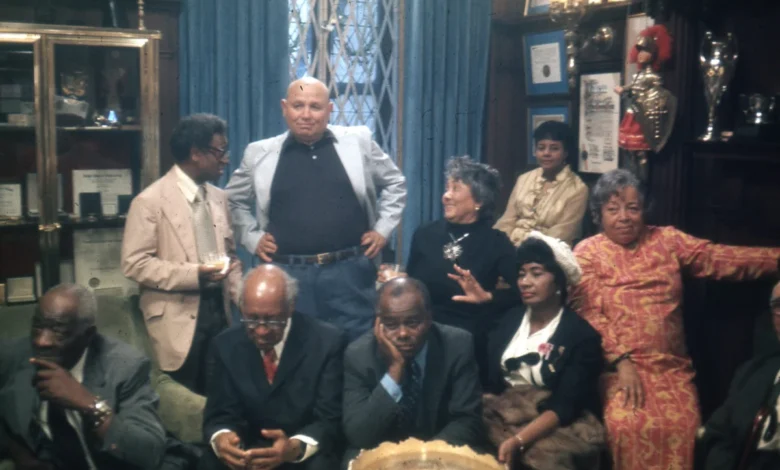
The cultural legacy of the Harlem Renaissance has received a monumental archival revival, capturing the attention of the nation’s top cultural institutions. Once Upon a Time in Harlem, an Oscar-contending documentary directed by David Greaves using pioneering footage shot by his late father, William Greaves, has officially been awarded the eighth annual Library of Congress Lavine/Ken Burns Prize for Film.
Announced by a prestigious coalition consisting of the Library of Congress, The Better Angels Society, documentary icon Ken Burns, and the Crimson Lion/Lavine Family Foundation, the top honor carries a $200,000 cash award. This financial backing cements its status as the most lucrative non-fiction film prize in the United States, designed specifically to champion exceptional filmmaking rooted in American history.
The crowning achievement places a national spotlight on a half-century-old cinematic treasure. Produced by Liani Greaves—the granddaughter of William Greaves—the documentary centers on a legendary, once-in-a-lifetime gathering held in 1972. At the Harlem townhouse of musical giant Duke Ellington, surviving architects, writers, and cultural icons of the Harlem Renaissance convened. For many of these luminaries, it was the first time they had laid eyes on one another in half a century.
A Historic Gathering and a Labor of Love
The origins of Once Upon a Time in Harlem stretch back over fifty years, rooted in the visionary drive of filmmaker and documentarian William Greaves. Recognizing the fading physical presence of the generation that fundamentally redefined Black artistic, literary, and intellectual life in the 1920s, Greaves took action. Using 16mm cameras, he documented an extraordinary assembly of creative titans, capturing interactions that traversed personal nostalgia, intellectual debate, and deep philosophical queries regarding how culture outlives its creators.
Among the luminaries caught on film by Greaves’ cameras were foundational artists and writers such as Aaron Douglas, Romare Bearden, Arna Bontemps, Richard Bruce Nugent, James Van Der Zee, and Ida Mae Cullen, the widow of celebrated poet Countee Cullen.

Decades later, the extensive raw footage remained largely unedited until William’s son, David Greaves, took up the mantle. Alongside producer Anne de Mare and his daughter Liani, David painstakingly restored, curated, and completed the film. The resulting documentary serves as a living, breathing historical archive, preserving spontaneous debates and profound reflections from individuals who directly shaped the American cultural landscape.
The project’s journey to completion culminated earlier this year with its premiere at the Sundance Film Festival, where it immediately captured the attention of critics, historians, and festival audiences alike before embarking on its current Oscar-contending run.
Praise from the National Jury and Ken Burns
The national jury, tasked with evaluating over a thousand submissions for this year’s prize, lauded Once Upon a Time in Harlem as a seminal work destined to influence historical scholarship and film studies for decades. Jurors emphasized the critical importance of the Harlem Renaissance in shaping the American narrative, praising the documentary for granting modern viewers a literal window into history.
Ken Burns, whose namesake is attached to the award alongside the Library of Congress and the Lavine family, shared his enthusiastic endorsement of the film.
"I was won over from the moment the camera started rolling," Burns stated. "It’s literally the best party I have ever been to, a festive time travel through the memory of these extraordinary individuals. Once Upon a Time in Harlem is a celebration of the Harlem Renaissance, but just as important—and riveting—it’s an intimate conversation about the meaning of art and life and how we share ideas across generations."
Acting Librarian of Congress Robert R. Newlen echoed these sentiments during interviews at the Camden International Film Festival in Maine, where the film screened to wide acclaim.

"Once Upon a Time in Harlem is a revelation," Newlen observed. "It reintroduces us to a range of personalities and perspectives and invites us to participate. It embodies how compelling archival footage can be—not only does it make this history feel alive in the present, but it is a great deal of fun to watch."
Director David Greaves and producer Liani Greaves expressed profound gratitude upon receiving news of the victory. Speaking with press representatives, David noted the staggering scale of the competition, observing that beating out more than a thousand other applicants made the victory all the more surreal. He expressed certainty that his late father and stepmother, Louise Greaves, would have been deeply moved by the recognition. Liani Greaves emphasized the team’s excitement to share the deeply personal family project with a broader national audience.
Celebrating the Runner-Up: Romare Bearden’s Legacy
In a fitting thematic coincidence, the runner-up for the eighth annual prize also focuses directly on the Harlem Renaissance. Romare Bearden: A Life in Collage, directed by Deborah Riley Draper, secured the $50,000 runner-up cash prize.
The documentary highlights the life and work of Romare Bearden, one of the twentieth century’s most innovative visual artists, who appears among the gathered luminaries in Greaves’ winning film. Utilizing Bearden’s own words, archival photography, personal art pieces, and historical film footage, Draper’s work reintroduces a towering yet historically underrecognized modernist painter, athlete, and civil rights activist.
The national jury praised the project for illuminating Bearden’s artistic philosophy and personal practice. Acting Librarian Robert R. Newlen remarked that the film successfully demonstrates how deeply integrated Bearden’s artistic practice was into his everyday existence, showcasing a life defined by extraordinary vision and perseverance.
A Legacy of Support for American Nonfiction
The winners and finalists will be officially honored during a high-profile awards ceremony in New York City on October 22, featuring appearances by Ken Burns and leaders from the Library of Congress.

Since its establishment in 2019, the Library of Congress Lavine/Ken Burns Prize for Film has distributed an impressive $2.6 million in total financial support to documentary filmmakers dedicated to chronicling the intricate tapestry of United States history. Past recipients include critically acclaimed works such as Flannery, Hold Your Fire, Gradually, Then Suddenly: The Bankruptcy of Detroit, Bella! This Woman’s Place Is in the House, Philly on Fire, Drop Dead City, Cartoon Kings, and American Pachuco: The Legend Of Luis Valdez.
Recognizing 2026 Finalists
In addition to the grand prize winner and runner-up, the Library of Congress announced four 2026 finalists, each receiving a $25,000 cash prize to assist with their respective historical documentary projects:
- The Animated Mind of Oliver Sacks (directed by Dempsey Rice): A deep dive into the early professional and private internal conflicts of the renowned neurologist, utilizing immersive animation and newly unearthed personal recordings.
- Barrio Television (directed by Christina DiPasquale): An exploration of 1970s New York where Puerto Rican activists disrupted traditional media formats to launch Realidades, the United States’ first bilingual Latino television series.
- The Day Freedom Died (directed by Joseph Dorman and Kelly Williams): A harrowing examination of the 1873 Colfax Massacre in Louisiana—the single bloodiest day of racial violence during the Reconstruction era—and the subsequent judicial rulings that crippled federal civil rights protections.
- Zenón and the Rebel Boats (directed by Juan C. Dávila Santiago): The untold history of Carlos “Taso” Zenón, a Puerto Rican fisherman who spearheaded the grassroots resistance against the U.S. Navy’s decades-long military occupation of Vieques.
Through substantial financial endowments and institutional backing, the Library of Congress Lavine/Ken Burns Prize continues to ensure that vital, underrepresented chapters of American history are thoroughly researched, beautifully restored, and preserved for future generations.
Related posts: