Mohammad Sharifullah Sentenced to 20 Years for ISIS-K Material Support Following Kabul Airport Attack

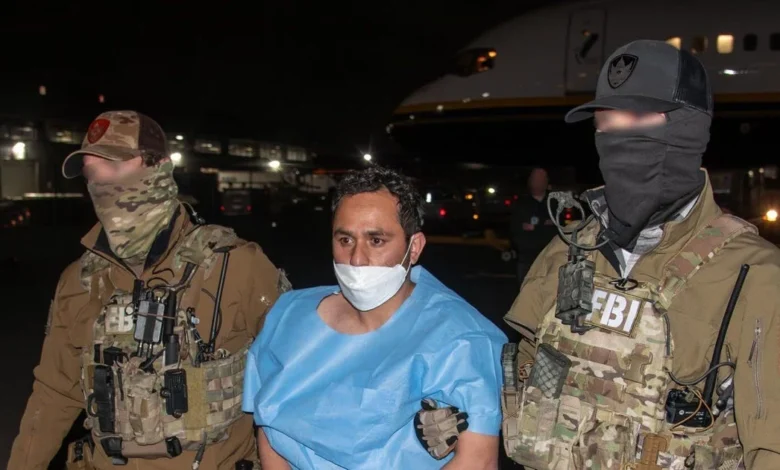
A federal judge in Virginia sentenced 28-year-old Mohammad Sharifullah to 20 years in federal prison on Wednesday, marking the culmination of a high-profile terrorism prosecution that has spanned years of international intelligence cooperation and legal maneuvering. Sharifullah, an operative for the Islamic State-Khorasan (ISIS-K), was convicted in April on charges of providing material support to a designated foreign terrorist organization. While the sentencing brings a measure of closure to the families of those lost during the chaotic final days of the American military presence in Afghanistan, the legal outcome remains a focal point of debate regarding the evidentiary challenges of prosecuting international terrorism.
The sentencing, handed down by U.S. District Judge Anthony Trenga, represents the statutory maximum for the single count of material support. Although prosecutors had sought the maximum term, the case was notable for what it did not conclude: a federal jury, while convinced of Sharifullah’s role in facilitating ISIS-K activities, could not reach a unanimous verdict on whether his actions were directly responsible for the deaths of the 13 U.S. service members and roughly 160 Afghan civilians killed in the August 26, 2021, suicide bombing at Abbey Gate.
The Abbey Gate Tragedy: Context and Chronology
To understand the weight of Wednesday’s proceedings, one must look back at the geopolitical volatility of late August 2021. As the United States and its coalition partners worked to evacuate thousands of citizens and at-risk Afghans from Hamid Karzai International Airport, the security perimeter became a target for ISIS-K.
The chronology of the attack, which remains a defining moment in the modern history of the U.S. military, is as follows:
- August 15, 2021: The Taliban captures Kabul, prompting an emergency evacuation operation.
- August 26, 2021: An ISIS-K suicide bomber, identified as Abdul Rahman al-Logari, detonates an improvised explosive device (IED) at Abbey Gate, a primary access point for the airport.
- March 2025: Following a joint operation between Pakistani intelligence and the CIA, Mohammad Sharifullah is captured near the Afghanistan-Pakistan border.
- April 2026: A federal jury in Virginia convicts Sharifullah of material support to ISIS-K, though they deadlock on charges linking him directly to the casualties of the bombing.
- September 16, 2026: Judge Trenga sentences Sharifullah to 20 years in federal prison.
The Trial and the Question of Accountability
The prosecution of Sharifullah relied heavily on internal communications and digital surveillance, alongside statements made by the defendant during extensive FBI debriefings following his extradition to the United States. Federal prosecutors characterized Sharifullah as a dedicated operative whose hatred for the United States fueled a decade-long career of logistical support for terrorism.
According to evidence presented by the Department of Justice, Sharifullah did not simply operate on the fringes of the organization. Instead, he acted as a facilitator, conducting reconnaissance and scouting routes for various attacks. In the case of the Kabul airport bombing, prosecutors alleged that Sharifullah was tasked with ensuring the safety of the route for the bomber, al-Logari. By surveilling the area for Taliban checkpoints and confirming that the path was clear, the government argued that Sharifullah was an essential cog in the machinery of the massacre.
However, the defense mounted a vigorous challenge to this narrative. Attorneys for Sharifullah argued that their client was not a decision-making leader within ISIS-K, but rather a low-level conduit for information. A central pillar of their defense strategy was the claim that Sharifullah’s statements to FBI agents were coerced or fabricated out of fear. The defense maintained that after his detention by Pakistani authorities—who have faced international scrutiny regarding the treatment of detainees—Sharifullah likely provided information that he believed his captors wanted to hear to ensure his own survival. This created a significant legal hurdle: without direct, corroborating evidence linking him to the final act of detonation, the jury remained divided on the more severe charges.
Impact on Military Families
The courtroom served as a theater for profound grief during the sentencing hearing. Parents of the fallen service members were granted the opportunity to deliver victim impact statements, providing a human dimension to the legal proceedings.
Mark Schmitz, father of Marine Corps Lance Cpl. Jared Schmitz, offered a haunting testimony, demanding that Sharifullah look at him as he recounted his son’s character and the permanent void left by his death. "They may have taken his life, but they’ll never take his legacy," Schmitz told the court. "A bomb killed my son. It did not kill what he stood for."
Similarly, Paula Knauss-Selph, the mother of Army Staff Sgt. Ryan Knauss, addressed the court with a somber reflection on the inadequacy of the law to heal the wounds caused by the loss of a child. Her statement, that "no justice will ever be enough to mend my broken heart," echoed the sentiments of many who feel that the sentencing of a single operative—even if he was a key facilitator—cannot compensate for the tragedy of the Kabul withdrawal.
Broader Implications for Global Counter-Terrorism
The Sharifullah case is being viewed by security analysts as a bellwether for the ongoing struggle against ISIS-K, which has proven resilient despite significant leadership losses. The Justice Department’s sentencing memo highlighted that Sharifullah’s career involved more than just the Abbey Gate attack; he was linked to a 2016 suicide bombing at the Canadian embassy in Kabul and, notably, the March 2024 assault on a concert hall in Moscow that resulted in approximately 140 fatalities.
The implications of this trial are twofold. First, it highlights the success of international intelligence partnerships. The ability of the U.S. government to track, capture, and extradite a suspect from the rugged borderlands of Pakistan demonstrates a persistent capability to pursue those who target Americans abroad, regardless of the time elapsed.
Second, the case underscores the challenges of the "material support" statute in the context of decentralized, transnational terror networks. Because ISIS-K operates through loose cells and logistical facilitators, proving specific intent for individual mass-casualty events is notoriously difficult. By convicting Sharifullah on the broader charge of material support, the government ensured he would face a lengthy prison term, yet the jury’s inability to link him directly to the Abbey Gate deaths illustrates the high bar of proof required in American courts for terrorism-related crimes.
Conclusion
As Mohammad Sharifullah begins his 20-year sentence, the legal chapter of the Abbey Gate bombing remains complex. For the families of the 13 U.S. service members, the proceedings have provided a venue to honor their children and confront the individual they hold responsible for their pain. For the U.S. government, the conviction serves as a demonstration of resolve in the fight against a terrorist entity that has repeatedly struck at both American and international targets. Nevertheless, the divide between the prosecution’s theory of his direct involvement and the jury’s final verdict highlights the persistent difficulty in achieving absolute legal clarity when dealing with the murky, clandestine operations of groups like ISIS-K. The sentence is final, but the shadow cast by the events of August 2021 remains, as the global community continues to grapple with the aftermath of the Afghan collapse and the enduring threat posed by its militant factions.