Rare 11th-Century Russian Medusa Pendant Reveals Medieval Clash of Faith and Superstition

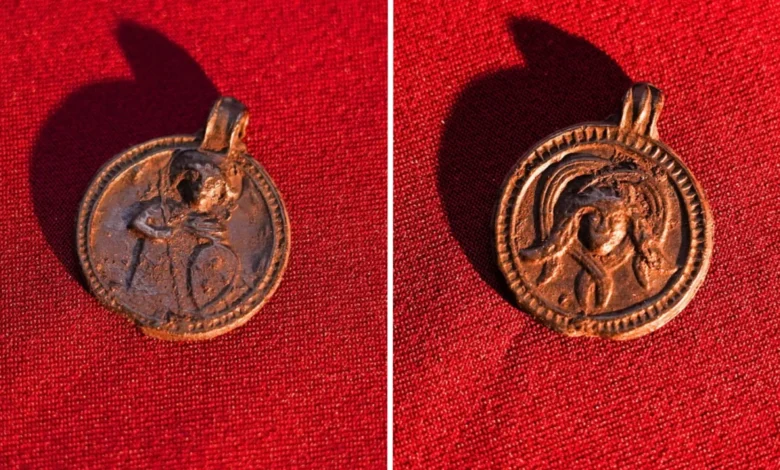
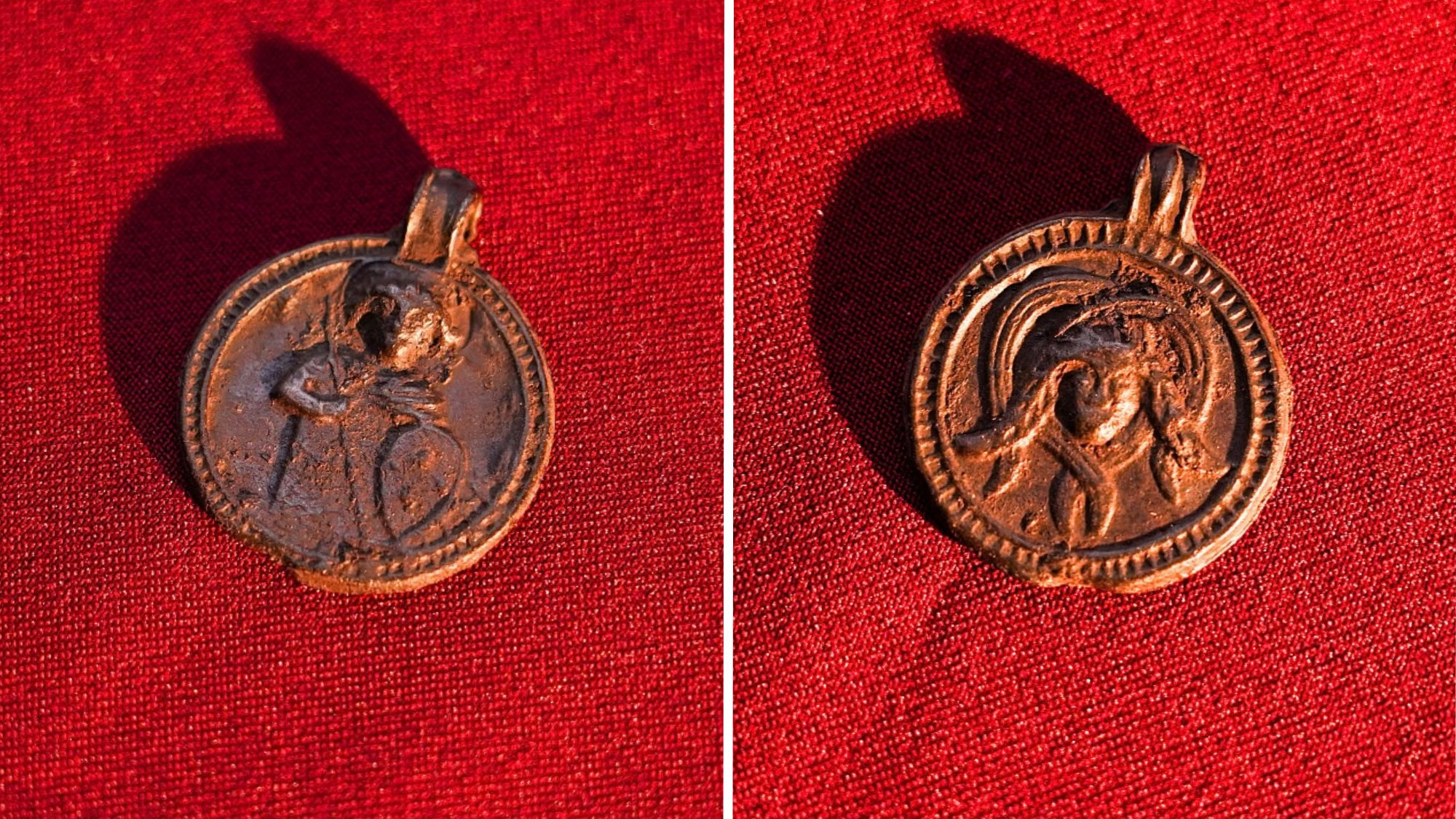
Archaeologists working in the historic region of Staraya, located approximately 400 miles southeast of St. Petersburg, have unearthed a rare and culturally significant 11th-century copper-alloy medallion that vividly illustrates the complex blending of medieval Christianity and ancient Greco-Roman mythology in early Russia. Recovered from the remnants of an ancient urban estate, the small double-sided pendant features an image widely believed to depict the warrior saint Theodore Stratelates on the front, juxtaposed with the serpentine, horrifying visage of the mythological Gorgon Medusa on the reverse.
This artifact belongs to a rare class of protective amulets known historically as Zmeeviki, or "coil images." These unique objects represent a fascinating historical anomaly where canonical Christian iconography was intentionally paired with pagan serpent symbolism. While similar artifacts have occasionally surfaced across Eastern Europe, this latest discovery stands out as potentially the oldest of its kind found in the region, offering unprecedented insight into the religious transitions, syncretism, and daily psychological realities of medieval East Slavic populations.
Main Facts of the Discovery
The excavation site, situated in the ancient town of Staraya—historically significant as a major hub of trade and early urbanization—yielded the medallion within the stratigraphic layers of a ruined medieval estate. According to preliminary metallurgical and stylistic analyses conducted by researchers at Novgorod State University, the object is fashioned from a copper alloy.
The front face of the pendant portrays a heavily armed figure wielding a spear and shield, a classic depiction of a warrior saint. Archaeologists have strongly linked this imagery to Theodore Stratelates, a revered third-century Roman military martyr within the Eastern Orthodox Church who famously slew a legendary serpent in Christian hagiography.
Conversely, the flip side of the pendant displays the unmistakable coiling serpents of Medusa, the Gorgon of Greek mythology whose gaze could turn onlookers to stone. Rather than representing a literal devotion to classical Greek pantheons, however, researchers emphasize that the gorgon served a symbolic purpose. In the worldview of medieval folk religion, the image functioned as a generalized personification of evil, darkness, and disease, effectively neutralized by the protective presence of the Christian saint on the obverse.
Chronology and Historical Context
To fully understand the weight of this discovery, historians must look backward through the chronology of early Russian Christianization. Christianity was officially adopted by Kievan Rus in 988 CE under the decree of Prince Vladimir the Great. However, the sweeping conversion of the political elite did not immediately translate into the total eradication of indigenous folk beliefs, pagan rituals, and pre-Christian superstitions among the broader populace.
During the 11th century—the era to which this newly discovered medallion is dated—early Russian society existed in a profound state of religious transition. While churches were being built and Christian liturgy was taking root, older protective customs persisted.
Prior to this find, archaeologists had recovered only four other Zmeeviki artifacts from the Staraya excavations, but those specimens consistently dated to a much later period, spanning the 12th through the 14th centuries. By pushing the local timeline back into the 11th century, the latest medallion establishes that these syncretic practices were active almost immediately following the formal Christianization of the region. Furthermore, it highlights the rapid expansion of cultural and commercial ties between early Russian principalities and the Byzantine Empire, through which such classical motifs and artistic traditions filtered northward.
Supporting Data and Societal Implications
The physical context of the find provides a clear window into the socio-economic status of the pendant’s original owner. Recovered from the ruins of a substantial urban estate, the copper-alloy construction of the amulet points directly to a middle-class resident.
In medieval Staraya, stark economic stratifications governed material culture. The wealthiest elites—such as high-ranking boyars, prosperous merchants, and high-status clergy—typically adorned themselves with jewelry and devotional items crafted from precious metals like gold and silver. Conversely, the peasantry and lower working classes often relied on inexpensive materials such as bone, wood, or low-grade base metals.
The middle tier of urban society, to which the estate owner belonged, could afford durable base-metal alloys crafted by skilled artisans. Intriguingly, previous archaeological discoveries of nearby metalworking workshops suggest that this specific talisman may have been forged locally, reflecting a domestic market for protective amulets that catered to the spiritual anxieties of the town’s growing merchant and artisanal class.
Official Responses and Expert Analysis
Academic authorities have underscored the theoretical and theological implications of mixing orthodox Christian icons with pagan mythological threats. Sergei Toropov, an archaeologist at Novgorod State University who led the investigation and subsequent public announcements, addressed the apparent contradictions inherent in the artifact.
"Most likely, this is not a specific mythological creature, but a collective image of dark forces," Toropov explained in an official institutional profile detailing the excavation. "Together with other finds, this pendant indicates that already in the 11th century there was a Christian community in early Russia, and cultural ties with Byzantium were also developed."
Toropov further elaborated on the psychological mindset of the medieval wearers, emphasizing that dogmatic purity was frequently secondary to practical spiritual security. "The main feature of the coil is a combination of images that are incompatible, from the point of view of strict dogma," he noted.
Historians outside the immediate excavation team have echoed these sentiments, noting that Zmeeviki amulets acted as spiritual insurance policies. For a medieval inhabitant facing the constant perils of famine, plague, infant mortality, and political instability, relying on orthodox prayer alone may not have felt sufficient. By welding the protective power of a warrior saint to the apotropaic ward of a terrifying pagan monster, the wearer sought maximum supernatural defense against an unpredictable world.
Broader Impact on Medieval Studies
The discovery of the Staraya medallion enriches the broader academic discourse surrounding religious syncretism in medieval Europe and Eurasia. Far from representing a neat, top-down replacement of old beliefs with new dogmas, the archaeological record consistently demonstrates that religious conversion was a long, negotiated process characterized by cultural adaptation.
As researchers continue to clean, conserve, and analyze the Stratelates-Medusa pendant, the artifact will serve as a vital cornerstone for future exhibitions and academic studies concerning the material culture of early Russia. It stands as a tangible testament to a time when ancient myths and medieval faiths collided, fused, and endured within the daily lives of everyday people.