Manchester United crash out of the Carabao Cup in historic fashion as Brighton produce a stunning second-half turnaround at Old Trafford.

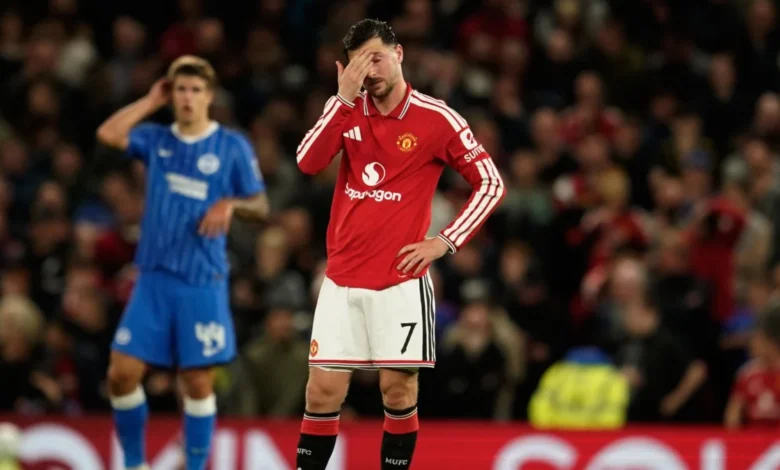
The atmosphere at Old Trafford shifted from expectation to disbelief on Tuesday evening as Manchester United squandered a commanding two-goal lead to suffer a 3-2 defeat against Brighton & Hove Albion, marking an early exit from the Carabao Cup. The result represents a significant blow to the club’s seasonal ambitions and places immense pressure on Michael Carrick’s managerial tenure, as the team failed to navigate the first hurdle of the competition for the second consecutive season.
This defeat carries historical weight, shattering a long-standing statistical trend at the Theatre of Dreams. Not since 1974 had Manchester United lost a competitive fixture at home after establishing a two-goal cushion. Having secured victory in 143 of their previous 145 instances when leading by two goals at Old Trafford, the collapse serves as a sobering indictment of the current defensive fragility and lack of game management within the squad.
A Dream Start Turns Into a Nightmare
The match began with an intensity that suggested United had successfully recalibrated following their recent frustrations in the Manchester derby. Within the first ten minutes, the home side appeared to have seized complete control. Teenager Shea Lacey, making his full debut, announced his arrival on the senior stage with a display of composure beyond his years, skipping past two Brighton defenders in the 8th minute before slotting the ball into the near post.
The momentum was instantaneous. Barely forty-three seconds after the restart, United doubled their advantage. Following an initial effort from Marcus Rashford that was parried by Brighton goalkeeper Jason Steele, Mason Mount reacted quickest to capitalize on the loose ball, firing home to make it 2-0. At that juncture, with the crowd energized and the visitors appearing shell-shocked, the prospect of a comfortable evening seemed a formality.
However, the rapid-fire goals appeared to trigger a sense of complacency. United’s intensity dissipated, and for long stretches of the remainder of the first half, they ceded control of the midfield to a Brighton side that had arrived in Manchester having made six changes to their starting XI.
The Turning Point: Brighton’s Resurgence
Brighton’s tactical discipline began to pay dividends as the first half drew to a close. Despite United’s lead, the visitors had created opportunities, most notably when Malick Yalcouye curled a one-on-one effort just wide of the post in the 36th minute.
The breakthrough for the Seagulls arrived in the first minute of stoppage time. A long ball into the United penalty area created a moment of hesitation, and goalkeeper Karl Darlow’s decision-making was brought into question as he failed to command his area. Charalampos Kostoulas capitalized on the uncertainty, slotting the ball home to reduce the deficit. While United players vociferously protested, claiming Benjamin Sesko had been fouled in the buildup, the goal stood, and the mood at Old Trafford darkened as the teams headed into the tunnel for the interval.
The second half proved to be a masterclass in opportunistic football from Brighton, while simultaneously exposing the tactical confusion within the United ranks. The visitors continued to press, and the equalizer arrived in the 65th minute. Following a scramble in the box where Sesko lost a 50/50 challenge, the ball fell kindly to Pascal Gross, who finished with clinical precision from close range.
Four minutes later, the turnaround was complete. Substitute Diego Gomez orchestrated a driving run through the heart of the United defense, eventually finding Maxim De Cuyper, who finished decisively to put Brighton ahead 3-2. The silence that descended upon Old Trafford was a stark contrast to the opening ten minutes of the match, as the home supporters struggled to process the rapid evaporation of their team’s lead.
A Late Rally and Failed Opportunities
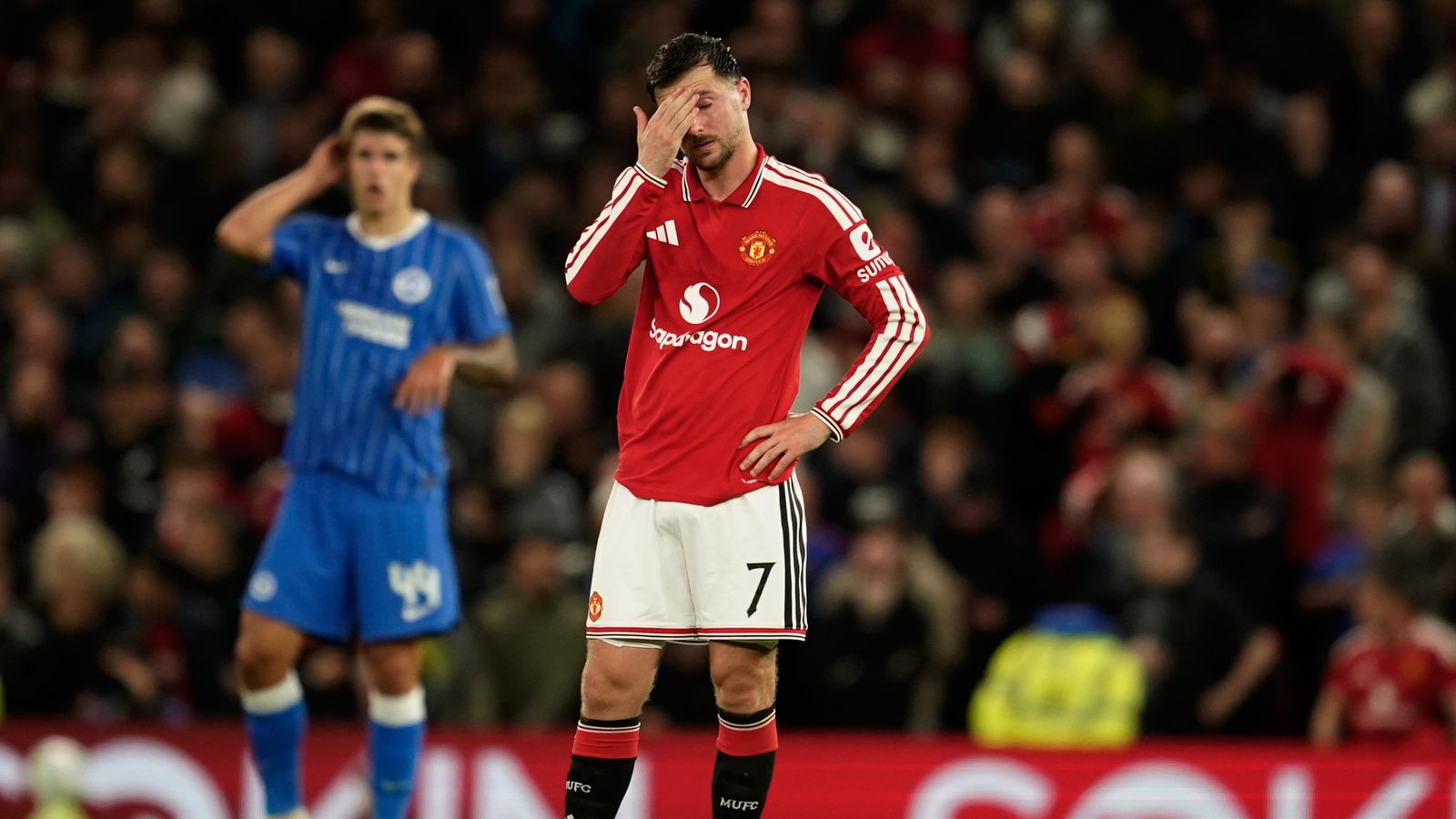
In a desperate attempt to salvage the tie, manager Michael Carrick introduced Bruno Fernandes as an emergency substitute, hoping the playmaker could provide the spark needed to force an equalizer. The tactical shift created a brief period of urgency, and Marcus Rashford found himself through on goal in the 76th minute—a golden opportunity to level the score. However, his near-post effort was kept out by a sharp save from Jason Steele, an intervention that ultimately preserved Brighton’s lead.
Brighton remained a constant threat on the counter-attack as United committed men forward. In the 84th minute, the visitors missed two chances to put the game beyond doubt; first, a goal-bound effort from Kostoulas was cleared off the line by Leny Yoro, and shortly thereafter, Darlow was called into action again to deny Gomez. Despite these late scares, Brighton held firm, effectively managing the closing stages to secure a well-deserved victory.
Statistical Breakdown and Contextual Analysis
The match serves as a microcosm of the challenges faced by United throughout the early stages of the season. A key metric highlighting the decline in United’s performance is the prolonged period of offensive inactivity following their second goal. Between the 10th minute and the 76th minute, United failed to register a single shot on target, a drought that invited pressure and allowed Brighton to regain their composure and confidence.
Furthermore, the defensive lapses—specifically regarding the individual errors leading to the Brighton goals—raise questions about the consistency of the backline. When compared to the previous season’s early exit at the hands of Grimsby, this performance suggests that the underlying issues in game management remain unresolved.
For Brighton, the result is a testament to the club’s depth and the effectiveness of their scouting and development structures. Despite making six changes, the team’s tactical identity remained intact, allowing substitutes like De Cuyper and Gomez to make decisive impacts. The victory reinforces Brighton’s reputation as a team capable of competing at the highest levels of the domestic cup competitions, regardless of the venue.
Implications for the Season Ahead
For Michael Carrick, the exit from the Carabao Cup is a significant setback. The competition represents one of the most accessible routes to silverware for a club of Manchester United’s stature, and an early exit in two consecutive years will be viewed with concern by the board and the fanbase alike.
The immediate implications for the squad are twofold: a heavier focus on league consistency and the necessity of addressing the mental fatigue that seems to plague the side when holding a lead. Analysts note that the team’s tendency to "sleepwalk" after gaining an advantage is a systemic issue that requires immediate correction. With upcoming fixtures in the Premier League and European competition, the margin for error is shrinking.
The defeat also highlights the reliance on key individuals. When the starting XI loses momentum, the bench has frequently struggled to provide the necessary tactical shift to reclaim control of a game. While the introduction of Fernandes provided some impetus, it arrived too late to undo the damage of the previous hour of play.
Conclusion
As the dust settles at Old Trafford, the narrative surrounding Manchester United remains one of transition and instability. While the emergence of talents like Shea Lacey provides a glimmer of long-term promise, the immediate reality is a club struggling to maintain performance levels across the full 90 minutes.
Brighton advances to the next round with their reputation bolstered, having showcased resilience and tactical superiority in a hostile environment. For United, the focus must now pivot entirely to domestic league performance, with the bitter taste of a historic home collapse lingering as a reminder of the work that remains to be done. The coming weeks will be critical for Carrick, as the club seeks to stabilize its campaign and prevent this cup exit from becoming a catalyst for further decline.
Related posts: