The Economic Reality Behind the Proposed Credit Card Competition Act and the $1,200 Savings Claim


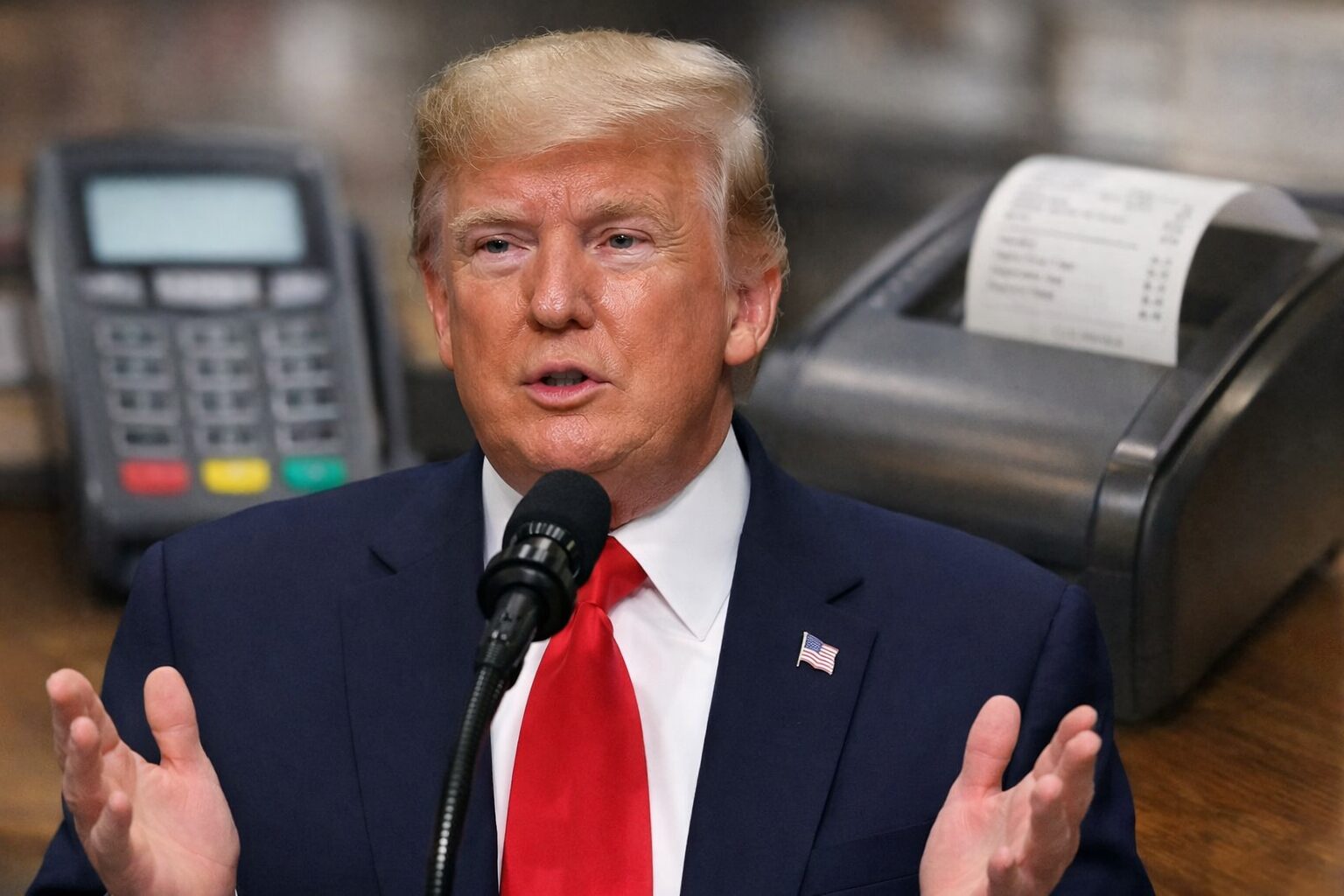
During a recent appearance at the Republican midterm convention, President Trump outlined a vision for financial reform, specifically targeting credit card swipe fees, which he characterized as "out-of-control." The President claimed that legislative intervention in this sector would save the average American family approximately $1,200 annually. He further argued that American consumers are currently subjected to fee structures significantly higher than those seen in international markets. However, a detailed analysis of the legislative framework being proposed—the Credit Card Competition Act—suggests a significant disconnect between these campaign promises and the actual economic mechanisms of the bill.
Legislative Background and Context
The Credit Card Competition Act, championed by Senator Dick Durbin (D-IL) and Senator Roger Marshall (R-KS), has been reintroduced with a new wave of political backing. The bill aims to mandate that financial institutions with more than $100 billion in assets enable at least two unaffiliated networks on their credit cards. Crucially, this would require banks to include a network other than the dominant duopoly of Visa or Mastercard. The legislation grants merchants the authority to select which network routes a given transaction takes, while specifically exempting American Express and Discover from these requirements.
The legislative push arrives after years of lobbying by merchant trade groups, most notably the National Retail Federation (NRF), which has long contended that the "interchange fees" paid by retailers are passed on to consumers as hidden costs in the price of goods. Supporters of the bill argue that by injecting competition into the routing of payments, the market will naturally force costs down, leading to lower prices at the register for everyday goods.
The $1,200 Discrepancy
The $1,200 figure touted by the President and echoed by Senator Marshall appears to be derived from industry lobbying data rather than an independent economic projection of the bill’s impact. The NRF’s internal estimates, which frequently serve as the basis for these claims, suggest that swipe fees are a major component of retail pricing. However, broader data paints a more complex picture.
If one looks at the total nationwide savings estimated by proponents—roughly $15 billion annually—and divides that across the millions of U.S. households, the actual per-family savings, even assuming 100% of the cost reduction is passed from merchant to consumer, is closer to $174. Furthermore, there is no language within the proposed legislation that legally requires businesses to lower their retail prices once their transaction costs are reduced. Historical evidence from international jurisdictions that have implemented similar interchange caps, such as the European Union and Australia, indicates that these savings are typically absorbed into merchant margins rather than being reflected in lower prices for consumers.
Chronology of the Interchange Debate
The controversy over swipe fees is not a new development in the financial sector.
- 2010: The Durbin Amendment was passed as part of the Dodd-Frank Wall Street Reform and Consumer Protection Act, which capped debit card swipe fees.
- 2023-2024: Retailer advocacy groups ramped up efforts to expand these caps to credit cards, citing the increasing prevalence of digital transactions.
- 2025: Several versions of the Credit Card Competition Act were introduced, garnering support from a bipartisan coalition of lawmakers concerned with the influence of the payment network duopoly.
- 2026: The issue moved to the forefront of the midterm election cycle, with high-profile endorsements and promises of direct financial relief for families.
The Mechanics of the Payment Ecosystem
To understand the implications of the bill, it is necessary to examine the current value proposition of credit cards. Today, payment networks compete for issuing-bank relationships by offering a suite of services, including advanced fraud detection, technological support, and marketing incentives.
A report by the New York Federal Reserve, which analyzed approximately 550 million credit card accounts—representing roughly 90% of the U.S. market—revealed that on average, issuers receive 1.82% of purchase volume in fees. Of that amount, approximately 1.57% is spent on rewards programs, purchase protections, and customer service initiatives. The remaining margin covers the cost of issuing, risk management, and administrative overhead.
Critics of the proposed legislation argue that if this revenue stream is "crammed down" by government mandate, the first programs to be affected will be consumer rewards. Because the bill shifts the incentive structure—forcing networks to compete for merchant adoption rather than consumer utility—the value currently returned to the cardholder is at risk of being eliminated or significantly capped.

Broader Economic Implications
The potential consequences of this legislation extend beyond credit card points. Economic models suggest several areas of concern:
- Credit Accessibility: By reducing the profitability of credit card issuing, banks may become more selective regarding their customer base. This could lead to a contraction in credit availability, particularly for marginal borrowers or those with thin credit histories. These individuals may then be forced to utilize more expensive, high-interest financial alternatives, such as payday lenders, to manage their expenses.
- Impact on the Travel and Hospitality Sector: Airline profitability is deeply intertwined with credit card partnerships. Major carriers often utilize these revenues to expand flight routes and lower ticket prices, as seen in the aggressive expansion of flight offerings linked to co-branded credit card agreements. A reduction in interchange revenue could lead to fewer flight options and higher base airfares as airlines look to offset the lost subsidy.
- Cross-Subsidization Myths: While proponents argue that swipe fees act as a tax on the poor to fund rewards for the wealthy, the reality is more nuanced. Many low-income consumers utilize cards for daily necessities. Moreover, cash-heavy transactions are not inherently cheaper for merchants; they involve significant costs related to security, insurance, employee theft, and the administrative burden of handling physical currency.
Official Responses and Industry Stance
Financial institutions and major payment networks have characterized the bill as a government overreach that threatens the security and innovation of the U.S. payment system. Spokespeople for the banking industry argue that the current market-driven system ensures that security investments—such as EMV chips and real-time fraud monitoring—are adequately funded.
Conversely, the National Retail Federation maintains that the current "duopoly" is anti-competitive and that the legislation is a necessary step to restore fairness in the marketplace. Their stance is that the reduction in interchange fees will provide businesses with the capital to invest in operations and keep retail prices stable in an inflationary environment.
Conclusion: The Trade-Off
The debate surrounding the Credit Card Competition Act highlights a fundamental disagreement over the role of government in private payment markets. While the promise of $1,200 in annual savings is a powerful political tool, it is not supported by current legislative text or empirical evidence from similar regulatory experiments globally.
If the bill passes, the most likely outcome is a transfer of value from the consumer to the merchant. While this may improve the bottom lines of large retail chains, it is unlikely to result in a meaningful reduction in the cost of goods for the average family. Instead, the American consumer is likely to face a landscape of diminished rewards, higher annual card fees, and a potential reduction in the availability of credit. As policymakers continue to weigh these options, the core issue remains whether the goal of the legislation is to lower consumer prices or simply to redistribute the economics of a complex, global payment network to favor the retail sector.