Public Sentiment Clashes with Political Action as Polls Reveal Strong Support for Utah National Monuments Amidst Drastic Reductions

The recent decision by President Donald Trump to drastically reduce the size of two major national monuments in Utah has sparked a significant disconnect between the state’s political leadership and the actual preferences of its residents. According to a series of comprehensive polls conducted over the last several years, a clear majority of Utahns supported maintaining the original boundaries of Bears Ears and Grand Staircase-Escalante National Monuments. These findings stand in direct opposition to the narrative put forward by Utah’s Republican leadership, who have characterized the executive orders as a victory for local interests and a correction of federal overreach.
The executive orders, signed during a high-profile ceremony in the Oval Office, slashed the protected areas of the two monuments by approximately 90 percent. Bears Ears National Monument, which previously spanned roughly 1.35 million acres of culturally and ecologically significant land, was reduced to a mere 121,000 acres. Similarly, Grand Staircase-Escalante, which had grown to nearly 1.9 million acres through various legislative and executive adjustments, was stripped down to just over 181,500 acres. The administration justified these moves by citing the need to "better align the use of these public lands with the public interest," specifically pointing to the region’s wealth of critical minerals, including copper, nickel, and uranium.
The Gap Between Public Opinion and Political Rhetoric
While Utah’s elected officials—including Governor Spencer Cox, Representative Celeste Maloy, and Senator Mike Lee—have long lobbied for these reductions, data from academic and independent research groups suggest they are out of step with their constituents. Representative Maloy argued during the signing ceremony that the cuts were a response to "locals who are worried about losing multiple uses on these federal lands," asserting that the President was "listening to the people of Utah."
However, a 2024–2025 study led by researchers at Utah State University (USU) paints a different picture. The survey found that 61 percent of Utahns supported or strongly supported the preservation of Bears Ears as a national monument. Only 19 percent expressed opposition. When asked specifically about reducing the monument’s size, 53 percent of respondents were opposed to the idea, while only 26 percent supported the cuts.
Michaelann Nelson, a professor of environmental rhetoric at Utah State University and the lead author of the poll, noted the stark contradiction. "They’re kind of picking and choosing which Utahns they’re paying attention to and listening to," Nelson said. She emphasized that the support for these monuments is not limited to urban centers like Salt Lake City but is reflected across various demographics, including rural populations that politicians claim to represent exclusively.
Regional Trends and Bipartisan Support
The sentiment in Utah is mirrored across the broader Mountain West. The annual "Conservation in the West" poll, conducted by Colorado College, has tracked public opinion on public lands for over a decade. The 2026 results indicated that 91 percent of voters across eight Western states—Arizona, Colorado, Idaho, Montana, Nevada, New Mexico, Utah, and Wyoming—wanted existing national monument designations kept in place. This represents a steady increase from 80 percent in 2017.
The Colorado College data also highlights a surprising level of bipartisan consensus. Support for maintaining national monuments reached 87 percent among Republicans, 92 percent among independents, and 96 percent among Democrats. Notably, support among those who identify as part of the "MAGA" movement rose from 81 percent in 2025 to 87 percent in 2026. Lori Weigel, a principal with New Bridge Strategies, which assisted with the poll, noted that voters consistently prioritize conservation and recreation over industrial development. "What we have seen very consistently in the data is that people want additional protections for these public lands," Weigel stated.
A Chronology of Monument Designations and Reductions
The conflict over Utah’s public lands is rooted in the Antiquities Act of 1906, a law that grants presidents the authority to protect "objects of historic or scientific interest." However, the Act also specifies that such reservations should be limited to the "smallest area compatible with the proper care and management of the objects to be protected." This specific clause has become the legal cornerstone for Utah politicians seeking to shrink monument boundaries.
The history of these two monuments is marked by a "yo-yo" effect of executive action:
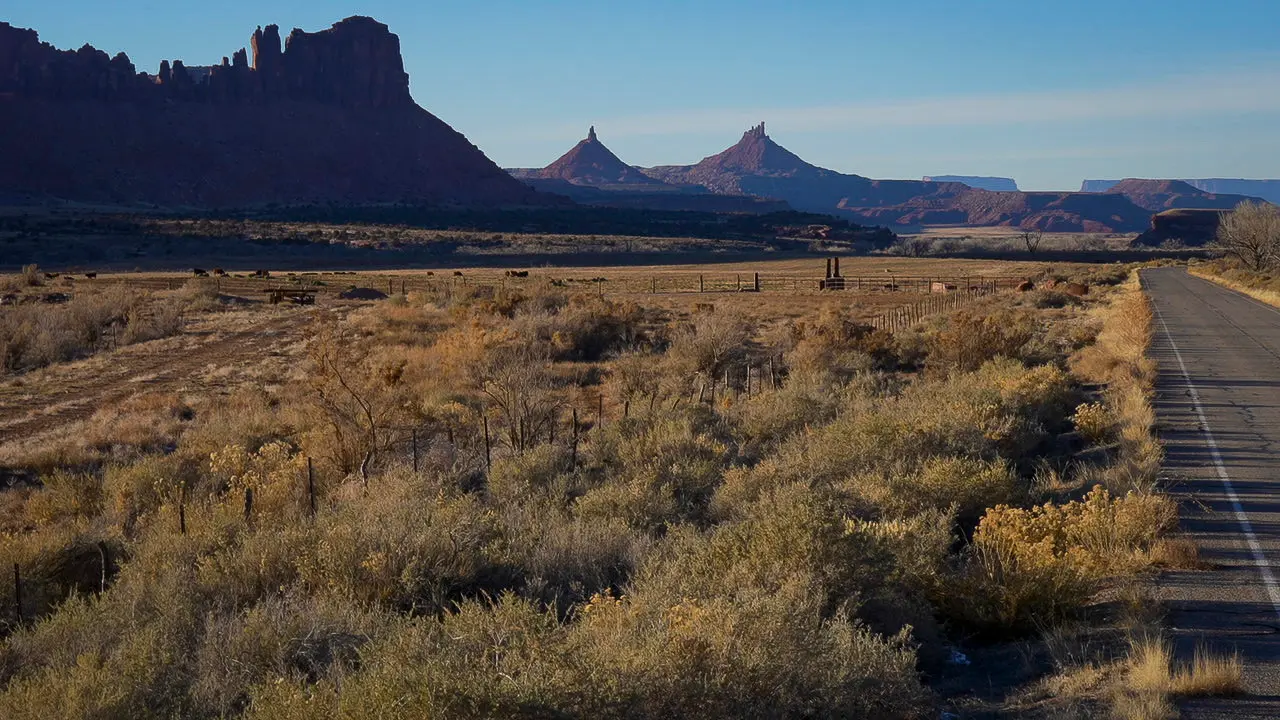
- 1996: President Bill Clinton designates Grand Staircase-Escalante National Monument (1.7 million acres), drawing immediate and fierce opposition from Utah Republicans.
- 2016: President Barack Obama designates Bears Ears National Monument (1.35 million acres) following a formal proposal from a coalition of five Native American tribes.
- 2017: President Donald Trump drastically reduces both monuments during his first term.
- 2021: President Joe Biden restores the original boundaries of both monuments, citing the need to protect cultural heritage and biodiversity.
- 2026: President Trump, returning to office, issues new executive orders to reduce the monuments once again, citing mineral security and "fairness."
This cycle of expansion and contraction has created a climate of uncertainty for land managers, local businesses, and the Native American tribes for whom the land is sacred.
The Role of Extraction and Industry Interests
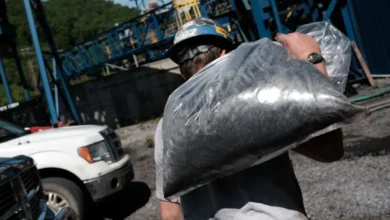
The administration’s primary justification for the 2026 cuts focuses on "critical minerals." The region encompasses significant deposits of uranium, which was historically mined in the area during the Cold War. Internal records from the 2017 reductions revealed that mining companies, specifically those involved in uranium processing, had lobbied the administration to alter monument boundaries to facilitate easier access to mineral claims.
While Governor Cox and other leaders argue that the monuments stifle economic opportunity, conservationists point to the booming outdoor recreation economy as a more sustainable alternative. A December 2024 survey by New Bridge Strategies found that 71 percent of Utah voters favored the protection of Bears Ears, and 74 percent supported Grand Staircase-Escalante. Many residents view the monuments as assets that drive tourism and improve the quality of life, rather than as barriers to industrial progress.
Misinformation Regarding Land Use and Recreation
During the signing of the latest executive orders, President Trump claimed that monument designations prevented citizens from enjoying the land. "You can’t do anything. You can’t go hunting. You can’t go fishing… You can virtually not even walk on it," he claimed.
Fact-checking these assertions reveals a different reality. Unlike National Parks, which have stricter regulations, National Monuments managed by the Bureau of Land Management (BLM) and the U.S. Forest Service typically allow for a wide range of "multiple uses." Hunting and fishing are permitted under state regulations, and existing grazing permits are generally honored. Off-road vehicle use is allowed on designated trails. The primary restriction imposed by monument status is a "mineral withdrawal," which prevents new mining claims and oil and gas leasing, while honoring valid existing rights.
Tribal Sovereignty and the Intertribal Commission
One of the most contentious aspects of the recent reduction is its impact on Native American tribes. Bears Ears was unique in its management structure, which included an intertribal commission consisting of representatives from the Hopi Tribe, Navajo Nation, Ute Indian Tribe, Ute Mountain Ute Tribe, and Zuni Tribe. This commission provided traditional ecological knowledge and ensured that ancestral sites, including cliff dwellings and petroglyphs, were protected.
Trump’s latest order disbanded this intertribal body, a move that flies in the face of public sentiment. Polling from 2024 indicates that nearly 90 percent of Utahns support Native American tribes having a strong role in managing their ancestral lands. Furthermore, 81 percent of respondents believed that the federal government should honor existing agreements with tribes regarding the management of Bears Ears.
Legal and Social Implications
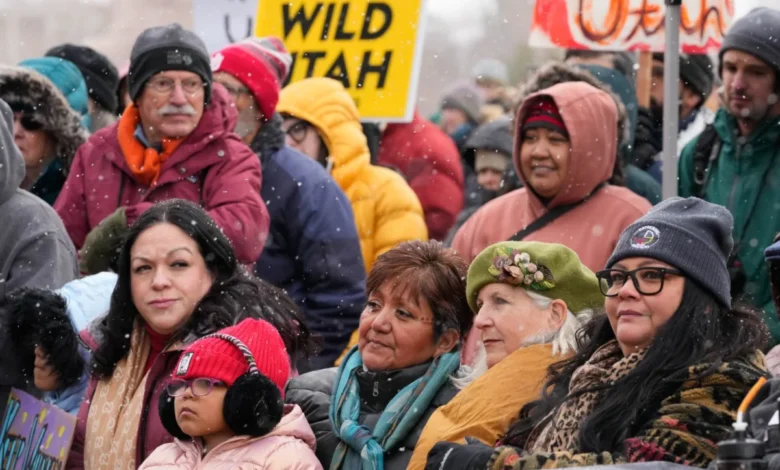
The reductions have already triggered a wave of protests and legal threats. Hundreds of activists gathered outside the Governor’s Mansion in Salt Lake City to voice their opposition, organized by the Southern Utah Wilderness Alliance (SUWA). Legal experts suggest that the executive orders will likely face immediate challenges in federal court. While the Antiquities Act clearly grants presidents the power to create monuments, it does not explicitly grant the power to abolish or drastically reduce them—a power that many legal scholars argue rests solely with Congress.
The ongoing "monument wars" in Utah reflect a broader national debate over the future of public lands in an era of climate change and resource scarcity. While politicians emphasize industrial independence and local control, the data suggests that the public—across party lines—increasingly views these landscapes as irreplaceable treasures that warrant permanent protection.
As the legal battles begin and the boundaries on the ground are redrawn, the discrepancy between Utah’s political actions and its public’s desires remains a central point of contention. The 2026 reductions may have been intended to bring "fairness" to the state, but according to the majority of Utahns, the decision has only served to undermine the protection of the state’s most iconic and culturally significant landscapes.
Related posts: