Range Rover Redefines Luxury Grand Touring with Electrified GT on EMA Architecture, Signaling a Bold Departure for the Iconic Brand.

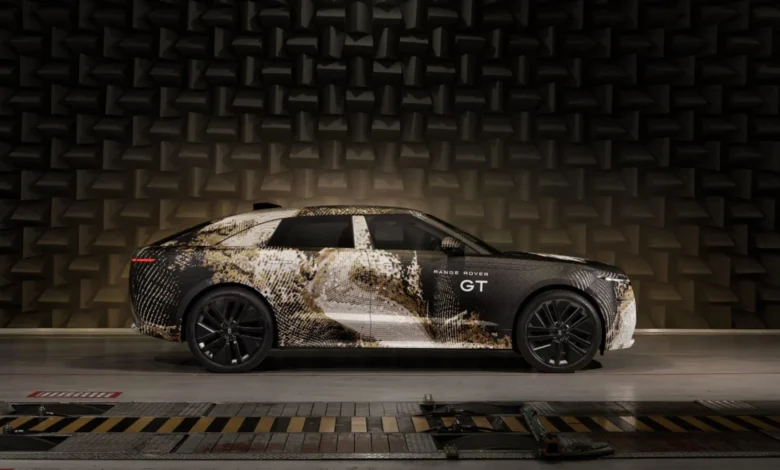
Range Rover has officially confirmed the imminent unveiling of its groundbreaking GT model, a vehicle meticulously engineered to reinterpret the grand tourer concept through a sophisticated, distinctly Range Rover lens. Martin Limpert, managing director of Range Rover, articulated the profound strategic intent behind this new offering, stating, "We have spent the last few years working obsessively on the fundamentals of the GT formula, reinterpreted in a sophisticated, uniquely Range Rover way. The result is the most car-like, yet unmistakably capable, Range Rover ever created, now possible on our electrified EMA architecture—complementing our existing powertrain portfolio to deliver a complete set of options for every customer need. Its blend of effortless EV performance, first-class long-haul refinement, and all-terrain capability is pure Range Rover; while its calming interior previews our vision of a modern grand tourer." This statement underscores a significant strategic pivot for the brand, traditionally synonymous with luxury SUVs, as it ventures into a more dynamically focused, yet equally opulent, segment.
The Dawn of a New Era: The Range Rover GT’s Vision
Limpert’s emphasis on the GT being the "most car-like" Range Rover ever created signals a deliberate move to broaden the brand’s appeal beyond its established SUV stronghold. This doesn’t, however, imply a dilution of the core Range Rover identity. Instead, it suggests an evolution, leveraging the inherent advantages of electrification to deliver a driving experience that combines the agility and low-slung dynamics of a traditional performance car with the commanding presence, luxurious comfort, and surprising off-road prowess for which Range Rover is renowned. The phrase "unmistakably capable" serves as a crucial qualifier, assuring enthusiasts that the GT will uphold the brand’s legendary all-terrain credentials, albeit in a package optimized for on-road sophistication.
The vehicle’s promise of "effortless EV performance" is a hallmark of modern electric powertrains, offering instant torque delivery and seamless acceleration—qualities perfectly suited to the grand touring ethos of covering vast distances with minimal fuss. Coupled with "first-class long-haul refinement," this positions the GT as a compelling choice for discerning travelers who demand both exhilarating performance and unparalleled comfort over extended journeys. The integration of "all-terrain capability" is perhaps the most audacious claim, hinting at a vehicle that defies conventional GT classifications and reinforces Range Rover’s unique selling proposition in a highly competitive luxury market.
Architecting the Future: The Electrified Modular Architecture (EMA)
Central to the Range Rover GT’s existence is the Electrified Modular Architecture (EMA), which represents a foundational pillar of Jaguar Land Rover’s (JLR) ambitious "Reimagine" strategy. EMA is the company’s third dedicated electrifiable platform, demonstrating a robust commitment to an electric future. It stands alongside the established Modular Longitudinal Architecture (MLA), currently underpinning models like the Range Rover and Range Rover Sport, and the nascent JEA platform, which is being developed exclusively by Jaguar for its forthcoming, all-electric portfolio, starting with the Type 01.
The strategic importance of EMA cannot be overstated. Dedicated EV platforms like EMA offer distinct advantages over adapting internal combustion engine (ICE) architectures for electrification. They allow for optimal battery packaging, creating a flat floor that maximizes interior space and design flexibility. This modularity also facilitates efficient manufacturing across various vehicle types and sizes, leading to economies of scale and faster product development cycles. For the Range Rover GT, EMA is crucial for achieving its "car-like" proportions and dynamic targets while seamlessly integrating a powerful electric drivetrain and a substantial battery pack necessary for competitive range and performance. This architecture is designed to support a new generation of electric vehicles, enabling JLR to deliver on its promise of a fully electrified future for its brands. The investment in such platforms is staggering, often running into billions of pounds, but it is seen as essential for long-term competitiveness in a rapidly electrifying global automotive market.
A Radical Interior Transformation: Ultraminimalism Meets Regulatory Compliance
Range Rover has offered a glimpse into the GT’s interior, revealing a significant departure from the more traditional, albeit luxurious, cabins found in its SUV stable. The new aesthetic is characterized by an "ultraminimalist" approach, presenting a clean, uncluttered environment. This trend aligns with a broader industry movement towards simplified interfaces, driven by a desire for reduced driver distraction and a more serene cabin experience. However, this minimalism is carefully balanced with the practical demands of modern automotive safety and user experience.
Crucially, Range Rover’s designers have ensured that the GT’s interior still satisfies safety regulators in Europe and other key markets that mandate physical controls for certain essential functions. This is a vital distinction in an era where some manufacturers have faced criticism for over-reliance on touchscreens, potentially compromising ease of use and safety. The article highlights a thoughtful design choice: the eschewing of a third screen for the front passenger. Instead, the focus remains on two primary, high-definition OLED screens—the main instrument display and the central infotainment touchscreen—which are known for their vibrant colors, deep blacks, and excellent contrast. Furthermore, the inclusion of a head-up display as standard for the GT underscores a commitment to providing critical driving information directly within the driver’s line of sight, enhancing safety and convenience without adding visual clutter to the main dashboard. This blend of cutting-edge digital displays with tactile physical controls for crucial functions represents a refined approach to luxury interior design, prioritizing both aesthetic appeal and ergonomic functionality.
JLR’s "Reimagine" Strategy: A Strategic Pivot
The Range Rover GT is not an isolated product launch but a direct manifestation of JLR’s ambitious "Reimagine" strategy, unveiled in February 2021 by CEO Thierry Bolloré. This strategy outlines a complete reinvention of the company, focusing on electrification, modern luxury, and distinct brand identities. Under "Reimagine," JLR committed to investing approximately £15 billion over the next five years into its industrial footprint, vehicle programs, autonomous technologies, and digital services. The goal is clear: to establish Jaguar as an all-electric luxury brand by 2025 and to introduce six pure electric Range Rover, Defender, and Discovery models by 2026. The ultimate ambition is for JLR to become a net-zero carbon business across its supply chain, products, and operations by 2039.
The GT, being an all-electric vehicle on a new dedicated EV platform, perfectly aligns with this strategic roadmap. It demonstrates Range Rover’s commitment to electrification and expands its portfolio into new luxury segments, appealing to a broader customer base that values both traditional luxury and cutting-edge electric performance. This strategic pivot is critical for JLR’s long-term viability, positioning it at the forefront of the luxury EV market rather than playing catch-up.
The Competitive Landscape of Luxury Electric Grand Tourers
The burgeoning market for high-performance luxury electric grand tourers is becoming increasingly crowded and competitive. The Range Rover GT will enter a segment currently populated by formidable contenders such as the Porsche Taycan, often considered the benchmark for electric sports sedans, and the Mercedes-Benz EQS, which offers a blend of futuristic luxury and impressive range. Other significant players include the Lucid Air, known for its exceptional range and innovative design, and upcoming models like the Bentley EV, which will undoubtedly aim for the pinnacle of ultra-luxury electric touring. Even Maserati has introduced its all-electric GranTurismo Folgore, demonstrating the widespread adoption of electrification in this niche.
The Range Rover GT’s differentiation will hinge on its unique blend of "car-like" dynamics with "unmistakably capable" all-terrain attributes. While its rivals might excel in pure road performance or outright luxury, none currently offer the inherent versatility and rugged elegance that is synonymous with the Range Rover brand. This unique selling proposition could attract a new demographic of buyers who desire the dynamism of an electric GT but are unwilling to compromise on the occasional need for enhanced capability, whether for navigating challenging weather conditions or venturing off the beaten path. This positioning allows Range Rover to carve out a distinct niche within the luxury EV market, leveraging its heritage while embracing innovation.
Jaguar’s Parallel Path: The Type 01 and JEA Platform
In parallel with the Range Rover GT’s development, Jaguar is undergoing its own radical transformation, anchored by the development of its JEA platform and the forthcoming Type 01. The Type 01, like the Range Rover GT, is envisioned as a four-door grand tourer and is also slated for a debut later this year. This shared segment focus highlights JLR’s strategic intent to capture a significant share of the luxury electric GT market across its distinct brands.
However, the Jaguar Type 01 is expected to embody a different interpretation of the grand tourer, focusing more acutely on a sleek, performance-oriented aesthetic and a dynamic driving experience that reflects Jaguar’s sporting heritage. The JEA platform is designed to be even more performance-focused, enabling lower-slung designs and exceptional handling characteristics that will differentiate Jaguar as an all-electric, high-performance luxury brand. The synergy between the Range Rover GT and Jaguar Type 01 lies in their shared commitment to electrification and luxury grand touring, but their distinct brand identities will ensure they appeal to different customer preferences—one prioritizing Range Rover’s unique blend of sophisticated capability, the other, Jaguar’s pure performance and elegant design. This dual-pronged approach allows JLR to address different facets of the premium electric GT market effectively.
The Evolution of the Grand Tourer Concept
The concept of the grand tourer (GT) car has historically been defined by vehicles that blend high performance with luxurious comfort, designed for effortless long-distance travel. Traditionally, this has meant powerful internal combustion engines, often V8 or V12, paired with refined suspensions and opulent interiors. Electrification, however, is fundamentally redefining this concept.
The Range Rover GT exemplifies this evolution. Instantaneous torque from electric motors provides a new level of "effortless performance," making overtakes seamless and acceleration exhilarating, all in near silence. This quiet operation enhances the "long-haul refinement," transforming the driving experience into a more serene affair. Furthermore, the inherent packaging advantages of electric powertrains—with batteries often integrated into the floor and motors being more compact than ICEs—allow for innovative interior designs, as seen with the GT’s "calming interior." This allows designers more freedom to create spacious, lounge-like cabins that further elevate comfort and luxury. The Range Rover GT, therefore, isn’t just an electric grand tourer; it’s a statement on how electrification can enhance and evolve the very essence of grand touring, making it more efficient, quieter, and potentially more capable than ever before.
Market Implications and Brand Positioning
The introduction of the Range Rover GT carries significant market implications and will undoubtedly reshape the brand’s positioning. By entering the GT segment, Range Rover is expanding its market reach beyond its traditional SUV stronghold. This move could attract a new demographic of buyers who appreciate the brand’s luxury and capability but prefer a more dynamic, car-like driving experience. It also signals Range Rover’s ambition to compete head-on with established luxury performance brands in a rapidly electrifying landscape.
For JLR, the GT represents a crucial step in its "Reimagine" strategy, demonstrating its ability to innovate and adapt. The success of the GT will be a key indicator of the company’s financial health and its ability to execute its ambitious electrification plans. Financially, capturing a share of the high-margin luxury EV segment is vital for JLR and its parent company, Tata Motors, as it seeks to fund its massive investments in future technologies. Moreover, the GT’s unique blend of attributes could help Range Rover maintain its premium pricing and exclusive image, reinforcing its position as a leader in modern luxury. This strategic expansion is not just about a new product; it’s about future-proofing the brand and ensuring its relevance in an increasingly electrified and competitive automotive world.
Timeline and Future Outlook
While the Range Rover GT has been partially revealed, covered in camouflage, full details about its design, powertrain specifications, battery range, and pricing are anticipated later this year. This staged reveal strategy builds anticipation and allows the company to control the narrative surrounding its groundbreaking new model. The parallel debut of the Jaguar Type 01 further highlights a significant period of transformation for JLR, with both brands launching pivotal electric grand tourers around the same time.
Looking ahead, the GT is expected to form a key part of Range Rover’s broader electrified portfolio, which will likely include fully electric versions of its existing SUV models. The EMA platform, underpinning the GT, will be instrumental in future product development, offering the flexibility to introduce a diverse range of electric vehicles that cater to evolving customer needs and preferences. The long-term vision for Range Rover is clear: to maintain its status as the epitome of luxury and capability, but to do so through an increasingly electrified and sustainable lens.
In conclusion, the Range Rover GT represents a pivotal moment for the iconic British brand. It is a bold statement of intent, signaling Range Rover’s unwavering commitment to electrification and its willingness to redefine its own boundaries. By blending effortless EV performance, first-class refinement, and unexpected all-terrain capability within a sophisticated, car-like form, the GT is poised to carve out a unique niche in the luxury electric grand tourer segment, ushering in a new era of modern luxury mobility for Range Rover.
Related posts: