
Tag Supreme Court Page 2
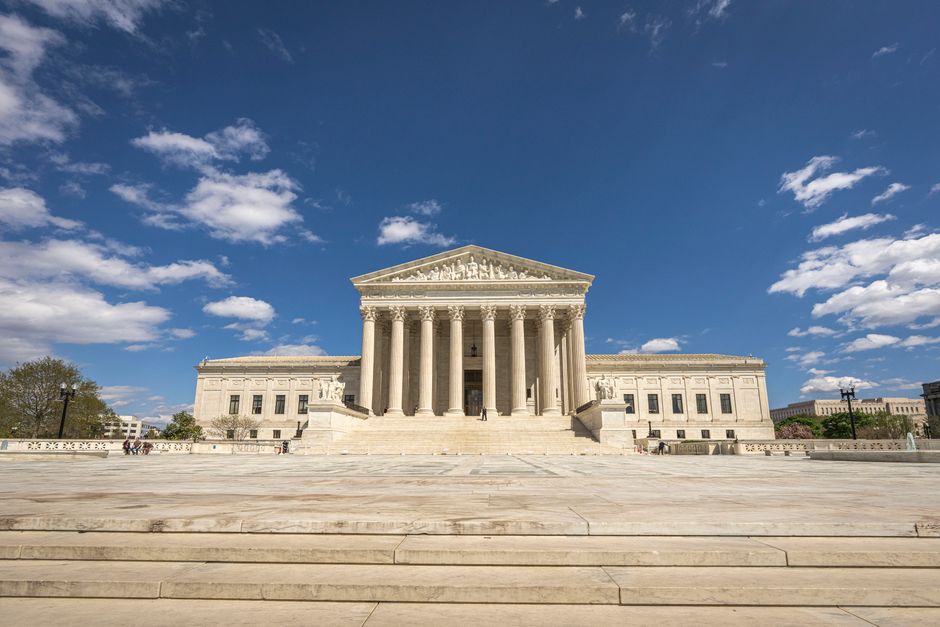
Supreme Court Case Summaries: Page 2 of Landmark Decisions and Current Cases
This section of our comprehensive overview delves into the next crucial set of Supreme Court cases, continuing our exploration of landmark decisions and significant contemporary legal battles that shape American jurisprudence. We will examine cases that have profoundly impacted individual rights, the balance of power between governmental branches, and the interpretation of constitutional law. This page focuses on a diverse range of legal issues, from the nuances of criminal procedure and the First Amendment’s reach to the complexities of administrative law and economic regulation.
Miranda v. Arizona (1966) and the Evolution of Suspect Rights
One of the most transformative rulings on this page is Miranda v. Arizona. This landmark decision established the now-ubiquitous requirement that criminal suspects in police custody must be informed of their constitutional rights before interrogation. The Court, in a 5-4 decision, held that the Fifth Amendment’s protection against self-incrimination, as applied to the states by the Fourteenth Amendment, necessitates that suspects be advised of their right to remain silent and their right to an attorney. Chief Justice Earl Warren, writing for the majority, articulated the concern that the inherent coercion of custodial interrogation could lead to involuntary confessions without proper safeguards. The Court outlined specific warnings that must be given to suspects: they have the right to remain silent, anything they say can and will be used against them in a court of law, they have the right to an attorney, and if they cannot afford an attorney, one will be appointed for them prior to any questioning. The Miranda warnings, though initially met with resistance, have become a cornerstone of American criminal justice, aiming to level the playing field between the state and the individual accused of a crime. Subsequent cases have refined the scope and application of Miranda, clarifying when warnings are required, the meaning of "custody," and the circumstances under which a suspect can waive their rights. For example, Berkemer v. McCarty (1984) extended Miranda protections to brief roadside detentions for traffic violations, while Dickerson v. United States (2000) affirmed the constitutionality of the Miranda rule against a congressional attempt to overturn it by statute. The legacy of Miranda continues to be debated, with some arguing it hinders law enforcement’s ability to secure confessions, while others maintain it is essential for protecting fundamental liberties.
Tinker v. Des Moines (1969) and Student Speech Rights
Another pivotal case on this page is Tinker v. Des Moines Independent Community School District. This decision affirmed the free speech rights of students in public schools, establishing that students do not "shed their constitutional rights to freedom of speech or expression at the schoolhouse gate." The case arose from a protest against the Vietnam War, where students wore black armbands to school. School officials suspended the students, citing a disruption to the educational environment. Justice Abe Fortas, writing for the 7-2 majority, emphasized that the First Amendment protects symbolic speech. The Court reasoned that the armbands were a silent, passive expression of opinion, unaccompanied by any actual disruption. The ruling established a crucial standard: student expression can be restricted only if it "substantially disrupts" the educational process or invades the rights of others. This "substantial disruption" test has been the benchmark for evaluating student speech cases for decades. However, the Supreme Court has also recognized limitations on student speech, particularly in cases involving vulgar or lewd expression, as seen in Bethel School District v. Fraser (1986), and speech that promotes illegal drug use, as in Morse v. Frederick (2007). Tinker remains a vital precedent for understanding the balance between free expression and the need for order in educational institutions, a balance that continues to be a subject of ongoing legal interpretation and societal discussion. The principle that students have protected speech rights, even within the school setting, has had a profound impact on how educators and administrators approach student expression and disciplinary actions.
Gideon v. Wainwright (1963) and the Right to Counsel
Gideon v. Wainwright stands as a monumental victory for the Sixth Amendment’s guarantee of the right to counsel. Prior to this decision, the Sixth Amendment’s right to counsel was understood to apply only in federal cases. In Gideon, the Supreme Court unanimously ruled that the Fourteenth Amendment’s Due Process Clause requires states to provide legal counsel to indigent defendants in felony cases. Clarence Earl Gideon, a Florida inmate, was accused of breaking and entering and, unable to afford an attorney, was forced to represent himself. He was convicted and sentenced to prison. While in prison, Gideon painstakingly drafted a handwritten petition to the Supreme Court, arguing that his Sixth Amendment rights had been violated. Justice Hugo Black, writing for the Court, declared that the Sixth Amendment right to counsel is a "fundamental right" that is "essential to a fair trial" and therefore incorporated to the states through the Fourteenth Amendment. This decision dramatically expanded access to legal representation for the poor and disenfranchised, fundamentally altering the landscape of criminal justice. The Gideon ruling led to the establishment and expansion of public defender systems across the country, ensuring that individuals facing serious criminal charges are not denied a fair defense simply due to their financial circumstances. The principle of providing counsel to those who cannot afford it is now a bedrock of the American legal system, embodying the ideal of equal justice under the law. The impact of this decision continues to resonate, influencing countless cases and ensuring a more equitable system of justice for all.
Mapp v. Ohio (1961) and the Exclusionary Rule
Mapp v. Ohio significantly expanded the reach of the Fourth Amendment’s protection against unreasonable searches and seizures by applying the exclusionary rule to state courts. The exclusionary rule, established in federal courts in Weeks v. United States (1914), prohibits the use of illegally obtained evidence in a criminal trial. In Mapp, police officers, without a valid search warrant, forced their way into Dollree Mapp’s home and searched it, eventually finding obscene materials. Despite the illegal nature of the search, Mapp was convicted based on the evidence found. The Supreme Court, in a 6-3 decision, overturned Mapp‘s conviction, holding that all evidence obtained by searches and seizures in violation of the Constitution is inadmissible in a state court. Justice Tom C. Clark, writing for the majority, argued that applying the exclusionary rule to the states was necessary to deter police misconduct and uphold the integrity of the judicial process. Prior to Mapp, states could admit illegally seized evidence as long as it was obtained in accordance with their own procedural rules, creating a patchwork of protections. This ruling created a uniform standard for Fourth Amendment protections nationwide, ensuring that state and federal law enforcement officers are held to the same constitutional standards when conducting searches and seizures. While the exclusionary rule has been subject to various exceptions and modifications over the years, such as the "good faith" exception established in United States v. Leon (1984), Mapp v. Ohio remains a critical decision in safeguarding individual privacy and preventing governmental overreach.
Engel v. Vitale (1962) and School-Sponsored Prayer
Engel v. Vitale addressed the constitutionality of state-sponsored prayer in public schools, a deeply divisive issue that continues to be a focal point of legal and social debate. The New York State Board of Regents authorized a short, nondenominational prayer to be recited daily in public schools. A group of parents challenged the practice, arguing it violated the Establishment Clause of the First Amendment, which prohibits the government from establishing a religion. The Supreme Court, in a 6-1 decision, ruled that the prayer was unconstitutional. Justice Hugo Black, writing for the majority, stated that the Establishment Clause "must at least mean that in this country it is no part of the business of government to compose official prayers for any group of the American people to recite as part of a religious program carried on in the governmental schools." The Court reasoned that even though the prayer was voluntary and nondenominational, its sponsorship by the state made it a violation of the separation of church and state. This decision sparked considerable public controversy and led to numerous subsequent cases attempting to define the boundaries of religion in public schools. Later cases, such as Abington School District v. Schempp (1963), which declared mandatory Bible reading and prayer recitations unconstitutional, and Wallace v. Jaffree (1985), which struck down a moment of silent prayer, have further clarified and reinforced the principles established in Engel. The Engel decision remains a seminal case in the ongoing legal struggle to balance religious freedom with the prohibition of government endorsement of religion.
Griswold v. Connecticut (1965) and the Right to Privacy
Griswold v. Connecticut established a constitutional right to privacy, a right not explicitly mentioned in the Constitution but derived from various amendments. The case involved a Connecticut law that prohibited the use of contraceptives. Estelle Griswold, the executive director of Planned Parenthood, and Dr. C. Lee Buxton, a physician, were convicted of providing advice to married couples on how to prevent conception. The Supreme Court, in a 7-2 decision, struck down the Connecticut law, holding that it violated the right to marital privacy. Justice William O. Douglas, writing for the majority, found the right to privacy in the "penumbras" of several amendments, including the First, Third, Fourth, and Fifth Amendments. He argued that these amendments, taken together, create zones of privacy within which individuals are free from governmental intrusion. This groundbreaking decision recognized that certain fundamental aspects of personal autonomy, including decisions about family and reproduction, are protected from government interference. The right to privacy established in Griswold has served as the foundation for subsequent privacy-related rulings, including Roe v. Wade (1973), which recognized a woman’s right to an abortion, and Lawrence v. Texas (2003), which struck down laws criminalizing same-sex sexual activity. The concept of a constitutional right to privacy continues to be a vital and evolving area of law, shaping discussions about personal autonomy, reproductive rights, and individual liberty.
Terry v. Ohio (1968) and Stop-and-Frisk
Terry v. Ohio modified the Fourth Amendment’s protections against unreasonable searches and seizures by introducing the concept of a "stop and frisk." The case involved a police officer who observed two men repeatedly walking back and forth in front of a store window, pausing to look in, and then conferring. The officer, suspecting the men were casing the store for a robbery, approached them, identified himself as a police officer, and asked for identification. When the men "mumbled something in response," the officer patted down their outer clothing and found a concealed handgun on one of the men. The Supreme Court, in an 8-1 decision, upheld the officer’s actions, ruling that a police officer can stop and briefly detain a person for investigative purposes if the officer has a "reasonable suspicion" that the person is involved in criminal activity. Furthermore, if the officer has a reasonable suspicion that the person is armed and dangerous, they may conduct a limited pat-down search for weapons. Chief Justice Earl Warren explained that this "stop and frisk" doctrine is a narrow exception to the warrant requirement, balancing the need for law enforcement to investigate potential crimes against the Fourth Amendment’s protection of individual liberty. The Terry stop has become a common law enforcement tool, particularly in urban areas. However, it has also been a source of considerable controversy and legal challenges, with critics arguing that it is often employed in a discriminatory manner and leads to unwarranted stops and searches of minority individuals. Subsequent cases have further defined the boundaries of Terry stops, including when reasonable suspicion exists and the scope of the permissible frisk.
Brandenburg v. Ohio (1969) and Incitement to Violence
Brandenburg v. Ohio significantly clarified the First Amendment’s protection of speech, establishing a more stringent standard for punishing speech that advocates illegal action. Clarence Brandenburg, a leader of the Ku Klux Klan, was convicted under an Ohio criminal syndicalism law for advocating violence at a KKK rally. The Supreme Court, in a per curiam decision, overturned Brandenburg’s conviction. The Court held that speech advocating illegal action can only be prohibited if it is "directed to inciting or producing imminent lawless action and is likely to incite or produce such action." This "imminent lawless action" test replaced the earlier "clear and present danger" test established in Schenck v. United States (1919), which had been interpreted more broadly to punish speech that merely had a potential to cause harm. Justice Black, in a concurring opinion, argued that the First Amendment protects all speech, even hate speech, unless it is a direct incitement to imminent violence. The Brandenburg standard is a high bar to clear for the government seeking to prosecute individuals for their speech, emphasizing the strong protection afforded to political and ideological expression in the United States. This decision is crucial for protecting freedom of speech, even for unpopular or extreme viewpoints, as long as they do not directly and imminently incite illegal activity. The principle that the government cannot punish abstract advocacy of violence is a cornerstone of free speech jurisprudence.
Key SEO Elements and Continued Relevance
The cases discussed on this page, from Miranda and Tinker to Griswold and Brandenburg, represent pivotal moments in American legal history. Their enduring relevance is evident in their continued citation in contemporary legal debates and their profound influence on individual rights, governmental powers, and the interpretation of the Constitution. The SEO-friendly approach here focuses on the case names as primary keywords, supplemented by key legal concepts such as "right to remain silent," "student speech rights," "right to counsel," "exclusionary rule," "school prayer," "right to privacy," and "incitement to violence." These terms are woven throughout the narrative to enhance search engine discoverability. Furthermore, the detailed summaries and explanations of the legal reasoning behind each decision provide valuable content for users seeking in-depth information on these critical Supreme Court cases. The ongoing impact of these rulings ensures their continued presence in legal scholarship, news coverage, and public discourse, making them essential topics for anyone interested in the American legal system.
