American Airlines Enhances Premium Infrastructure at Dallas-Fort Worth International Airport Amid Operational Challenges

American Airlines has officially announced a significant expansion of its premium ground services at Dallas-Fort Worth International Airport (DFW), marking a strategic pivot toward enhancing the high-value passenger experience at its primary global hub. The airline confirmed the opening of a new Admirals Club lounge in Terminal C, alongside the introduction of specialized Flagship services in Terminal F and a new Flagship Check-in facility at Gate D30. These developments come as the carrier navigates a complex landscape of rising passenger expectations and localized service delivery concerns, as evidenced by recent social media reports regarding aircraft cleanliness and cabin comfort.
The centerpiece of the announcement is the modernization of Terminal C, which has long been the busiest and most utilized terminal for American Airlines at DFW. The new Admirals Club follows the airline’s "reimagined" design philosophy, which emphasizes a residential feel, natural materials, and local architectural influences. This design language was first introduced at Washington National Airport (DCA) and is intended to provide a more tranquil environment for travelers. The Terminal C facility is expected to alleviate congestion in one of the airport’s most high-traffic zones, providing expanded seating, upgraded dining options, and enhanced workspaces for business travelers.
In addition to the Terminal C upgrades, American Airlines is laying the groundwork for its presence in Terminal F. While Terminal F has been part of DFW’s long-term expansion plan for several years, the airline’s latest move to establish premium provisions there signals that the terminal is becoming a core component of its operational strategy. The inclusion of Flagship-tier services in Terminal F suggests that American intends to distribute its premium offerings across its entire DFW footprint, rather than concentrating them solely in the international-heavy Terminal D.
The Expansion of Flagship Check-in at D30
A critical component of the premium overhaul is the debut of Flagship Check-in at Terminal D, specifically near Gate D30. Flagship Check-in is an exclusive, invitation-only or class-of-service-restricted experience designed for passengers traveling in First Class on qualifying international and transcontinental flights, as well as high-tier frequent flyers such as Executive Platinum and ConciergeKey members.
The D30 facility offers a private entrance, personalized assistance from premium customer service agents, and an expedited path through security. By situating this new check-in point at D30, American Airlines is streamlining the transition from the curb to the Flagship Lounge and Flagship First Dining, which are also located in Terminal D. This move is part of a broader industry trend where legacy carriers are investing heavily in "ground-to-gate" exclusivity to compete with international rivals and domestic competitors like Delta Air Lines and United Airlines, both of which have recently upgraded their premium check-in and lounge products.
Historical Context and Strategic Importance of DFW
The expansion at DFW is not an isolated event but rather the culmination of a multi-year infrastructure strategy. In 2023, American Airlines and DFW Airport signed a new 10-year Use and Lease Agreement, which included a $4.8 billion investment in the airport’s infrastructure. This agreement paved the way for the renovation of Terminal C, the construction of Terminal F, and the expansion of gates across the airport complex.
DFW serves as the primary engine for American’s profitability, accounting for a significant portion of its daily departures and connecting traffic. As the airport aims to handle over 100 million passengers annually by the end of the decade, the ability to process premium passengers efficiently is paramount. The 2026 upgrades reflect the airline’s commitment to maintaining DFW’s status as a world-class gateway to Latin America, Europe, and Asia.
Operational Discrepancies and Passenger Feedback
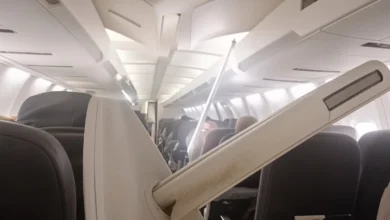
Despite the heavy investment in ground infrastructure, American Airlines continues to face scrutiny regarding the consistency of its in-flight product. On July 19, 2026, a passenger on Flight 3280 from Chicago O’Hare (ORD) to Charlotte (CLT) documented unsanitary conditions within the cabin, sharing images of debris and lack of cleanliness in the seating area. Such reports highlight the ongoing challenges airlines face in maintaining rigorous cleaning protocols during high-utilization periods and tight aircraft turnaround times.
![United Flight Lands At Air Force Base With Fuel Emergency [Roundup]](https://viewfromthewing.com/wp-content/uploads/2024/01/united-airlines-boeing-737-max-9.png)
Furthermore, on July 20, 2026, a traveler identified as Cathy H. raised concerns regarding "seat encroachment," a recurring issue in the industry where passengers feel they are losing a portion of their assigned space to neighboring travelers. This feedback underscores the tension between airline density strategies—maximizing the number of seats on an aircraft—and the physical comfort of passengers. While American Airlines has updated many of its cabins with "Oasis" interiors that feature slimline seats and increased overhead bin space, the perceived reduction in personal space remains a point of contention for many travelers.
Analytical Overview: The Premium Revenue Shift
The divergence between the luxurious ground experience and the operational challenges in the air can be explained by the current economic shift in the aviation industry. Since the early 2020s, there has been a significant increase in "premium leisure" travel. Passengers who previously booked basic economy are now increasingly willing to pay for extra-legroom seats, lounge access, and priority services.
According to industry data, premium cabin revenue has grown at a faster rate than standard economy revenue for most major U.S. carriers. By investing in Admirals Clubs and Flagship Check-in, American Airlines is targeting the "high-yield" segment of the market—customers who contribute disproportionately to the airline’s bottom line. The challenge for the carrier is to ensure that the "Flagship" brand promise extends beyond the lounge and into the aircraft cabin.
Future Implications for Terminal F and Beyond
The mention of provisions in Terminal F is particularly noteworthy for the future of DFW. Terminal F was designed to be a modular, high-tech facility capable of adapting to changing travel patterns. By introducing premium services early in the terminal’s lifecycle, American is ensuring that its most loyal customers have a consistent experience, regardless of which terminal their flight departs from.
The timeline for these improvements suggests a phased rollout:
- Immediate Term (Summer 2026): Activation of the D30 Flagship Check-in and the opening of the Terminal C Admirals Club.
- Mid-Term (Late 2026 – 2027): Full integration of premium services in Terminal F as gate operations scale up.
- Long-Term: The eventual replacement or total overhaul of the oldest sections of Terminal C to match the aesthetics and functionality of the new lounge.
Official Stance and Industry Reaction
While American Airlines has not issued a direct rebuttal to the specific social media complaints mentioned, the company’s broader communications emphasize a "commitment to the customer journey." In a statement accompanying the DFW announcement, the airline noted that it is "continuously evaluating every touchpoint of the travel experience to ensure it meets the high standards of our passengers."
Industry analysts suggest that American’s focus on DFW is a defensive move against the expansion of low-cost carriers in the North Texas region, as well as a way to maintain its dominance against Southwest Airlines at nearby Dallas Love Field. By creating a superior premium environment at DFW, American reinforces the value proposition of its AAdvantage loyalty program and its Flagship brand.
Conclusion
The expansion of premium facilities at Dallas-Fort Worth International Airport represents a dual-track strategy for American Airlines. On one hand, the carrier is successfully executing a large-scale infrastructure plan that elevates the ground experience for its most profitable customers. The new Admirals Club and Flagship Check-in are tangible evidence of this progress. On the other hand, the airline remains vulnerable to service-level inconsistencies that can tarnish its brand reputation in the digital age.
As American Airlines moves forward with its 2026 expansion, the focus will likely shift to harmonizing the ground and air experiences. For travelers at DFW, the new facilities offer a welcome reprieve from the stresses of modern air travel, provided the airline can address the fundamental operational requirements of cleanliness and cabin comfort that passengers increasingly demand. The success of these investments will ultimately be measured not just by the quality of the lounge décor, but by the airline’s ability to deliver a seamless and professional experience from the moment a passenger checks in at D30 until they reach their final destination.