Nvidia’s Jensen Huang Deepens Japan’s Industrial AI Ties with Multi-Billion Dollar Sovereign Play and Robotics Alliances

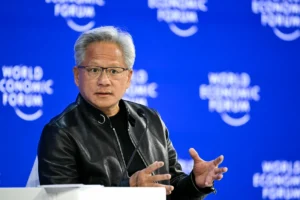
Nvidia’s charismatic chief executive, Jensen Huang, concluded a pivotal two-day visit to Tokyo on July 16, solidifying a series of strategic partnerships designed to integrate artificial intelligence deeply into Japan’s industrial and technological landscape. This high-stakes engagement followed earlier crucial stops in Taiwan and South Korea, underscoring Nvidia’s concerted effort to cultivate robust AI ecosystems across East Asia. Huang’s Tokyo itinerary was packed, featuring high-level meetings with Japan’s industrial titans and key players in the chip supply chain, culminating in agreements that span the nation’s entire technological spectrum, from a national AI factory to collaborations with leading robotics manufacturers and vital chip material suppliers. His message was unequivocal: Nvidia is targeting Japan’s vast factory floors, and the country’s most prominent manufacturers are eagerly embracing the vision. According to Huang, the next epoch of AI will unfold within factories, propelled by intelligent robots and machines, and he explicitly invited Japan to lead its construction.
This renewed collaboration marks a significant full-circle moment for Nvidia and Japan. Three decades ago, a timely $5 million investment from Sega proved instrumental in rescuing a then-struggling Nvidia from the brink of bankruptcy. Today, the relationship has evolved, with Nvidia and Japan’s industrial behemoths finding themselves in a mutually critical juncture once more, uniting to usher in the era of "physical AI." This ambitious endeavor is anchored by three foundational projects set to redefine Japan’s industrial future.
The Genesis of Physical AI in Japan: A Strategic Imperative
Jensen Huang’s tour across Asia wasn’t merely a series of business meetings; it was a carefully orchestrated diplomatic and commercial offensive aimed at embedding Nvidia at the heart of the region’s burgeoning AI ambitions. Having delivered a keynote in Taiwan and secured significant deals in South Korea, including a reported 50,000-GPU agreement last fall, Huang’s arrival in Tokyo signaled a strategic pivot towards manufacturing and industrial automation. His focus on "physical AI"—AI systems designed to interact with and control the real world, particularly through robots and machines—resonates profoundly with Japan’s unique economic and demographic challenges.
Japan, a global leader in advanced manufacturing and robotics, faces a rapidly aging population and a shrinking workforce. Projections indicate that by 2040, nearly 35% of its population will be over 65, creating immense pressure on labor-intensive industries. This demographic reality makes the widespread adoption of intelligent automation not just an economic advantage but a national imperative. By integrating AI into factory floors, supply chains, and various service sectors, Japan aims to maintain its industrial competitiveness and quality of life in the face of these profound demographic shifts. This background provides the crucial context for why Huang’s message about reinventing manufacturing for the age of intelligent industries found such fertile ground in Tokyo.
Noetra: Japan’s Sovereign AI Gambit
At the core of Japan’s ambitious AI strategy is Noetra, a landmark initiative representing the country’s sovereign play in artificial intelligence. Driven by a deep-seated desire to avoid reliance on foreign-controlled AI infrastructure—whether American or Chinese—for its critical factories and robotic systems, the Japanese government has mobilized an unprecedented consortium. Approximately 44 domestic firms, with industry heavyweights such as SoftBank, Sony, NEC, and Honda forming the nucleus, have coalesced to develop indigenous AI solutions specifically tailored for robots, vehicles, and industrial environments.
Tokyo’s commitment to this vision is substantial, pledging up to 1 trillion yen (approximately $6.2 billion USD at current exchange rates) over the next five years. This significant investment underscores a national bet on homegrown "physical AI"—foundation models engineered from the ground up to operate sophisticated machinery. The overarching goal is for Japan to own the software "brain" that will power its future industrial might.
However, the hardware backbone required to construct and train these advanced AI models still originates from Nvidia. The U.S. chip giant is slated to build what it terms "a Vera Rubin AI factory," a colossal data center poised to be a cornerstone of Japan’s AI infrastructure. This facility, expected to launch in 2028, will be packed with Nvidia’s next-generation chips, featuring 13,750 Vera CPUs and 27,500 Rubin GPUs, delivering an immense 140 megawatts of computational power. Noetra will oversee the development and operation of this critical data center, ensuring its alignment with national objectives.
Noetra’s development roadmap is meticulously phased. The initial stage, slated for fiscal year 2026, focuses on a reasoning model with a strong emphasis on Japanese-language proficiency. This will be followed by an omni-modal version by 2028, capable of processing and understanding text, images, video, and audio simultaneously. The culminating phase, projected for 2030, will deliver "Real-world Native AI"—systems specifically designed to control and interact with robots, with capabilities progressively released to external Noetra developers. This multi-stage approach highlights Japan’s methodical pursuit of AI sovereignty, aiming to build sophisticated, domain-specific AI from the ground up, with Nvidia’s advanced hardware providing the essential computational foundation. The scale of models envisioned, potentially into the trillions of parameters, necessitates this immense computational capability, positioning Japan at the forefront of large-scale physical AI development.
The Robotics Coalition: Japan’s Industrial Giants Embrace Cosmos
Nvidia’s strategic focus on Japan’s factory floors has galvanized the country’s preeminent robotics and manufacturing players, who are enthusiastically aligning behind Nvidia’s Cosmos models. A formidable coalition of industrial giants, including Fanuc, Yaskawa, Kawasaki Heavy Industries, Fujitsu, Hitachi, NEC, Sony, SoftBank, Kubota, and the robotics industry group AIRoA, have publicly announced their plans to build upon Nvidia’s open-model effort, Cosmos.
Cosmos, which Nvidia initially launched in May with a select group of global AI laboratories, is designed to be an open-source foundation model for physical AI. In Tokyo, Nvidia provided a compelling incentive for Japanese firms to commit: the unveiling of Cosmos 3 Edge. This specialized version of the Cosmos model is engineered to run directly on Nvidia’s Jetson Thor chips, embedded within the machines themselves. This on-device intelligence is critical for real-time decision-making, autonomy, and efficiency in complex industrial environments.
Early adopters are already testing shared control systems, while others, such as Honda R&D and Omron, are actively integrating these advanced tools into their development pipelines. Jensen Huang articulated the profound significance of this collaboration, stating, "The next frontier of AI is in the physical world, and this is a once-in-a-generation opportunity for Japan. Japan invented modern manufacturing. Now, it has the opportunity to reinvent it for the age of intelligent industries." This statement not only acknowledges Japan’s historical prowess but also positions it as a vanguard in the next industrial revolution.
The implications for Japan’s manufacturing sector are immense. By leveraging Cosmos 3 Edge, Japanese companies can develop more adaptable, intelligent, and efficient robotic systems. This move is expected to enhance productivity, reduce operational costs, and enable new levels of automation in industries ranging from automotive and electronics to heavy machinery and agriculture. The collaborative nature of Cosmos also fosters a shared ecosystem for innovation, potentially accelerating the development and deployment of advanced physical AI solutions across diverse applications. This convergence of Japan’s manufacturing expertise with Nvidia’s AI hardware and software represents a powerful synergy aimed at solidifying Japan’s global leadership in industrial automation.
Toyota: Expanding AI’s Reach from Vehicles to Production Lines
Toyota, a global automotive titan, exemplifies the expanding integration of Nvidia’s technology across various facets of its operations. The relationship began with Toyota committing its next-generation vehicles to Nvidia’s Drive platform, an announcement made at CES in January 2025. This initial collaboration focused on in-car computing for advanced driver assistance systems (ADAS) and autonomous driving capabilities.
The new agreements forged during Huang’s visit extend Nvidia’s footprint significantly deeper into Toyota’s ecosystem, moving beyond just vehicles to encompass manufacturing processes. This includes the use of Nvidia’s simulation platforms to design and optimize production lines, a critical application for improving efficiency and reducing waste in complex assembly operations. Furthermore, Nvidia’s technology will power the sophisticated software that runs Toyota’s vehicles, enhancing everything from infotainment to powertrain management. It will also be integral to systems designed to interpret real-time road traffic data, providing crucial intelligence for both human drivers and advanced driver-assistance features.
Toyota’s approach to autonomous driving, while progressive, remains notably conservative compared to some competitors like Waymo and Tesla. The Japanese automaker is prioritizing advanced driver assistance systems that augment the driver’s capabilities—assisting with steering and braking—but still require active human supervision. This strategy reflects Toyota’s emphasis on safety and gradual implementation, a stance that aligns well with the reliability and precision offered by Nvidia’s robust computing platforms. The expansion into manufacturing simulation and broader software integration highlights a holistic strategy to leverage AI across the entire value chain, from design and production to the end-user experience, thereby reinforcing Toyota’s position at the forefront of automotive innovation.
Why It Matters: Japan’s Industrial Rebirth and Sovereign Ambitions
Jensen Huang’s visit was more than a series of deal signings; it was a powerful affirmation of physical AI as a central pillar of Japan’s future industrial strategy. Tokyo is not merely endorsing this vision but actively funding it with significant capital. Faced with the stark reality of a shrinking workforce and an aging population, Japan views advanced automation and AI-driven robotics as indispensable tools for maintaining economic vitality and societal function.
The government’s long-term vision is ambitious: it aims to deploy 10 million AI-equipped robots across 18 diverse sectors by 2040. This monumental undertaking is backed by a projected $65 billion in combined public and private investment specifically targeting physical AI. Japan’s "AI Robotics Strategy," unveiled in March, sets an even loftier goal: capturing over 30% of the global AI robotics market by 2040. This market is conservatively valued by Tokyo at approximately ¥20 trillion, or about $133 billion USD, signifying a massive economic opportunity.
The Ministry of Economy, Trade and Industry (METI) is actively funding the development of a domestic foundation model designed to run these advanced machines. The Noetra-Nvidia "Vera Rubin AI factory" is positioned as the crucial infrastructure where models of this unprecedented scale—potentially reaching into the trillions of parameters—will be trained. The fundamental wager is that Japan’s unparalleled factory-floor data and its world-renowned manufacturing base can provide a unique competitive advantage for the development and deployment of physical AI globally.
Beneath this compelling industrial narrative lies an equally significant sovereign imperative. As the United States and China continue to advance rapidly in large-scale AI capabilities, Tokyo is increasingly determined to cultivate its own data, control its own compute resources, and reduce its dependence on foreign-controlled infrastructure. This drive for technological self-sufficiency was visibly underscored by Huang’s appearance on July 16 alongside Japan’s Trade Minister Ryosei Akazawa at the government’s official physical AI launch event, with Prime Minister Sanae Takaichi joining via video conference.
The Takaichi administration has unequivocally made AI and semiconductors the linchpin of a broader growth plan, which aims to attract a staggering ¥370 trillion ($2.3 trillion) in public and private investment across 17 strategic sectors by 2040. Within this grand strategy, Noetra’s AI factory—which Nvidia proudly touts as "the world’s first national AI infrastructure"—stands as the clearest and most concrete manifestation of Japan’s commitment. However, this strategic push for independence, at least for the foreseeable future, remains intricately reliant on advanced American silicon, illustrating the complex interdependencies of the global technology landscape. This paradox highlights Japan’s pragmatic approach: leveraging global leaders like Nvidia to build foundational capabilities while simultaneously striving for long-term domestic control and expertise.
Nvidia’s Global Playbook: "Working the Whole Room"
Jensen Huang’s methodical engagement in Tokyo mirrors a proven playbook he has successfully deployed across other key markets. Over two intensive days, Huang meticulously met with nearly every influential figure in Japanese technology. His schedule included a working lunch with the CEOs of industrial powerhouses such as Toyota, Fanuc, Yaskawa, Fujitsu, and Kawasaki Heavy Industries. Later, he engaged with dozens of crucial supply-chain chiefs in a more informal setting over skewers and whisky at a Kanda izakaya, fostering personal connections and reinforcing trust.
This approach is consistent with his recent "homecoming" keynote in Taiwan, where he enjoys rockstar status, and his impactful visit to Seoul last fall. During his South Korea visit, Huang secured a significant 50,000-GPU deal with a consortium of Hyundai, Samsung, SK, and Naver, famously punctuated by a shared meal of fried chicken. Each stop on his Asian tour is a testament to Nvidia’s strategy of deep, localized engagement, recognizing that technological leadership in AI requires not just superior hardware but also robust partnerships, tailored solutions, and a comprehensive understanding of each nation’s unique industrial and strategic priorities. In Tokyo, the focus was distinct: securing the future of industrial robots, fortifying the semiconductor supply chain, and providing the foundational chips necessary for Japan’s AI ambitions. Nvidia’s ability to "work the whole room" across diverse cultural and industrial landscapes underscores its critical role as a foundational enabler in the global AI revolution.
Related posts: