The political landscape of late 2025 was characterized by an intricate web of internal party conflicts, high-stakes local elections, and a protracted federal government shutdown, all meticulously dissected by CNN Political Director David Chalian on the "CNN Political Briefing" podcast. With incisive analysis and insights from key political players and expert guests, the podcast provided a crucial lens through which to understand the ever-changing dynamics shaping American governance and electoral prospects. From Republican challenges to House leadership and the evolving influence of former President Donald Trump, to Democratic strategies for the upcoming 2026 midterms and the surprising outcomes of municipal elections, the period underscored a nation grappling with significant political realignment and persistent ideological divides.
Republican Fissures and the Quest for Leadership
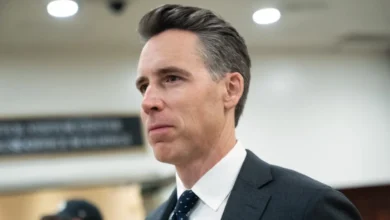
The Republican Party in late 2025 found itself at a critical juncture, navigating internal dissension and grappling with its post-Trump identity. A notable point of contention emerged on December 5, 2025, when California Republican Congressman Kevin Kiley, in an appearance on the briefing, leveled pointed criticism at House Speaker Mike Johnson, asserting that the Speaker had "failed to lead." Kiley’s remarks were not isolated but indicative of a broader "vibe shift" within the Republican conference as it began to strategize for the 2026 midterm elections and contemplate a future beyond the immediate shadow of former President Trump.
This public critique of Speaker Johnson’s leadership echoed earlier periods of intra-party strife that had plagued House Republicans, particularly concerning the stability of the Speakership. Johnson, who ascended to the role amidst considerable turmoil, inherited a caucus often divided between its more traditional conservative wing and a populist faction aligned with the MAGA movement. Kiley’s comments, particularly concerning leadership efficacy, suggested a growing impatience and potential fracturing as the party faced legislative deadlines and prepared its electoral messaging for the next cycle. The underlying tension likely stemmed from policy disagreements, strategic choices regarding government funding, and the challenge of uniting a diverse ideological coalition. The podcast also touched upon Kiley’s personal political circumstances, noting that he "may have been drawn out of his job with the new district lines California voters passed last month at Gov. Gavin Newsom’s urging," a detail that underscored the pervasive impact of redistricting on individual political careers and party power dynamics, particularly in states with significant partisan shifts.
Further complicating the Republican narrative was the ongoing assessment of former President Donald Trump’s influence over his base. On November 21, 2025, the briefing posed a provocative question: "Is President Trump Losing Control of MAGA?" Jonathan Martin of POLITICO joined Chalian to delve into this complex issue, highlighting a rare crack in the seemingly strong bond between Trump and his most ardent supporters. The discussion centered on Trump’s reversal of course on the Epstein files, a move interpreted by some as an attempt to realign with broader party sentiment, but which drew criticism from segments of his loyal base. Additionally, Trump faced scrutiny from supporters over his perceived lack of focus on domestic economic issues like prices and affordability, and his continued penchant for prioritizing foreign affairs. Martin’s assessment explored whether this period marked the beginning of Trump’s “lame duck” phase, prompting a broader conversation about who or what might define the Republican Party in the years to come. This analysis suggested that while Trump remained a formidable force, even his most dedicated followers were beginning to exhibit selective loyalty, hinting at a potential diversification of conservative thought and leadership post-Trump. The implications for the 2026 midterms were significant, as a less unified or singularly focused MAGA base could alter the electoral calculus for Republican candidates across the nation.
Democratic Strategies and Electoral Triumphs Amidst Federal Gridlock
Conversely, the Democratic Party, fresh off a series of "big electoral victories," faced its own set of internal debates regarding strategy and direction. On November 14, 2025, former Virginia Governor and DNC Chair Terry McAuliffe offered his insights into how Democrats had successfully navigated intra-party tensions to end what was described as the "longest government shutdown in U.S. history." McAuliffe, a veteran of Democratic politics and a former chair of Hillary Clinton’s 2008 presidential campaign, provided an assessment of the party’s shutdown strategy and a prescription for winning the 2026 midterms. His central argument, intriguing and perhaps controversial, was that "Donald Trump is the Democrats’ Best Weapon," implying that Trump’s continued presence and polarizing nature served as a unifying force for Democratic voters and a stark contrast to galvanize their base.
The resolution of the government shutdown was a recurring and dominant theme in the "CNN Political Briefing" throughout October 2025. The shutdown, which entered its third week by October 17, prompted discussions with key figures from both parties. Congressman Ro Khanna (D-CA), a prominent voice from the progressive wing of his party, appeared on the briefing to outline what was negotiable for Democrats, what remained "off the table," and his prognosis for how the standoff would ultimately conclude. Khanna’s insights highlighted the progressive demands and the Democratic Party’s unified stance against what they perceived as Republican overreach or austerity measures.

Earlier, as the shutdown became a "reality," the blame game intensified. On October 3, 2025, Congressman Mike Lawler (R-NY), representing a battleground district that had voted for Kamala Harris in the preceding election, argued that Democrats had committed a "critical error" in their shutdown calculus. Lawler’s perspective illustrated the Republican strategy to assign blame to the Democrats, framing the shutdown as a consequence of their legislative demands or intransigence. This episode underscored the sophisticated messaging efforts undertaken by both parties to shape public opinion during periods of federal gridlock.
Leading up to the shutdown, on September 26, 2025, Representative Suzan DelBene (D-WA), Chair of the Democratic Congressional Campaign Committee (DCCC), shared the Democrats’ "plan to win the shutdown" and, more broadly, to recapture the House in 2026. DelBene’s focus was on crafting a narrative that would resonate with voters, emphasizing the practical impacts of the shutdown on everyday Americans and positioning Democrats as the party of responsible governance. The DCCC’s strategy likely involved highlighting Republican divisions and perceived extremism to project an image of unity and competence for the Democrats. The protracted nature of the shutdown, spanning several weeks, would have had tangible economic consequences, including furloughs for federal employees, disruptions to government services, and potential impacts on GDP growth, factors that both parties strategically leveraged in their public messaging. Historical data suggests that government shutdowns, while often politically motivated, invariably inflict economic damage and typically result in a net negative for the party perceived as responsible for the impasse.
Key Local Elections and Emerging Political Figures
Beyond the federal stage, late 2025 was marked by significant local elections that signaled potential shifts in urban and state-level politics. New York City, in particular, witnessed a transformative mayoral race. On November 7, 2025, the briefing celebrated the victory of Zohran Mamdani, a "little-known state assemblyman" who "catapulted himself to victory" in the city’s mayoral race, earning a prominent place in the national conversation. Errol Louis, Political Anchor of Spectrum News NY1, joined David Chalian to explain how Mamdani had "rewrote the political playbook in Gotham." Mamdani’s win, likely on a progressive platform, represented a significant triumph for the left wing of the Democratic Party and suggested a growing appetite among urban voters for bold, reform-oriented leadership. His victory defied traditional political wisdom in New York, a city with a complex blend of liberal and centrist Democratic voters, indicating a powerful grassroots movement and effective coalition-building.
The path to Mamdani’s victory was detailed in earlier episodes. On October 31, 2025, CNN Correspondents Jeff Zeleny and Eva McKend provided a "home stretch" report on the elections in New York City, New Jersey, and Virginia, offering insights from their time on the campaign trail. This episode highlighted the intense final days of campaigning and the diverse political landscapes of these crucial electoral battlegrounds.
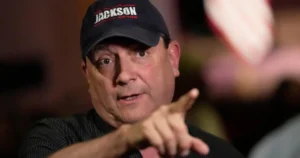
A week prior, on October 24, 2025, the briefing featured Republican candidate Curtis Sliwa, who saw "a path to becoming NYC’s Mayor." Sliwa, the GOP’s standard-bearer and a recognizable figure in New York, was undertaking his second mayoral bid, having lost to Eric Adams four years prior. This time, he faced not only the rising progressive star Zohran Mamdani but also the former governor Andrew Cuomo, who had left office "in disgrace four years ago." Sliwa’s challenge was formidable, given that Democratic voters in New York City historically outnumber Republicans by a six-to-one margin. Despite enormous pressure to drop out, Sliwa shared his perspective from a lifetime in New York politics, reflecting on his two mayoral runs. His campaign, though ultimately unsuccessful against Mamdani, underscored the enduring struggle of Republicans to gain traction in deep-blue urban centers, often relying on unique candidacies and targeted messaging to attempt to bridge the demographic and ideological gap. The presence of a former governor like Cuomo in the race further complicated the dynamics, fragmenting the anti-Mamdani vote and potentially aiding the progressive candidate.
An Extraordinary Moment in American Justice
Beyond electoral and legislative battles, the "CNN Political Briefing" also delved into significant developments within the American justice system. On October 10, 2025, the podcast addressed what was described as "An Extraordinary Moment in American Justice": the prosecution of former FBI director James Comey. Former federal and state prosecutor Elie Honig, author of "When You Come at the King: Inside DOJ’s Pursuit of the President, From Nixon to Trump," provided historical context for Comey’s case. Honig’s analysis would have placed Comey’s prosecution within a broader narrative of the Department of Justice’s engagement with high-profile political figures, from the Nixon administration to the Trump era. This discussion likely explored the delicate balance between political accountability and prosecutorial independence, the precedent-setting nature of such a prosecution, and its implications for public trust in federal law enforcement and the judiciary. The "extraordinary" label suggested that the case deviated from typical prosecutorial norms, potentially raising questions about political motivations, the rule of law, and the long-term impact on the FBI’s institutional integrity. Such a development would undoubtedly have generated widespread legal and political debate, intensifying scrutiny on the Department of Justice and its leadership.
Conclusion
The "CNN Political Briefing" episodes from late 2025 paint a vivid picture of a deeply polarized and dynamically shifting American political landscape. From the internal power struggles within the Republican Party, exemplified by Congressman Kiley’s criticism of Speaker Johnson and the nuanced assessment of former President Trump’s waning control over his base, to the strategic maneuvers of Democrats following "big electoral victories" and the resolution of a prolonged government shutdown, the period was rife with significant developments. The local electoral triumphs, particularly Zohran Mamdani’s groundbreaking win in New York City, signaled emergent political forces and a potential recalibration of urban governance. Meanwhile, the legal system found itself under an unprecedented spotlight with the prosecution of a former FBI director. As the nation looked toward the 2026 midterm elections, the intricate interplay of these events suggested a continued era of political volatility, demanding insightful analysis and a keen understanding of both national trends and local impacts, which the "CNN Political Briefing" consistently aimed to provide. The discussions underscored that the future of American politics would be shaped not just by top-down leadership but also by grassroots movements, evolving party ideologies, and the enduring challenges of federal governance.