The Cost of Conflict Trump’s Aggressive Rollback of Wind Energy and the Resulting Economic Uncertainty for Union Labor

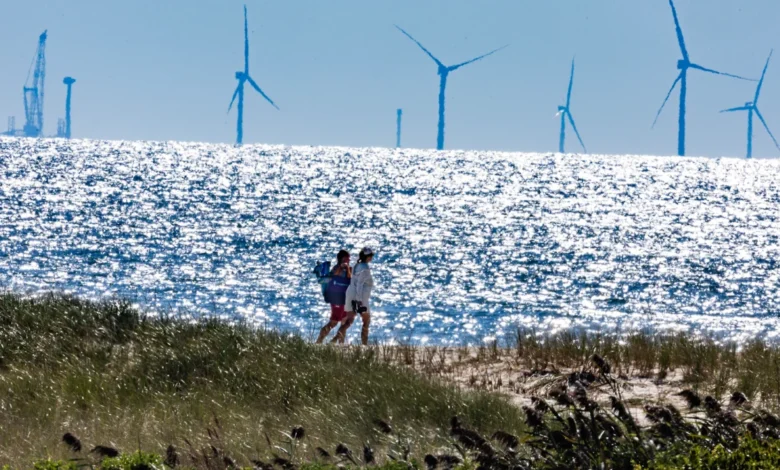
The American offshore wind industry, once envisioned as a cornerstone of the nation’s transition to renewable energy, has become a primary battlefield for the second Trump administration’s regulatory and ideological overhaul. Through a series of executive orders, stop-work mandates, and multi-billion-dollar lease buyouts, the administration has initiated a systemic dismantling of wind energy projects across the Atlantic and Pacific coasts. While the White House frames these actions as a necessary pivot toward "reliable" energy and national security, the policy shift has sent shockwaves through the labor sector, leaving thousands of unionized workers caught in a cycle of litigation and job instability.
Since returning to office, President Donald Trump has escalated a decades-long campaign against wind power, a stance previously marked by public grievances over avian mortality, aesthetic concerns, and unverified health claims. However, the current strategy has moved beyond rhetoric into high-stakes fiscal and legal maneuvers. To date, the administration has spent more than $2.6 billion in taxpayer funds to settle contracts and buy out wind energy leases, effectively paying corporations to abandon projects that were intended to provide long-term employment for specialized trades.
A Timeline of Regulatory Friction and Legal Challenges
The current volatility in the wind sector is the result of a rapid succession of federal interventions that began shortly after the presidential inauguration. In January 2025, the administration issued an executive order aimed at a "temporary withdrawal" of all areas on the outer continental shelf from offshore wind leasing. This order also mandated a comprehensive review of the federal government’s existing permitting practices, effectively freezing the pipeline for new developments.
By mid-2025, the focus shifted from future leases to projects already under construction. In August 2025, a stop-work order was issued for the Revolution Wind Project, a major installation off the coast of Rhode Island and Connecticut. The order arrived while crews were mid-shift, creating immediate logistical and financial confusion. Thomas Kilday, a furnace electrician with IBEW Local 99, was among those stationed on a vessel at sea when the news broke.
"No one really knew what was going on," Kilday recalled. "You plan your whole life around being gone for 28 days. To have everything thrown up in the air while you’re out on the water makes you worry about your pay and your future. There is a profound sense of uncertainty when the rules change while you’re in the middle of the job."
The legal battle over Revolution Wind became a bellwether for the industry. In September 2025, a federal court granted an injunction to block the administration’s stop-work order, allowing construction to resume. However, the reprieve was short-lived. In December, the administration issued a second 90-day stop-work order, this time citing "national security" concerns. This second attempt was also met with a judicial injunction in January 2026, with a judge ruling that the administration had failed to provide sufficient evidence that the project posed an immediate threat to the nation.
The Financial Toll of Lease Buyouts
Following several losses in federal court, the Trump administration adjusted its tactics. Recognizing that stop-work orders were vulnerable to legal challenges, the Department of the Interior began negotiating massive settlements to cancel leases entirely. This "buyout" strategy has proven to be an expensive method of halting the industry’s growth.
Recent data from the Department of the Interior and the National Resources Defense Council (NRDC) highlights the scale of these expenditures:
- Invenergy Settlement: The administration paid $765 million to Invenergy to abandon four major wind projects located in California, New York, and Maine.
- Bluepoint and Garden State Wind: Nearly $900 million was paid to cancel offshore leases in the lucrative New York Bight and off the California coast.
- Total Expenditure: To date, the administration has committed over $2.6 billion to ensure that approximately half a dozen major offshore projects never reach completion.
Critics of the policy, including Pat Crowley, president of the Rhode Island AFL-CIO, argue that these buyouts represent a massive waste of public funds. "What the administration is doing is throwing money away for the sake of an ideology," Crowley stated. "These projects were not just about carbon emissions; they were about providing high-paying, stable union jobs for thousands of people. Taking those off the table doesn’t make economic sense."
Impact on the Specialized Labor Force
The human cost of this policy shift is most visible in the "blue economy" hubs of New England and the Mid-Atlantic. For workers like Will Gonzalez, a construction laborer with Laborers’ Local 385, the cancellation of projects represents a missed opportunity to utilize specialized training. Gonzalez worked on the Vineyard Wind 1 project off the coast of Martha’s Vineyard—one of the few projects that managed to reach full operational status despite federal pressure.
"All of us who worked on Vineyard Wind 1 wanted to segue right into the next project," Gonzalez explained. "We are fully trained, certified, and ready to go. Now, those certifications are sitting unused. It’s a personal vendetta that is taking good union jobs off the table. Families need these jobs to pay the bills, and to see them discarded because of politics is frustrating."
The offshore wind industry requires a highly specialized workforce, including maritime experts, turbine technicians, and underwater welders. Union leaders argue that by creating an unstable environment, the administration is discouraging the next generation of tradespeople from entering the renewable energy sector, potentially leading to a "brain drain" as workers seek more stable employment in traditional infrastructure or fossil fuel sectors.
The Administration’s Defense: Prioritizing "Proven" Energy
In response to criticism from labor groups and environmental advocates, the Department of the Interior has maintained that its actions are intended to protect the American economy from "unreliable" energy sources. A spokesperson for the department denied that the cancellation of leases had any negative impact on employment.
"No jobs were eliminated because none of these leases were operational or supporting employment at scale," the spokesperson stated. The administration’s official position is that wind energy projects are often tied to long-term subsidies and "fragile" supply chains that do not offer the immediate economic benefits of traditional energy infrastructure.
The Department of the Interior further argued that its approach prioritizes investments in "proven, affordable, and reliable energy" that can deliver benefits faster than offshore wind projects, which often face years of permitting delays and environmental litigation. This stance aligns with the administration’s broader "Energy First" policy, which emphasizes the expansion of oil, gas, and coal production.
Historical Context: The Scotland Connection
Many industry analysts and workers point to a long-standing personal history between Donald Trump and the wind industry as a primary driver of current policy. In 2015, Trump lost a high-profile legal battle in the United Kingdom Supreme Court over a proposed 11-turbine offshore wind farm near his golf resort in Aberdeenshire, Scotland. Trump had argued that the turbines would be a "blight" on the landscape and ruin the view from his property.
The loss in Scotland appears to have informed his subsequent rhetoric. Throughout his political career, Trump has frequently disparaged wind energy in public forums, often using hyperbolic language. Will Gonzalez and other union members believe this history has translated into a "personal vendetta" that now dictates federal energy policy.
Broader Implications for the U.S. Energy Market
The aggressive rollback of wind energy has significant implications for the United States’ standing in the global energy market. While European and Asian nations continue to invest heavily in offshore wind technology, the U.S. market is currently characterized by high risk and regulatory volatility.
Investor Confidence: The $2.6 billion in lease buyouts may have provided a short-term exit for energy corporations, but the underlying message to investors is one of instability. Financial analysts warn that if federal contracts can be unilaterally canceled or bought out for ideological reasons, the U.S. may struggle to attract large-scale capital for any long-term infrastructure projects, regardless of the sector.
Grid Reliability: Projects like Revolution Wind were designed to power hundreds of thousands of homes. Revolution Wind, which is over 90 percent complete, began delivering power to New England in March 2026. Proponents argue that halting similar projects removes a critical tool for diversifying the energy grid and reducing reliance on volatile global commodity markets for oil and gas.
Environmental Impact: Beyond the labor and economic concerns, the halt of wind projects slows the nation’s progress toward reducing carbon emissions. With several states, including New York and Massachusetts, having set ambitious renewable energy targets, the federal government’s current stance creates a direct conflict with state-level mandates, likely leading to further legal battles between state governors and the White House.
As the Trump administration continues its second term, the future of American offshore wind remains precarious. While the administration has successfully halted several projects through financial settlements, the persistence of union labor and the intervention of the federal judiciary suggest that the battle over the Atlantic’s winds is far from over. For workers like Thomas Kilday and Will Gonzalez, the hope remains that the industry will eventually find a steady course, providing the "important work" they take pride in performing.