
An Atheist Chaplain And A Death Row Inmates Final Hours
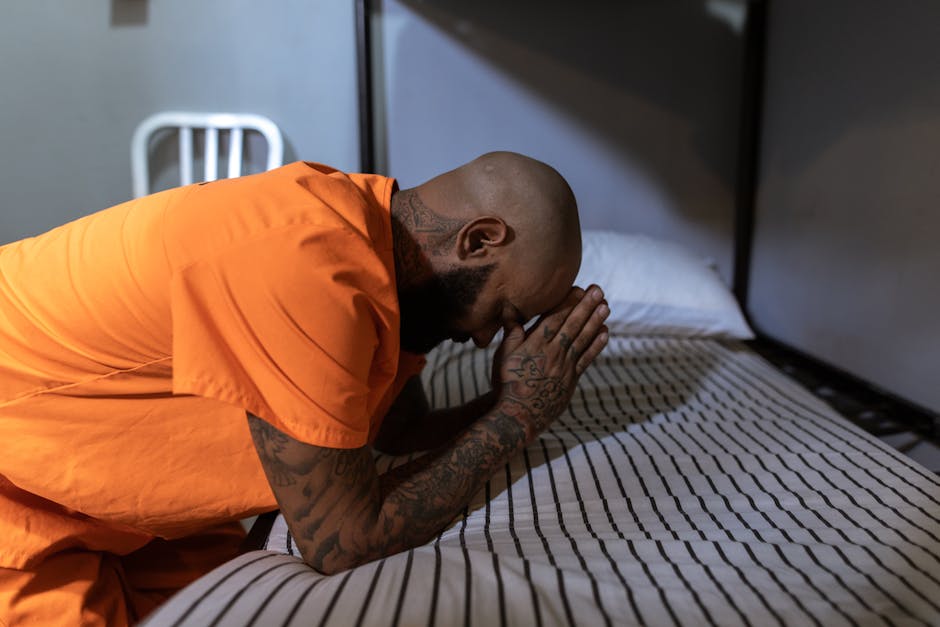
The Atheist Chaplain: Navigating Final Hours on Death Row
The sterile, linoleum-clad room offered no solace, only the stark reality of impending finality. Dr. Evelyn Reed, an atheist chaplain affiliated with a secular advocacy group, adjusted her glasses. Her role, often met with skepticism and misunderstanding, was to provide non-religious support to inmates facing execution. Her inmate, Marcus “The Shadow” Jones, was a man condemned for a heinous crime, a man who had, in his final months, rejected any concept of divine intervention or posthumous judgment. Evelyn’s presence was a testament to the evolving landscape of spiritual care within correctional facilities, a recognition that comfort, reflection, and dignity at the end of life transcend traditional religious frameworks. She was not there to offer pronouncements of salvation or to engage in theological debate. Her purpose was far more grounded: to be a human presence, a listener, a facilitator of peace in the face of absolute oblivion.
Marcus had initially requested a religious chaplain, a standard procedure. However, as his execution date drew nearer, and his journey of introspection intensified, he had explicitly requested Evelyn. His reasons were complex. He felt no connection to the God presented by the prison’s chaplaincy. He described it as a “fairytale for the scared,” and he no longer felt the need for such narratives. He wanted someone who understood his perspective, someone who acknowledged the stark finality of death without attempting to cloak it in supernatural promises. This request, a rarity, had placed Evelyn in a unique and demanding position. She was to guide a man through his last hours, not towards an afterlife, but towards a peaceful acceptance of his existence ending. This required a deep understanding of existentialism, Stoicism, and the practicalities of human comfort and emotional processing.
Evelyn’s training had prepared her for the clinical aspects of death and dying, but the specific context of death row presented unique challenges. The atmosphere was thick with protocol, security, and the hushed anxieties of correctional officers and staff. The weight of societal condemnation, amplified by the media circus that often surrounded such cases, was palpable. Evelyn’s task was to shield Marcus from this external noise, to create a small sanctuary of human connection within the impersonal machinery of the justice system. She had spent weeks with Marcus, building a rapport, understanding his history, his regrets, and his few remaining sources of comfort. They had discussed literature, his childhood memories, the taste of a particular meal he missed, the feeling of sunshine on his skin. These were not attempts to distract him, but rather to ground him in the lived experience he was about to leave behind.
The hours leading up to the execution were meticulously scheduled. Evelyn arrived hours before the official countdown began, a silent observer of the preparations that hummed around the facility. She was allowed private, unmonitored time with Marcus. The death chamber, a stark and functional space, was a constant visual reminder of what was to come. Evelyn avoided dwelling on its physicality, choosing instead to focus on Marcus’s internal state. She observed his breathing, his posture, the subtle shifts in his facial expression. Her presence was intended to be a steady anchor, not an emotional storm.
“Marcus,” she began softly, her voice calm and even, “how are you feeling right now?”
He met her gaze, his eyes surprisingly clear. “Empty, Evelyn. And… quiet. Like the world has finally stopped yelling.”
Evelyn nodded, accepting his articulation without judgment. “Emptiness can be a vast space. What are you finding in that space?”
“Memories,” he said, a faint smile touching his lips. “The smell of rain on hot asphalt after a summer storm. My grandmother’s laugh. The way the light used to filter through the leaves in the park near my old apartment. Small things. Things I never paid attention to before.”
Evelyn encouraged him to elaborate, to revisit these moments, not to dwell on what was lost, but to appreciate the richness of what had been. She understood that for many, the end of life brings a sharpening of senses, a heightened awareness of the sensory and emotional tapestry of their existence. Her role was to help Marcus weave that tapestry one last time, to acknowledge its threads, its colors, its imperfections, and its inherent beauty. She spoke of the philosophical concept of memento mori, not as a religious exhortation, but as a practical reminder to live fully in the present.
“We are all, in a sense, on death row,” she said, a familiar observation from her secular perspective, designed to normalize the ultimate human experience. “The difference is our timeline is unknown. Your timeline has been made clear. This allows for a unique kind of focus, doesn’t it? A stripping away of the ephemeral.”
Marcus considered this. “It’s honest, I’ll give it that. No more pretending. No more games.”
Evelyn did not shy away from the gravity of the situation. She acknowledged the pain and suffering Marcus had caused, not to inflict guilt, but to create space for genuine remorse and self-reflection, if that was what he sought. She had learned that for some, the final hours offered an opportunity for profound introspection, for a reckoning with their actions, and a desire for atonement, even in the absence of external absolution.
“We can talk about anything, Marcus,” Evelyn reiterated. “The past, the present, whatever weighs on you. Or we can simply sit in silence, if that feels right. There’s no script here, no expectation, other than to be present with you.”
He chose to talk. He spoke of his childhood, of the seeds of anger and resentment that had been sown early on. He didn’t offer excuses, but rather an explanation of the trajectory of his life, the choices he had made, and the consequences he now faced. Evelyn listened with an open, non-judgmental ear, offering gentle prompts and reflections that encouraged him to explore his own feelings and insights. She helped him articulate his understanding of responsibility and the impact of his actions on others, acknowledging that the concept of justice, while flawed, was a fundamental aspect of human society.
As the hour approached, the atmosphere in the facility became more charged. Evelyn maintained her calm demeanor, a steadying influence amidst the heightened tension. She had brought with her a small, worn copy of Marcus’s favorite book, a collection of essays by a humanist philosopher. She read a few passages aloud, not for their theological content, but for their exploration of human resilience, the search for meaning, and the acceptance of mortality.
“’The unexamined life is not worth living,’” she read, quoting Socrates, a figure often embraced by secular humanists. “’But it is the examined life, lived with courage and integrity, that truly defines us, regardless of the outcome.’”
Marcus closed his eyes, absorbing the words. “I wish I’d read that sooner.”
“You are examining it now, Marcus,” Evelyn said softly. “And in this examination, there is a form of dignity.”
The final minutes were spent in quiet companionship. Evelyn held his hand, a simple gesture of human connection. She spoke of the beauty of the natural world, the enduring cycles of life and death, and the legacy that even a fleeting existence can leave through the echoes of one’s impact, however tragic. She did not offer platitudes about an afterlife, but focused on the present moment, on the shared humanity of their encounter.
“Thank you, Evelyn,” Marcus whispered, his voice growing weaker. “For… seeing me.”
“You are seen, Marcus,” Evelyn replied, her voice firm but gentle. “You are human. And your humanity is acknowledged.”
As the execution commenced, Evelyn remained present, a silent witness to the final breath. Her role was not to intervene, but to ensure that in the face of a system that had rendered its final judgment, a measure of human compassion and dignity was present until the very end. She left the facility with a heavy heart, but also with a profound sense of the importance of her work. The atheist chaplain, a figure often overlooked, played a crucial role in providing a secular space for reflection, acceptance, and human connection, ensuring that even in the most extreme circumstances, the final hours of life were met with a measure of peace, stripped of dogma and infused with genuine empathy. Her work was a testament to the universal human need for presence, understanding, and dignity, regardless of one’s belief system or the path one had taken. This secular ministry, though unconventional, was vital in offering solace and a final measure of humanity to those facing their ultimate end, demonstrating that compassion and support are not the sole domain of religious faith, but fundamental aspects of our shared human experience.
