
Us Sanctions Russia Israel Postwar Gaza
US Sanctions on Russia and the Complex Interplay with Post-War Gaza Realities
The imposition of United States sanctions on Russia, stemming from its full-scale invasion of Ukraine in February 2022, has created a multifaceted global economic and geopolitical landscape. While ostensibly targeting the Russian Federation to cripple its war-making capabilities and compel a change in its aggressive posture, these sanctions have had far-reaching consequences that, in turn, intersect with the deeply complex and volatile situation in post-war Gaza. Understanding this intersection requires a granular examination of how US policy towards Russia influences global markets, humanitarian aid flows, and the broader geopolitical calculus that impacts the Palestinian territories. The economic repercussions of sanctions on Russia extend beyond its borders, affecting commodity prices, supply chains, and the financial stability of nations worldwide. Russia’s status as a significant exporter of energy, agricultural products, and certain critical minerals means that its exclusion from global markets, or significant disruption of its trade, inevitably reverberates through international commerce. This disruption can lead to price volatility, increased inflation, and potential shortages, particularly in developing economies.
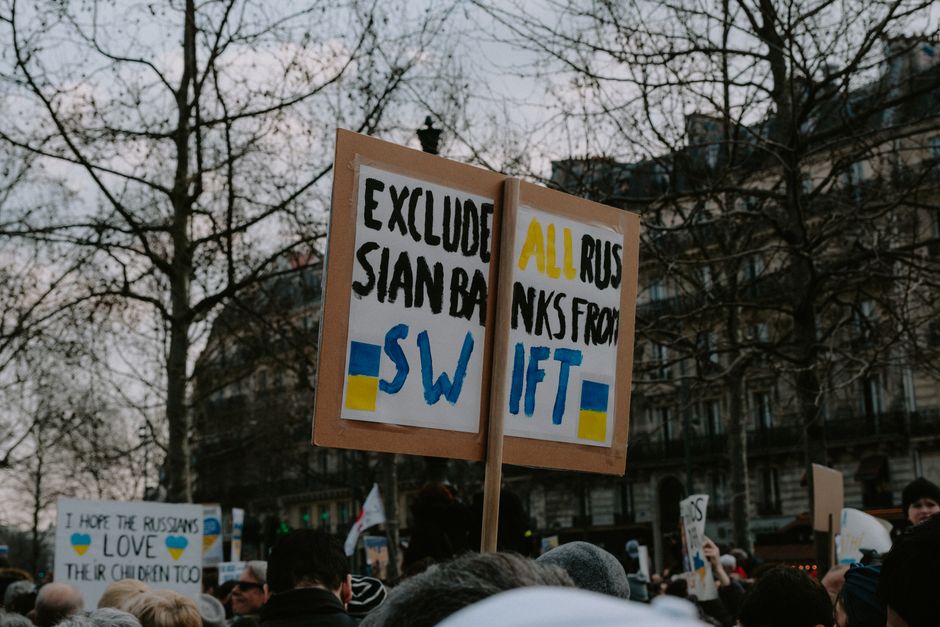
The direct impact of US sanctions on Russia involves a broad spectrum of measures. These include targeting key Russian financial institutions, freezing assets of oligarchs and government officials, restricting access to Western technology and components crucial for its military and industrial sectors, and imposing export controls. The stated objective is to degrade Russia’s ability to sustain its military operations, undermine its economic base, and isolate it internationally. The effectiveness of these sanctions is a subject of ongoing debate, with proponents arguing that they have significantly weakened Russia’s economy and military, while critics point to instances of circumvention, resilience in certain sectors, and unintended negative consequences for other nations. The sheer scale of these sanctions, unprecedented in their scope against a major global economy, necessitates a comprehensive analysis of their ripple effects, moving beyond immediate bilateral impacts.
The post-war Gaza context, characterized by decades of blockade, intermittent conflict, and a severe humanitarian crisis, is acutely sensitive to external economic and political pressures. Any disruption in global supply chains or fluctuations in commodity prices, amplified by sanctions on a major producer like Russia, can exacerbate existing vulnerabilities within Gaza. For instance, increases in the global price of fuel, stemming from reduced Russian supply or increased demand elsewhere, directly impact the cost of electricity generation, transportation, and agricultural production within Gaza. This, in turn, drives up the cost of essential goods and services, further straining an already impoverished population. Similarly, disruptions in the availability or affordability of food staples, often influenced by global grain markets where Russia is a significant player, can directly affect food security in Gaza, where the majority of the population relies on external aid.
Furthermore, the broader geopolitical ramifications of US sanctions on Russia indirectly influence the dynamics of the Israeli-Palestinian conflict. The United States’ role as a primary mediator and a key supporter of Israel means that its strategic priorities and its engagement with regional actors are heavily influenced by its global policy objectives, including its confrontation with Russia. A heightened focus on countering Russia can, at times, divert diplomatic bandwidth and resources away from other pressing international issues, potentially impacting the intensity and focus of US efforts to address the Israeli-Palestinian conflict or to facilitate post-war reconstruction and stabilization in Gaza. This is not to suggest a direct causal link, but rather a dynamic where competing geopolitical priorities can shift the allocation of diplomatic attention and influence.
The humanitarian aid landscape to Gaza is another area where the impact of US sanctions on Russia can be felt. While direct aid to Gaza is typically channeled through dedicated humanitarian organizations and not directly from Russia, the global economic environment shaped by sanctions can influence funding availability and operational costs. Donor countries, including the US and its allies, may face increased economic pressures at home due to inflation and the broader costs of global instability, potentially affecting their capacity or willingness to contribute to humanitarian assistance efforts. Moreover, the complex financial systems and banking channels through which humanitarian aid is disbursed can be indirectly impacted by the broader global financial tightening that often accompanies major sanction regimes. While specific humanitarian exemptions are usually built into sanctions regimes, the overall climate of financial scrutiny and increased compliance burdens can create operational challenges and delays.
The intricate web of global politics means that actions taken by major powers, such as the US imposing sanctions on Russia, rarely remain confined to bilateral relationships. The economic and political fallout creates ripples that can touch even the most seemingly distant or intractable conflicts. In the case of Gaza, the economic hardship and political instability are chronic issues. Any external shocks, whether they be global commodity price surges or shifts in international diplomatic priorities, can significantly worsen the humanitarian situation and hinder long-term recovery efforts. The effectiveness of any post-war reconstruction or peace-building initiatives in Gaza will be inextricably linked to the broader global economic stability and the availability of sustained international support, both of which can be indirectly influenced by major geopolitical events like the sanctions imposed on Russia.
Examining the sanctions regime against Russia also necessitates an understanding of the mechanisms of circumvention and adaptation. While the stated intent is to isolate Russia, economic realities often compel alternative trading routes and financial mechanisms. This can involve third countries acting as intermediaries, or the development of parallel payment systems. These efforts at circumvention, however, can also create secondary sanctions risks for entities engaging in such activities. The global financial system, already strained by the pandemic and other economic shocks, becomes more complex and potentially less transparent as nations navigate these new realities. This complexity can inadvertently affect the smooth flow of legitimate trade and aid to vulnerable regions like Gaza, even if not directly targeted by sanctions.
The United States’ policy towards both Russia and the Israeli-Palestinian conflict is guided by a range of strategic interests. In the case of Russia, these interests revolve around national security, the principle of national sovereignty, and the stability of the international order. In the Middle East, US interests include promoting regional security, supporting its allies, and facilitating a resolution to the Israeli-Palestinian conflict. The interplay of these distinct but interconnected policy objectives creates a complex strategic environment. For instance, if the US perceives Russia as actively supporting actors that undermine regional stability in the Middle East, this could strengthen the resolve to maintain sanctions on Russia. Conversely, if the US prioritizes de-escalation in the Middle East, it might seek to manage its relationship with actors who have ties to Russia in a way that does not jeopardize those de-escalation efforts, a delicate balancing act.
The perception of fairness and equity in the application of international law and sanctions also plays a role in the broader geopolitical narrative. Critics of US foreign policy sometimes point to perceived double standards, where sanctions are applied more stringently to certain nations than others, or where humanitarian concerns are not consistently prioritized across different contexts. While this is not a direct consequence of the sanctions themselves, it contributes to the broader political environment in which international relations operate. In regions like Gaza, where populations often feel marginalized and subject to external pressures, such perceptions can fuel resentment and complicate efforts to build trust and achieve lasting peace.
The long-term implications of US sanctions on Russia for the global economy are still unfolding. However, it is clear that these measures have contributed to a period of significant global economic uncertainty. For a region like Gaza, which is perpetually on the brink of humanitarian crisis, such uncertainty translates into tangible hardship. The ability of international organizations and donor nations to effectively respond to the needs of Gaza is directly tied to their own economic health and their capacity to allocate resources. Therefore, understanding the interconnectedness of global economic policy, such as sanctions on Russia, and the specific humanitarian challenges faced by post-war Gaza is crucial for developing effective and sustainable approaches to both international relations and humanitarian aid. The sanctions on Russia are not an isolated event; they are part of a dynamic global system where economic and political decisions have far-reaching and often unanticipated consequences. The future of Gaza, in its quest for stability and recovery, will undoubtedly be shaped, in part, by these broader global forces. The challenge lies in mitigating the negative spillover effects of such geopolitical actions on vulnerable populations and ensuring that the pursuit of international security and economic stability does not come at the undue expense of human welfare in conflict-affected regions. The interconnectedness of the globalized world means that even policies directed at one major power like Russia inevitably cast a shadow, or at times, a ray of uncertain light, on seemingly disparate geopolitical arenas like post-war Gaza.
