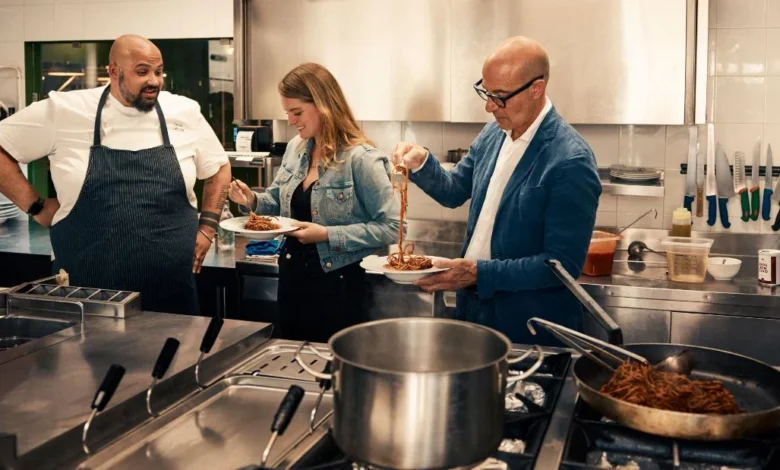
The culinary landscape of Italy is a complex tapestry of history, geography, and tradition, a fact meticulously documented in the second season of the critically acclaimed travelogue Stanley Tucci: Searching for Italy. Following the monumental success of its debut season, which garnered multiple Emmy Awards and sparked a renewed global interest in regional Italian gastronomy, the series continues its exploration of the peninsula’s diverse flavors. Host Stanley Tucci, an Academy Award-nominated actor with deep ancestral ties to the country, serves as a cultural conduit, bridging the gap between world-class Michelin-starred innovation and the humble, enduring recipes of local households.
The second season expands its scope beyond the well-trodden paths of Rome and Florence, venturing into the rugged coastlines of Liguria, the sun-drenched plains of Puglia, the isolated traditions of Sardinia, and the deeply personal terrain of Calabria. This guide serves as a comprehensive record of the establishments and artisans visited by Tucci, providing both a roadmap for culinary enthusiasts and a broader analysis of how these regional identities are preserved through the medium of food.
The Italian Riviera: Liguria’s Innovative Traditions
Liguria, the crescent-shaped region known as the Italian Riviera, is defined by its dramatic meeting of mountains and sea. The geography of the region—steep cliffs and limited arable land—has historically forced its inhabitants to be exceptionally inventive. During his journey through Liguria, Tucci highlighted how this "harshness of the land" birthed some of the world’s most beloved culinary exports, most notably pesto.
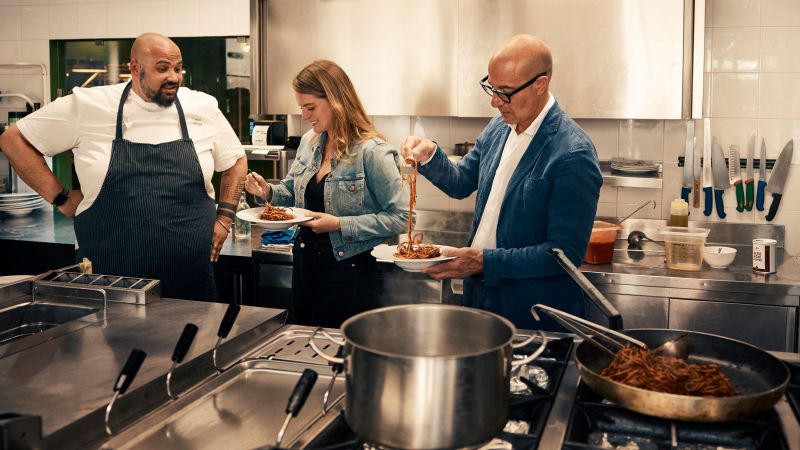
One of the season’s primary stops was Cracco Portofino, helmed by the renowned Michelin-starred chef Carlo Cracco. In this high-end establishment, the focus remains firmly on local flora. Cracco demonstrated the preparation of pansotti, a traditional ravioli-style pasta filled with preboggion—a specific blend of wild greens and herbs foraged from the Ligurian hills—served with a rich walnut sauce. This dish exemplifies the region’s ability to elevate "wild" ingredients into sophisticated cuisine.
In Genoa, the regional capital, Tucci visited Il Genovese, where Chef Roberto Panizza, often referred to as the "King of Pesto," maintains the ancient practice of crushing basil, pine nuts, garlic, and cheese by hand in a mortar. This dedication to traditional methods is supported by the Pesto World Championship, an organization Panizza founded to preserve the integrity of the sauce. Further exploring the working-class staples of Genoa, Tucci visited Antico Forno della Casana, a bakery celebrated for its traditional focaccia alla Genovese. The local custom, as Tucci discovered, involves eating the bread upside down so that the salt crystals directly stimulate the palate.
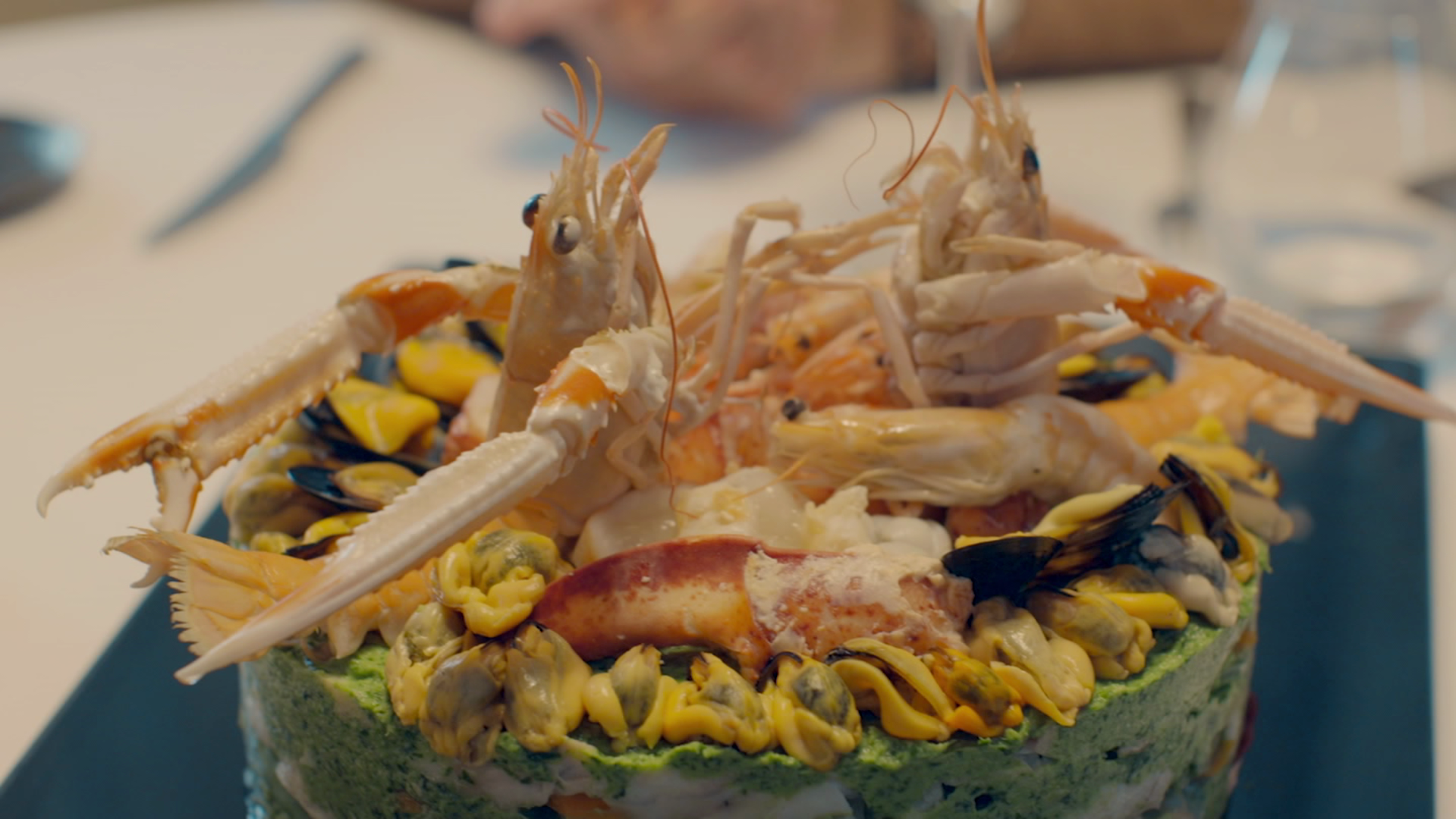
The exploration of Genoa concluded with a visit to The Cook, located within a 14th-century palazzo. Chef Ivano Ricchebono showcased the cappon magro, a visually stunning, pyramid-shaped seafood and vegetable salad that dates back to the 16th century. This dish represents the transition of Ligurian food from simple sustenance for sailors to a centerpiece of aristocratic banquets.

Puglia: The Rise of the Boot’s Breadbasket
Puglia, the "heel" of the Italian boot, has historically been one of the nation’s most impoverished regions. However, it is also the source of much of Italy’s agricultural wealth, producing vast quantities of durum wheat, olive oil, and vegetables. Tucci’s visit to Puglia revealed a region experiencing a gastronomic renaissance, fueled by a newfound pride in cucina povera (peasant cooking).
In the city of Bari, Tucci encountered the provocative spaghetti all’assassina at Urban Bistrot. Chef Celso Laforgia utilizes a unique technique where dry pasta is charred in a pan with chili and tomato broth without being boiled first. This "assassin’s pasta" is a testament to the bold, spicy profiles that define southern Italian street food.
The theme of transforming humble ingredients continued at Antichi Sapori in Montegrosso. Chef Pietro Zito is a leading figure in the "farm-to-table" movement in Puglia, serving orecchiette made from burnt grain—a historical necessity where peasants collected the scorched kernels left after fields were burned—paired with fava bean cream and burrata.

Tucci also explored the meat-centric traditions of the hilltop town Cisternino at Trattoria Bere Vecchie. This establishment functions as a "fornello pronto," a butcher shop that grills its wares on-site. Tucci sampled bombette (stuffed pork rolls) and gnumareddi (lamb offal wraps), dishes that reflect the communal, rustic dining habits of the Apulian interior. The journey through the region included a stop at Caseificio Dicecca, where artisan Vito Dicecca has innovated by creating 66 varieties of Apulian blue cheese, a rarity in a region dominated by fresh cheeses like mozzarella and burrata.
The Puglia segment culminated in Matera, the ancient city of caves. At Ristorante Vitantonio Lombardo, located within a renovated grotto, the Michelin-starred chef presented "Poverty and Nobility," a dish that uses veal and black breadcrumbs to mimic the appearance of truffles, symbolizing the region’s complex relationship between its difficult past and its prestigious future.
Sardinia: An Archaeological Culinary Dig
Sardinia’s culinary identity is distinct from the mainland due to its historical isolation and the influence of various Mediterranean settlers, including the Phoenicians, Romans, and Spanish. Tucci’s exploration of the island was divided between the seafood-rich coastline and the tradition-bound interior.
At Fradis Minoris, a sustainable restaurant with a Michelin Green Star, Tucci sampled fregola ai frutti di mare. The fregola, a toasted, pebble-like pasta, bears a striking resemblance to North African couscous, highlighting Sardinia’s role as a Mediterranean crossroads. In Alghero, a city known as "Barceloneta" due to its Catalan roots, Tucci visited Al Forno to try panada, a savory meat pie that is a direct culinary cousin of the Spanish empanada.
The island’s mastery of tuna was showcased at Luigi Pomata, where the eponymous chef, known as the "King of Tuna," prepared cassulli alla carlofortina. This dish uses bluefin tuna belly, a prized local resource. Tucci also experienced the ancient traditions of the Sardinian mountains at Arimani, a culinary school where Chef Simonetta Bazzu preserves recipes like zuppa gallurese—a hearty dish of bread soaked in sheep broth and layered with cheese. These inland traditions emphasize the shepherd culture that remains the backbone of Sardinian identity.
Calabria: A Homecoming to the Ancestral Toe
The visit to Calabria was the most sentimental segment of the season, as it is the region from which Tucci’s own family emigrated. Calabria forms the "toe" of Italy and is characterized by a rugged, wild landscape and a cuisine that leans heavily on preservation, utilizing chilies (peperoncino), sun-dried vegetables, and cured meats.

In the village of Marzi, Tucci visited Panificio Cuti, where Pina Olivetti continues a century-old tradition of sourdough baking. The morsello, a bread bowl filled with sausage and greens, served as a reminder of the portable meals designed for the region’s farmers and hunters.
Calabria’s unique agricultural products were highlighted at Osteria della Cipolla Rossa in Tropea. The city is world-famous for its sweet red onions (cipolla rossa), which are so mild they can be eaten raw. This single ingredient is the foundation of the region’s signature spaghetti dish.
The coastal town of Scilla provided an opportunity to witness the tradition of swordfish hunting. At Il Principe di Scilla, Tucci sampled raw swordfish and a rich ragu, illustrating the deep respect the Calabrese have for the sea. The season’s exploration ended in the Aspromonte mountains at Qafiz, where Chef Nino Rossi presented a dessert titled "Fire," inspired by the resilience of the land following devastating wildfires.

Chronology and Production Context
The second season of Stanley Tucci: Searching for Italy aired in two parts throughout 2022. The series was produced by CNN Original Series in association with RAW, and its release coincided with a period of significant growth for food-based travel programming.
- Season 1 Premiere: February 2021 (Focusing on Naples, Rome, Bologna, Milan, Tuscany, and Sicily).
- Season 2 Part 1: May 2022 (Venice, Piedmont, Umbria, and a special episode in London).
- Season 2 Part 2: October 2022 (Liguria, Puglia, Sardinia, and Calabria).
The production of the show faced logistical challenges due to shifting travel regulations, yet it remained a top-rated program for CNN, frequently winning its time slot and generating substantial social media engagement.
Analysis and Broader Implications
The "Tucci Effect" has become a recognized phenomenon within the Italian tourism industry. Establishments featured on the show have reported unprecedented surges in bookings and international inquiries. Beyond the economic impact on individual restaurants, the series serves a vital role in cultural preservation. By highlighting hyper-regional dishes like pansotti or spaghetti all’assassina, Tucci brings global attention to culinary traditions that are often at risk of being overshadowed by a homogenized "Italian-American" menu.

Furthermore, the show addresses the socio-economic history of Italy. Tucci does not shy away from the poverty that defined regions like Puglia and Calabria; instead, he demonstrates how that struggle fostered a culture of zero-waste and high-creativity cooking. This narrative aligns with modern global trends toward sustainability and local sourcing, positioning traditional Italian methods as a blueprint for future culinary practices.
In conclusion, Season 2 of Searching for Italy reinforces the idea that food is the most accessible entry point into understanding a nation’s soul. Through his visits to these four distinct regions, Tucci provides more than just a restaurant guide; he offers a profound meditation on how history, family, and land converge on the dinner plate. As the series continues to evolve, it remains a definitive document of Italy’s enduring and ever-changing gastronomic legacy.