Guantanamo Bay Immigration Detention: A $73 Million Policy Marked by Underutilization and Legal Scrutiny


Just over a year after President Donald Trump’s administration initiated a highly publicized plan to transform the U.S. military base in Guantanamo Bay, Cuba, into a sprawling detention center for 30,000 individuals awaiting deportation, a CBS News investigation reveals the ambitious operation is largely a costly failure. Despite a projected expenditure exceeding $70 million for the U.S. military alone, the facilities designed for this purpose sit virtually empty, housing a mere six immigration detainees as of May 11, 2026. This stark underutilization, coupled with a staggering ratio of approximately 100 government employees for every detainee, raises significant questions about the policy’s efficacy, financial prudence, and legal standing.
Policy Inception and Grand Ambitions
President Trump, eight days into his second term in January 2025, made headlines with an executive order that underscored his administration’s "aggressive crackdown on illegal immigration." The centerpiece of this renewed strategy was the proposed expansion of detention capabilities at the Guantanamo Bay Naval Base. The White House announced plans to establish 30,000 detention beds at the controversial outpost, signaling a firm intent to utilize a location long associated with the indefinite detention of terrorism suspects for a dramatically different purpose: civil immigration enforcement. This move was framed as an essential component of a broader strategy aimed at deterring unlawful entries and facilitating the swift deportation of individuals deemed a priority by immigration authorities. The rhetoric surrounding the announcement emphasized the severity of the administration’s approach, promising to send the "worst" detainees and "high-priority criminal aliens" to Guantanamo, thereby removing them from the U.S. mainland.
The Reality on the Ground: A Costly Underutilization
However, a comprehensive review of internal government documents and information provided to Congress by CBS News paints a picture far removed from the administration’s grand pronouncements. More than a year into the operation, the detention facilities at Guantanamo Bay remain overwhelmingly vacant. As of May 11, 2026, the U.S. government held just six immigration detainees at the naval base, all identified as nationals of Haiti. While the documents indicate that 832 immigration detainees have been transferred to the base on more than 100 flights over the past year, the overwhelming majority have since been processed or deported, leaving the costly infrastructure largely dormant.
The disparity between stated capacity and actual occupancy is particularly striking. President Trump’s January 2025 announcement spoke of 30,000 beds; however, internal federal documents reveal the base’s actual capacity for immigration detainees is limited to approximately 400 beds. On the aforementioned May 11 date, fewer than 2% of these available beds were occupied.
The financial and logistical overhead for this minimal occupancy is substantial. Figures provided to Congress indicate that the Department of Defense (DoD) alone has allocated 522 personnel to assist with immigration detention at Guantanamo. Additionally, internal federal documents detail approximately 60 U.S. Immigration and Customs Enforcement (ICE) and non-military staff assigned to the mission. This means that government employees assigned to the immigration detention operation at Guantanamo outnumber the current detainee population by a ratio of roughly 100 to 1. The total projected cost for the U.S. military’s involvement in this effort has escalated to an estimated $73 million, an increase from an earlier public estimate of $40 million. This significant expenditure covers everything from personnel salaries and benefits to the extensive logistical requirements of maintaining the facilities and transporting individuals to and from the remote island location.
Chronology of the Guantanamo Immigration Initiative
The timeline of this controversial initiative underscores the swift, yet ultimately inefficient, implementation of the policy:
- January 2025: Eight days after his return to the White House, President Trump announces an executive order to utilize Guantanamo Bay for immigration detention, with a stated goal of 30,000 beds. This move is presented as a cornerstone of his aggressive immigration enforcement agenda.
- February 2025: Initial flights carrying immigration detainees, arrested by ICE within the U.S., begin arriving at Guantanamo. The administration initially characterizes these transfers as involving "the worst" and "high-priority criminal aliens."
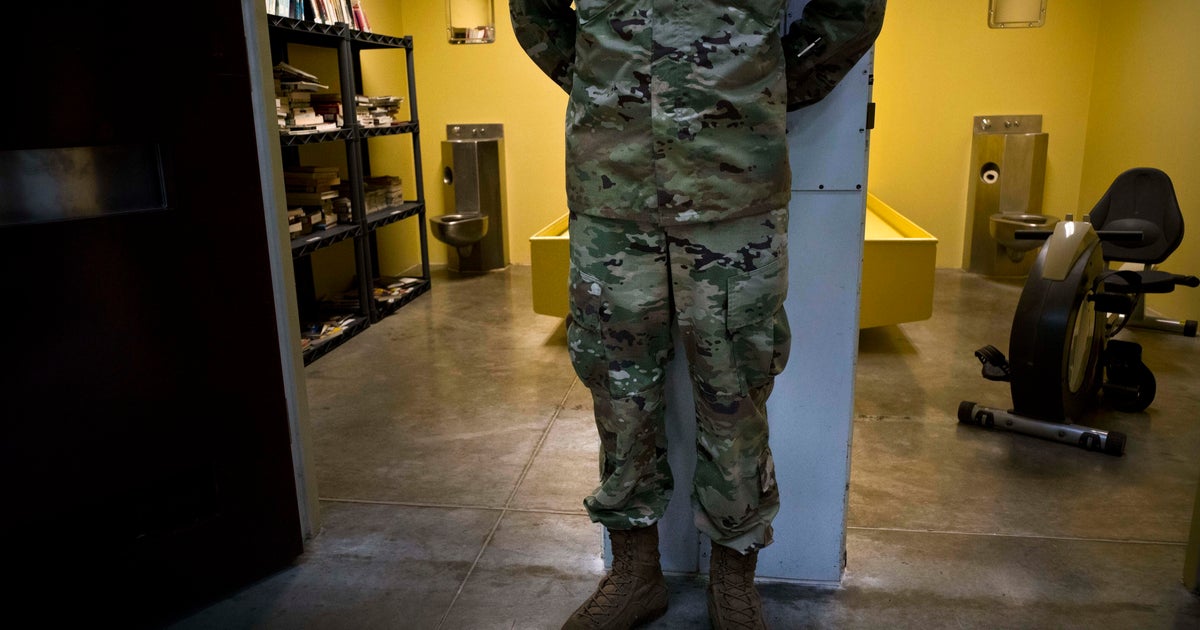
- March-April 2025: CBS News reports reveal a broader scope of detainees being transferred than initially advertised. It becomes clear that "low-risk" individuals, including those without serious criminal records, are also being sent to the base. Subsequent disclosures detail an internal government memo granting officials wide discretion in selecting who to transfer, including non-criminal detainees. Detainees are segregated, with "low-risk" individuals housed at the barrack-like Migration Operations Center and "high-risk" individuals at Camp VI, a section of the post-9/11 prison complex.
- Late 2025: While transfers continue, the overall number of detainees at any given time remains significantly below the announced capacity or even the operational capacity. The legal challenges against the policy begin to gain traction.
- December 2025: A federal judge in Washington, D.C., issues a preliminary ruling in a lawsuit challenging the legality of the operation. The judge finds the immigration detention effort at Guantanamo to be "impermissibly punitive" and "likely unlawful," though stops short of issuing an injunction to block the transfers.
- May 2026: The CBS News investigation reveals the current state of underutilization, with only six detainees present, underscoring the policy’s failure to meet its stated objectives in terms of scale and efficiency, despite mounting costs.
Historical Precedent and Guantanamo’s Controversial Legacy
The decision to utilize Guantanamo Bay for civil immigration detention carries significant historical and ethical baggage. The naval base, leased by the U.S. from Cuba since 1903 (an arrangement the Cuban government disputes as illegal), has a complex history. Before the second Trump administration, Guantanamo had been used by both Republican and Democratic presidents to house migrants intercepted at sea, notably tens of thousands of Haitians during the Clinton administration in the early 1990s. This precedent, however, differed fundamentally from the current operation, which involves transferring individuals apprehended within the U.S. to a facility outside federal court jurisdiction.
More profoundly, Guantanamo Bay gained international infamy following the September 11, 2001, terrorist attacks, when it was established as a detention facility for suspected terrorists. This post-9/11 prison became synonymous with allegations of abuse, due process violations, and torture, leading to widespread condemnation from human rights organizations and international bodies. The specter of these past controversies inevitably hangs over the current immigration detention mission, raising serious questions about the appropriateness and legality of holding civil detainees—some with no criminal record—in a military facility with such a contentious history. The inherent lack of typical civilian court oversight and constitutional protections further compounds these concerns.
Legal Challenges and Ethical Concerns
The American Civil Liberties Union (ACLU) has been at the forefront of the legal battle against the Guantanamo immigration operation. Lee Gelernt, the ACLU lawyer who filed the lawsuit, unequivocally described the administration’s use of Guantanamo as "nothing more than political theater like so many other administration policies." He further argued that the policy is "unprecedented and illegal," serving "no legitimate policy goal given the financial and logistical burdens of using this notorious military base for immigration purposes."
The preliminary ruling by the federal judge in Washington, D.C., in December 2025, which characterized the effort as "impermissibly punitive" and "likely unlawful," underscores the profound legal vulnerabilities of the program. Critics contend that holding civil immigration detainees in a military facility effectively deprives them of established due process rights typically afforded in the U.S. federal court system. The distinction between the barrack-like Migration Operations Center for "low-risk" individuals and Camp VI, a section of the post-9/11 prison, for "high-risk" detainees, while intended to differentiate, still places all detainees within a military rather than civilian justice framework, a key point of contention for legal advocates.
Expert Analysis and Policy Motivations
Theresa Cardinal Brown, a former Department of Homeland Security (DHS) immigration official who served under both Presidents George W. Bush and Barack Obama, offered insight into the Trump administration’s likely motivations. She suggested that Guantanamo, along with other controversial facilities like "Alligator Alcatraz" in Florida, was established to exert pressure on individuals residing in the U.S. illegally to "self-deport" and to deter others from attempting unlawful entry. This deterrence strategy, while a recurring theme in immigration policy, is proving exceptionally costly in the case of Guantanamo.

Cardinal Brown highlighted the significant logistical and financial challenges inherent in operating such a remote facility. "Everything has to be shipped in there, right? It’s not like we’re importing things from Cuba," she explained. "Everything has to come from a U.S. source to that military installation. It’s going to be much, much more expensive." This logistical complexity, coupled with the high personnel count, explains the rapidly escalating costs despite the low detainee numbers. While the deterrence effect of such policies is difficult to quantify definitively, Cardinal Brown noted the generally low levels of illegal crossings at the U.S.-Mexico border, though attributing this solely to Guantanamo is speculative.
Political Fallout and Calls for Accountability
The findings of this investigation have ignited renewed criticism from Capitol Hill. Senator Elizabeth Warren, who received updated cost projections for the Guantanamo operation, did not mince words. She accused President Trump and Defense Secretary Pete Hegseth of "wasting billions in taxpayer funds on a cruel immigration agenda." Her statement reflects a broader sentiment among critics who view the Guantanamo initiative as an expensive, politically motivated gesture rather than an effective or humane solution to immigration challenges.
CBS News has reached out to both the Pentagon and the Department of Homeland Security for comment on these findings, specifically inquiring about the administration’s plans for the future of the operation and the rationale behind its continuation given the high costs and low occupancy. As of the latest update, no official comment has been provided by either department, leaving key questions unanswered regarding the long-term viability and justification for this controversial policy.
Future Outlook and Unanswered Questions
The future of the Guantanamo Bay immigration detention operation remains uncertain. With its high operational costs, minimal detainee population, and ongoing legal challenges, the program stands as a symbol of an ambitious policy that has largely failed to meet its stated objectives. Will the Trump administration continue to pour millions into an underutilized facility, or will it re-evaluate its strategy? The lack of transparency and official comment from the Pentagon and DHS further obfuscates the path forward.
Beyond the immediate financial and operational concerns, the initiative raises profound questions about the use of military facilities for civil detention, the scope of executive power in immigration enforcement, and the protection of due process rights for all individuals, regardless of their immigration status. The controversy surrounding Guantanamo’s use for immigration detainees will undoubtedly continue to fuel debates over U.S. immigration policy, the allocation of taxpayer funds, and the nation’s commitment to international human rights standards. As the cost continues to climb and the beds remain empty, the ultimate impact of this policy — both domestically and on America’s international standing — is yet to be fully realized.