
North Korea Russia Missiles Bank
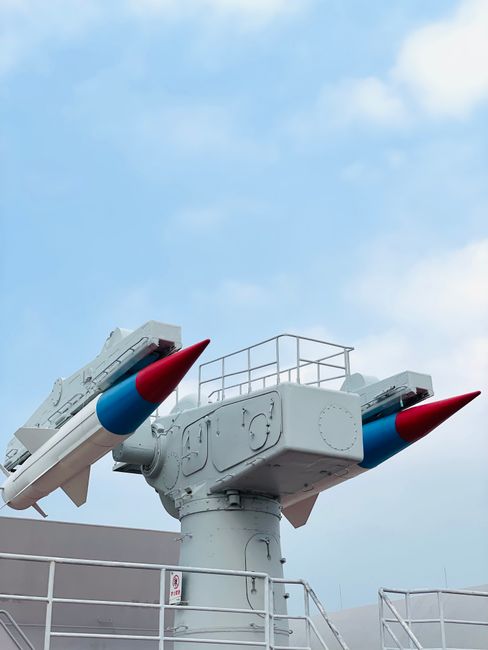
North Korea-Russia Missile Bank: Geopolitical Tensions and the Shifting Global Arms Landscape
The clandestine and increasingly overt cooperation between North Korea and Russia concerning missile technology and potentially ballistic missile components represents a significant and disturbing development in the global security landscape. This "missile bank," while not a formally designated or publicly acknowledged entity, refers to the growing body of evidence suggesting a systematic exchange of weaponized and dual-use technologies, as well as finished ballistic missile systems, between Pyongyang and Moscow. This relationship is driven by a confluence of factors, including mutual strategic interests, economic desperation, and a shared adversarial posture towards the United States and its allies. Understanding the intricacies of this burgeoning partnership is crucial for analyzing its implications for regional stability in Northeast Asia, the proliferation of advanced weaponry, and the effectiveness of international sanctions regimes.
The genesis of this collaboration can be traced back to a shared historical legacy and a more recent convergence of geopolitical imperatives. During the Cold War, North Korea received significant military and technological assistance from the Soviet Union, fostering a deep-seated, albeit sometimes strained, relationship. Following the collapse of the Soviet Union, Russia’s own military-industrial complex faced severe economic hardship, and its engagement with North Korea waned. However, the ascendance of Vladimir Putin and a renewed assertion of Russian global influence, coupled with North Korea’s persistent pursuit of nuclear weapons and advanced missile capabilities, has rekindled this connection. Russia, facing international isolation and sanctions following its annexation of Crimea and subsequent invasion of Ukraine, finds in North Korea a willing partner capable of supplying much-needed munitions. North Korea, in turn, desperately needs hard currency and, more importantly, access to sophisticated technology that can advance its indigenous weapons programs, particularly in areas where its own research and development capabilities may be reaching their limits.
The specific nature of the "missile bank" is multifaceted, encompassing the transfer of finished ballistic missile systems, components for missile production, raw materials, and potentially even expertise. Intelligence reports and analysis from think tanks and government agencies have pointed to North Korean artillery shells and short-range ballistic missiles being supplied to Russia for use in Ukraine. Conversely, there are strong indications that Russia is reciprocating by providing North Korea with more advanced missile technology, potentially including guidance systems, engine components, or even entire intermediate-range ballistic missile (IRBM) systems that Pyongyang has struggled to develop independently. The Hwasong-17 and Hwasong-18 intercontinental ballistic missiles (ICBMs) developed by North Korea, while impressive, may have benefited from Russian technical insights or components, especially concerning solid-fuel propulsion and guidance mechanisms. The reciprocal nature of this exchange suggests a more strategic partnership than a simple transactional sale of surplus weaponry.
The implications of this North Korea-Russia missile bank are far-reaching and profoundly destabilizing. For Russia, acquiring North Korean munitions provides a critical lifeline to sustain its protracted conflict in Ukraine, circumventing Western sanctions and prolonging its military objectives. This also allows Russia to conserve its own limited stockpiles of more advanced weaponry. For North Korea, the benefits are even more existential. The influx of cash from these arms sales provides a vital source of revenue to sustain its impoverished economy and fund its weapons of mass destruction programs. Crucially, the access to Russian technology can accelerate Pyongyang’s development of more potent and longer-range ballistic missiles, increasing its ability to threaten regional adversaries and the United States homeland. This elevates the nuclear and missile threat posed by the Kim regime, making deterrence strategies more complex and volatile.
The international community is grappling with the ramifications of this evolving relationship. The United Nations Security Council, a body that has historically imposed stringent sanctions on North Korea for its nuclear and missile programs, is finding itself increasingly fractured. Russia, as a permanent member of the Security Council, has the power to veto any resolutions that would condemn or further sanction its actions, thereby effectively shielding North Korea from further international pressure. This dynamic significantly hampers the effectiveness of existing sanctions regimes and complicates efforts to de-escalate tensions. The United States, along with South Korea and Japan, has been at the forefront of documenting and denouncing this cooperation, issuing repeated warnings and imposing targeted sanctions on entities and individuals involved in the illicit arms transfers. However, the practical impact of these measures is limited by Russia’s unwavering support for Pyongyang.
The concept of a "missile bank" also raises profound questions about arms control and non-proliferation. The transfer of advanced missile technology from a state with a history of nuclear weapons development to a state actively engaged in such proliferation creates a dangerous feedback loop. It emboldens North Korea, potentially making it more inclined to engage in further provocations and increasing the likelihood of miscalculation. It also sets a troubling precedent for other states seeking to acquire advanced weaponry, suggesting that international norms and treaties can be readily circumvented through such clandestine partnerships. The sophistication of modern ballistic missiles relies on complex engineering, including advanced propulsion systems, inertial navigation units, and re-entry vehicle technology. Any assistance in these areas, even if seemingly incremental, can have a significant impact on a nation’s indigenous capabilities.
Furthermore, the economic underpinnings of this relationship are critical to understand. North Korea’s economy is heavily sanctioned and largely dependent on illicit activities for survival. Arms sales, particularly to a major military power like Russia, represent a significant and readily available source of hard currency. This revenue can then be reinvested into its nuclear and missile programs, creating a self-perpetuating cycle of development and proliferation. Russia, on the other hand, is under immense economic pressure due to Western sanctions. While the direct financial benefit of North Korean arms might be secondary to the strategic advantage of acquiring munitions for Ukraine, the ability to leverage this relationship for economic gains, perhaps through the eventual sale of its own military technology or raw materials, cannot be entirely discounted.
The strategic calculations driving both Moscow and Pyongyang are complex. For Russia, aligning with North Korea serves multiple purposes. It demonstrates defiance to the West, highlights the limitations of Western sanctions, and provides a reliable supplier of much-needed military hardware for its ongoing conflict. It also allows Russia to project influence in a region where its interests are increasingly challenged by the United States and its allies. For North Korea, this alliance offers a degree of international legitimacy, albeit through a rogue partnership, and crucially, provides the technological stimulus needed to continue its pursuit of advanced military capabilities. It allows Kim Jong Un to project an image of strength and defiance, both domestically and internationally, further solidifying his regime’s survival.
The implications for regional security in Northeast Asia are particularly acute. The increased sophistication and potential proliferation of North Korean ballistic missiles, facilitated by Russian technology, directly threaten South Korea, Japan, and U.S. military bases in the region. This could lead to an escalation of military tensions, increased defense spending by regional powers, and a heightened risk of conflict. The ongoing development of solid-fuel ICBMs by North Korea, which are harder to detect and launch more quickly, is a particular concern. If Russia is providing assistance in developing such systems, it dramatically shortens the warning times for potential attacks and complicates defensive strategies.
The international response to this escalating cooperation remains a significant challenge. While the U.S. and its allies are actively working to expose and counter this relationship, Russia’s veto power in the UN Security Council renders many multilateral approaches ineffective. Unilateral sanctions, while important, have historically proven insufficient to curb North Korea’s determined pursuit of advanced weaponry. A more coordinated and comprehensive approach, involving enhanced intelligence sharing, diplomatic pressure, and potentially even the exploration of alternative diplomatic pathways, is required. However, the current geopolitical climate, marked by deep mistrust and entrenched adversarial positions, makes such a unified strategy incredibly difficult to achieve. The effectiveness of arms control treaties and non-proliferation regimes is being severely tested by this unprecedented level of collaboration between two pariah states. The narrative of a global security order being reshaped by such partnerships underscores the urgent need for a re-evaluation of existing strategies and a more robust commitment to upholding international norms. The North Korea-Russia missile bank is not merely a bilateral exchange; it is a symptom of a broader geopolitical recalibration, with significant implications for global peace and security.
