
Tag Middle East Conflict
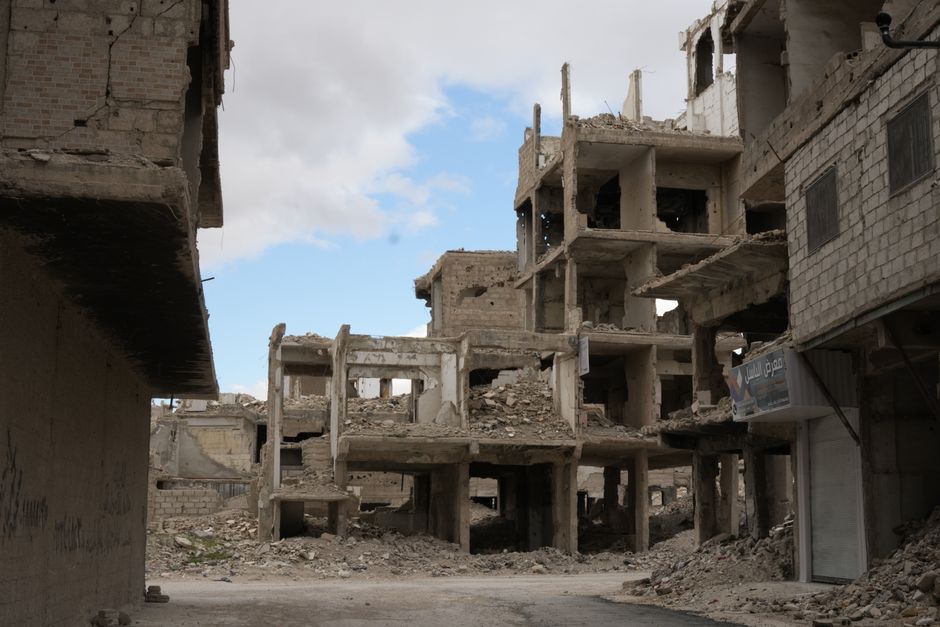
The Israel-Palestine Conflict: A Deep Dive into the Entangled Geopolitics and Enduring Grievances
The Israeli-Palestinian conflict, a protracted and deeply entrenched geopolitical struggle, centers on competing claims to the same territory, primarily encompassing Israel, the West Bank, and the Gaza Strip. Its origins are complex, tracing back to the late 19th and early 20th centuries with the rise of Zionism, a nationalist movement advocating for a Jewish homeland, and the concurrent growth of Arab nationalism. The Balfour Declaration of 1917, a British statement of support for the establishment of a Jewish national home in Palestine, significantly impacted the region, further fueling both aspirations. Following World War I and the collapse of the Ottoman Empire, Britain was granted a mandate over Palestine by the League of Nations. During this period, Jewish immigration increased, leading to rising tensions with the Arab population, who constituted the majority and also envisioned their own independent state.
The United Nations Special Committee on Palestine (UNSCOP) report in 1947 proposed a partition plan for Palestine, dividing it into separate Arab and Jewish states, with Jerusalem designated as an international city. While the Jewish leadership accepted the plan, the Arab leadership rejected it, perceiving it as unjust and a violation of their rights. In May 1948, following the withdrawal of British forces, Israel declared its independence. This declaration was immediately followed by the first Arab-Israeli War, with neighboring Arab states invading Israel. The war resulted in a decisive Israeli victory, leading to the displacement of hundreds of thousands of Palestinians, an event known as the Nakba (catastrophe). Israel gained control of more territory than initially allotted by the UN partition plan, while the West Bank came under Jordanian control and the Gaza Strip under Egyptian administration.
The Six-Day War of 1967 marked a pivotal escalation. Israel launched a preemptive strike against Egypt, Syria, and Jordan, resulting in Israel’s capture of the West Bank, Gaza Strip, East Jerusalem, the Golan Heights, and the Sinai Peninsula. The occupation of these territories, particularly the West Bank and Gaza, has been a central and enduring grievance for Palestinians and a major point of contention internationally. UN Security Council Resolution 242, passed in the aftermath of the war, called for the "withdrawal of Israel forces from territories occupied in the recent conflict" and the "termination of all claims or states of belligerency and respect for and acknowledgment of the sovereignty, territorial integrity and political independence of every State in the area." The interpretation of "territories occupied" remains a key point of contention, with Israel asserting security needs and historical claims, while Palestinians and the international community largely view the occupied territories as Palestinian land subject to a right of self-determination.
The Palestinian Liberation Organization (PLO), founded in 1964, initially aimed to liberate Palestine through armed struggle and sought the destruction of Israel. Over time, its political wing, under the leadership of Yasser Arafat, shifted towards a more diplomatic approach, recognizing Israel’s right to exist and advocating for a two-state solution. The Oslo Accords, signed in 1993 and 1995, represented a groundbreaking attempt at a peace process, establishing the Palestinian Authority (PA) as an interim self-governing body in parts of the West Bank and Gaza. However, the Oslo Accords failed to resolve core issues such as the status of Jerusalem, the right of return for Palestinian refugees, Israeli settlements in the occupied territories, and final security arrangements. The peace process faltered due to continued violence, expansion of settlements, and a lack of trust on both sides.
The Israeli settlements in the West Bank, established and expanded since 1967, are a significant obstacle to peace. Considered illegal under international law by the vast majority of the international community, these settlements fragment Palestinian territory, disrupt contiguity, and undermine the viability of a future Palestinian state. Israel maintains that these settlements are not illegal, citing historical and religious claims to the land, as well as security considerations. The expansion of settlements has been a persistent source of tension, fueling Palestinian resentment and international criticism. Similarly, the status of Jerusalem, holy to Judaism, Christianity, and Islam, is a deeply sensitive issue. Both Israelis and Palestinians claim Jerusalem as their capital, and its future division or shared governance remains a formidable challenge. Israel annexed East Jerusalem in 1980, a move not recognized by most of the international community, which considers it occupied territory.
The Gaza Strip, under a blockade imposed by Israel and Egypt since 2007 following the Hamas takeover, has faced severe humanitarian challenges. Hamas, designated as a terrorist organization by several countries, has engaged in armed conflict with Israel, launching rockets and carrying out attacks. Israel cites these actions as justification for its security measures and the blockade, aiming to prevent the flow of weapons to Hamas. The blockade has led to high unemployment, poverty, and limited access to essential services in Gaza, contributing to a cycle of violence and humanitarian crisis. The recurring conflicts in Gaza, marked by significant civilian casualties on both sides, further exacerbate the deep-seated animosity and hinder any progress towards a lasting peace.
The issue of Palestinian refugees, displaced during the 1948 war and subsequent conflicts, remains a critical component of the conflict. Palestinians assert a right of return to their ancestral homes, a demand Israel rejects, citing demographic and security concerns. The fate of these refugees, currently numbering millions and residing in neighboring countries and the diaspora, is a complex humanitarian and political question with no easy resolution. The international community has largely supported a solution that respects the rights of refugees while acknowledging the practicalities and security concerns of Israel.
The role of external actors, including the United States, European Union, and various Arab nations, has been significant throughout the conflict. The United States has historically been a strong ally of Israel, providing substantial military and financial aid. However, it has also played a mediating role in peace efforts, albeit with varying degrees of success. Arab nations have offered varying levels of support to the Palestinian cause, ranging from diplomatic condemnation of Israeli policies to direct military intervention in the past. The Abraham Accords, signed in 2020, marked a significant shift, normalizing relations between Israel and several Arab nations, including the UAE, Bahrain, Sudan, and Morocco. While these accords have been lauded by some for fostering regional stability and economic cooperation, they have also been criticized by Palestinians for bypassing the core issues of their cause and potentially undermining their aspirations for statehood.
The narratives of the conflict are diametrically opposed. For Israelis, the establishment of a Jewish state is seen as a historical imperative, a sanctuary after centuries of persecution, and a fulfillment of ancient ties to the land. They emphasize their security concerns, the need to defend against attacks, and their historical and religious connection to the territory. For Palestinians, the conflict is one of dispossession, occupation, and the denial of their right to self-determination. They highlight the injustices of displacement, the ongoing occupation, and the struggle for statehood and freedom. Understanding these deeply ingrained narratives is crucial to grasping the complexity and intransigence of the conflict.
The ongoing political fragmentation within the Palestinian leadership, primarily between the Fatah-dominated PA in the West Bank and Hamas in Gaza, further complicates efforts to achieve a unified Palestinian front and negotiate effectively. This internal division weakens the Palestinian position and makes it challenging for international mediators to engage with a single, credible representative body. The rise of extremist factions on both sides, who reject any compromise and advocate for violence, also contributes to the perpetuation of the conflict and undermines moderate voices.
The international legal framework surrounding the conflict, including numerous UN resolutions and international humanitarian law, remains a point of contention. Israel often argues that its actions are in self-defense and comply with international law, while critics point to alleged violations of international humanitarian law in its occupation policies, settlement expansion, and military operations in Gaza. The International Criminal Court (ICC) has opened investigations into alleged war crimes committed by both Israeli forces and Palestinian armed groups, further highlighting the legal dimensions and complexities of the dispute.
Ultimately, a lasting resolution to the Israeli-Palestinian conflict remains elusive, marked by a persistent cycle of violence, deep-seated distrust, and irreconcilable claims. The potential pathways to peace often revolve around the "two-state solution," envisioning an independent Palestinian state alongside Israel, or a "one-state solution," where Israelis and Palestinians would live in a single, democratic state with equal rights. However, both these models face immense practical and political hurdles, including security guarantees, borders, settlements, refugees, and the fundamental question of national identity and sovereignty. The enduring grievances, coupled with the complex interplay of regional and international politics, ensure that the Israeli-Palestinian conflict continues to be a deeply challenging and consequential geopolitical issue, demanding sustained diplomatic engagement and a willingness for difficult compromises from all parties involved. The human cost of this protracted struggle, measured in lives lost, families displaced, and futures curtailed, underscores the urgent need for a just and sustainable resolution.
