Airport Security Standoff: Passenger Chugs Full Bottle of Premium Tequila to Avoid TSA Confiscation

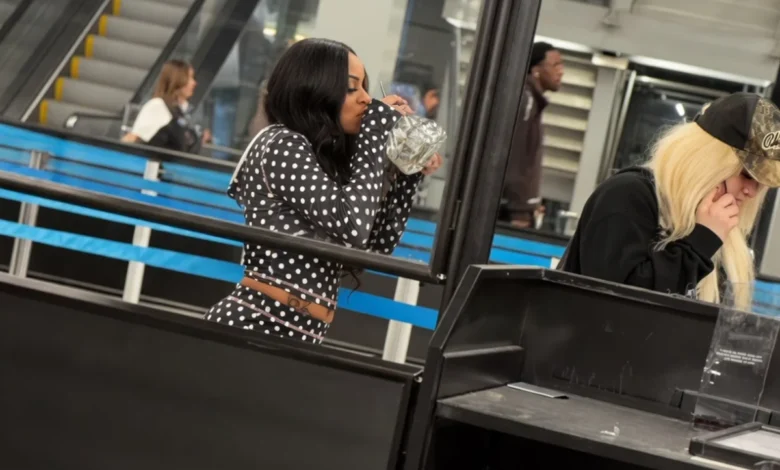
The Transportation Security Administration (TSA) checkpoint at a major domestic airport recently became the site of an unusual display of defiance and rapid consumption when a female passenger, informed that her bottle of premium liquor exceeded carry-on limits, opted to drink the entire contents rather than surrender the item to security personnel. The incident, captured on video and subsequently circulated across social media platforms including TikTok, highlights a recurring tension between strict federal aviation security protocols and passenger behavior. Reports indicate the bottle contained Don Julio, a high-end tequila, which the passenger reportedly chugged in full view of other travelers and TSA officers to avoid "wasting" the expensive purchase.
The passenger’s decision to consume the alcohol on the spot was a direct response to the TSA’s "3-1-1" liquids rule, which prohibits containers larger than 3.4 ounces (100 milliliters) in carry-on luggage. Faced with the choice of abandoning the bottle, returning to the check-in counter to pay for a checked bag—a process that often requires specialized packaging for glass—or consuming the liquid, the traveler chose the latter. This event is not an isolated occurrence but rather part of a documented trend where passengers "pre-game" at the security threshold to bypass the financial loss of confiscated luxury goods.
The Mechanics of the TSA 3-1-1 Rule and Security Protocols
The regulations governing liquids, aerosols, and gels in carry-on baggage were established in the mid-2000s following a thwarted terrorist plot. Specifically, in August 2006, British authorities uncovered a plan to detonate liquid explosives disguised as soft drinks on multiple aircraft bound for the United States and Canada. In response, the TSA and international aviation bodies implemented a total ban on liquids, which was later modified to the current 3-1-1 rule: 3.4 ounces or less per container, all fit into one clear, quart-sized plastic bag, per one passenger.
Alcoholic beverages fall under these strict guidelines. While passengers are permitted to bring miniature "nip" bottles that meet the 3.4-ounce requirement, larger bottles of spirits, wine, or beer must be placed in checked luggage. Furthermore, the TSA and Federal Aviation Administration (FAA) maintain distinct rules regarding the consumption of such items. While the TSA manages what enters the "sterile" area of the airport, the FAA governs the consumption of alcohol aboard the aircraft. Under federal law, passengers are strictly prohibited from consuming their own alcohol during a flight; all alcohol consumed on board must be served by the airline to ensure the crew can monitor and control passenger sobriety levels.
In the case of the woman chugging the Don Julio, the bottle in question appeared to be a standard 750-milliliter size. By choosing to drink the liquor at the checkpoint, the passenger effectively circumvented the confiscation rule but simultaneously created a significant safety and health risk for herself and her fellow passengers.
Health and Physiological Impact of Rapid Alcohol Consumption
The physiological implications of consuming a large volume of high-proof spirits in a short timeframe are severe. A standard 750-milliliter bottle of tequila typically has an alcohol by volume (ABV) of 40%. Consuming even half of such a bottle—approximately 375 milliliters—is equivalent to roughly eight to nine standard drinks. For the average adult, consuming this amount within minutes constitutes extreme "binge drinking" and can lead to rapid-onset alcohol poisoning.
Medical experts note that the body metabolizes alcohol at a constant rate, generally about one standard drink per hour. When a person consumes nearly ten times that amount in a single sitting, the liver is overwhelmed, and blood alcohol concentration (BAC) spikes to dangerous levels. In an aviation context, these risks are compounded by the cabin environment. Aircraft cabins are pressurized to altitudes of 6,000 to 8,000 feet, where lower oxygen levels can exacerbate the effects of intoxication, leading to impaired judgment, reduced motor skills, and respiratory distress.
Witnesses to the incident expressed concern on social media, with many questioning how the passenger was permitted to board the aircraft following the consumption of such a significant quantity of alcohol. Aviation safety experts point out that if a passenger displays visible signs of intoxication at the gate, airline personnel are legally obligated to deny them boarding under FAA regulations.
Aviation Safety and the Legal Framework of In-Flight Intoxication
The FAA takes a stringent stance on intoxicated passengers due to the potential for "unruly passenger" incidents, which have seen a marked increase in recent years. According to FAA data, a significant percentage of reported in-flight disturbances involve alcohol consumption. When a passenger is highly intoxicated, they become a liability during emergencies, potentially obstructing evacuation routes or failing to follow crew instructions.
Title 14 of the Code of Federal Regulations (CFR) Section 121.575 states clearly that "No certificate holder may allow any person to board any of its aircraft if that person appears to be intoxicated." If the passenger in the Don Julio incident proceeded to her gate and boarded the flight, it suggests either a delay in the onset of her symptoms or a failure in the screening process by gate agents. Once in the air, if a passenger becomes disruptive due to intoxication, the flight crew may be forced to divert the aircraft, resulting in thousands of dollars in costs and potential federal charges for the individual involved.
The incident also highlights a loophole in airport security. While TSA officers are trained to identify prohibited items, their primary mission is "threat detection" related to explosives and weapons. While they may notify local law enforcement or airline staff if a passenger is visibly drunk and disorderly, their mandate does not strictly include enforcing sobriety unless the individual becomes a direct security threat at the checkpoint.
A History of Checkpoint Defiance: Pre-gaming Trends
This recent event mirrors a 2021 incident where a group of women traveling to Miami were filmed "pre-gaming" at a security checkpoint. After being told their bottles of alcohol could not pass through the x-ray machines, the group opted to distribute shots among themselves rather than surrender the liquor. These videos frequently go viral, often framed as "travel hacks" or acts of comedic defiance against perceived bureaucratic overreach.
However, industry analysts suggest these incidents point to a broader frustration with the cost of air travel and the perceived inconsistency of security rules. Many travelers view the liquid ban as an outdated "security theater" measure, especially as newer technology emerges. The financial aspect cannot be ignored; a bottle of Don Julio can retail for $50 to over $100 depending on the variety, and airport concessions are notorious for high markups. To some travelers, the "sunk cost" of the bottle outweighs the risk of intoxication.
Technological Solutions and the Future of the Liquid Ban
The debate over the necessity of the 100-milliliter rule continues as airport technology evolves. The TSA has begun deploying advanced Computed Tomography (CT) scanners at checkpoints across the United States. These machines create 3D images of carry-on bags, allowing officers to better identify the chemical composition of liquids. In several European airports, such as London City and Teesside International, the implementation of high-tech scanners has already led to the lifting of the 100-milliliter limit, allowing passengers to carry up to two liters of liquids.
In the United States, the rollout of these scanners is ongoing but has not yet resulted in a nationwide policy change. The TSA maintains that until the technology is ubiquitous and integrated with automated screening lanes, the 3-1-1 rule remains the most effective way to mitigate the threat of liquid explosives. Until such a shift occurs, passengers will continue to face the choice of checking their liquids or surrendering them—or, in extreme cases, consuming them.
Broader Implications for the Travel Industry
The Don Julio incident serves as a cautionary tale for the travel industry regarding the intersection of security protocols and passenger behavior. It underscores the need for better communication between the TSA and airline gate agents to ensure that passengers who engage in rapid consumption at the checkpoint are properly screened for sobriety before boarding.
Furthermore, it raises questions about the responsibility of airports to provide viable alternatives for passengers with prohibited liquids. While most airports offer "mailing stations" where passengers can pay to ship items home, these are often poorly marked or expensive, leading travelers to make impulsive decisions.
As the travel industry continues to recover from the disruptions of the last several years, the management of alcohol-related incidents remains a priority for the FAA and airlines. While the woman in the video may have saved her bottle of tequila from the trash bin, the potential legal, health, and safety consequences of her actions represent a significant risk that far outweighs the retail price of the spirits. For now, the TSA’s message remains clear: if it is over 3.4 ounces, it must be checked, mailed, or left behind—regardless of the brand on the label.