Loudoun County Sheriff Office Suspends ICE Agreement Following Federal Appeals Court Ruling on Virginia Immigration Law


The landscape of local law enforcement cooperation with federal immigration authorities in Virginia has shifted dramatically following a recent decision by the 4th U.S. Circuit Court of Appeals. The ruling has cleared the path for sweeping legislative restrictions spearheaded by Democratic Governor Abigail Spanberger, compelling law enforcement agencies across the state to dismantle or significantly restructure their partnerships with U.S. Immigration and Customs Enforcement (ICE). Among the immediate casualties of this legal pivot is the Loudoun County Sheriff Office, which announced it would formally suspend its 287(g) jail enforcement agreement, ending a partnership that allowed local deputies to act as a force multiplier for federal immigration officials.
The decision underscores an intensifying constitutional and operational clash between the Trump administration’s aggressive nationwide deportation agenda and progressive state administrations seeking to erect legal and operational roadblocks. As federal agencies push to scale up immigration enforcement nationwide, state-level legislation such as Virginia House Bill 1441 has redefined the boundaries of cooperative federalism, forcing local sheriffs to choose between compliance with state mandates or the voiding of their collaborative frameworks.
The Mechanics of the Suspension and Operational Shifts
Under the terms of the now-suspended 287(g) agreement—which was initially established in August 2024—deputies within the Loudoun County Adult Detention Center possessed specific federal authority to verify the immigration status of inmates and hold them on administrative detainers. This arrangement granted ICE a vital operational window, providing federal agents up to 48 hours beyond an inmate’s scheduled criminal release date to assume custody and initiate deportation proceedings.

With the suspension of the agreement, that cooperative bridge has collapsed. According to representatives for the Loudoun County Sheriff Office, the most immediate practical consequence is that individuals housed in the local jail who possess active federal immigration warrants or detainers will no longer be held past their designated release dates. Instead, inmates will be processed and freed concurrently with their scheduled criminal release timelines, regardless of whether ICE agents have arrived to take them into custody.
Statistical data from the sheriff’s office highlights the tangible impact of terminating the partnership. Since the beginning of the year, the Loudoun County Sheriff Office successfully transferred 330 undocumented immigrants to federal custody under the auspices of the 287(g) program. The abrupt halt of this pipeline means federal authorities will now have to rely on traditional, community-based enforcement operations—such as at-large arrests—to locate and apprehend individuals released directly back into the community, a method critics argue is both less efficient and potentially more resource-intensive for federal agents.
Legislative Architecture of HB 1441 and State-Level Restrictions
The catalyst for Loudoun County’s policy reversal is House Bill 1441, a comprehensive piece of legislation signed into law by Governor Spanberger in April. The statute imposes a rigorous framework of twelve mandatory conditions on any local or state law enforcement agency wishing to maintain a formal partnership with federal immigration enforcement.
Rather than attempting to directly regulate federal operations—a constitutional overreach that federal courts have consistently struck down—the Virginia General Assembly conditioned the availability of state-level law enforcement cooperation and local agency assistance on adherence to these strict statutory parameters.
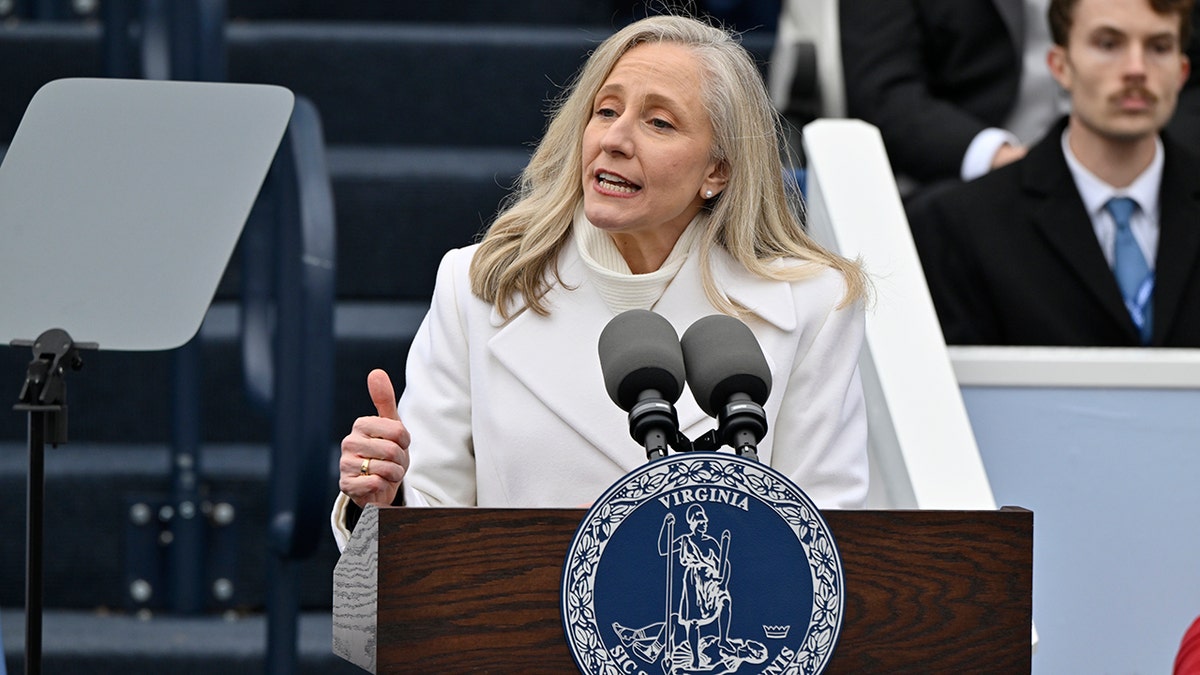
The conditions stipulated within HB 1441 are extensive and touch upon nearly every aspect of tactical engagement between local and federal personnel. Key provisions of the law include:
- Advance Notification: Requiring ICE to disclose the specific names and hierarchical ranks of participating federal agents at least seven days prior to conducting local enforcement activities.
- Uniform and Branding Restrictions: Barring federal immigration agents from displaying the word "police" on their uniforms, tactical gear, or agency vehicles to prevent public confusion with municipal or county law enforcement officers.
- Surveillance Limitations: Severely restricting the deployment of advanced surveillance technologies during joint operations, including limitations on facial recognition software and automated license plate readers.
- Sensitive Location Protections: Mandating that ICE agree to strict geographical boundaries that prohibit enforcement operations near educational institutions, houses of worship, and state courthouses.
- Legal Jurisdiction and Accountability: Requiring federal authorities to consent to state court jurisdiction in specific civil and criminal proceedings. Furthermore, any on-duty incident resulting in an agent-involved shooting is subjected to mandatory investigation by the Virginia State Police, opening the door to potential prosecution by local and state commonwealth’s attorneys.
Local agencies were granted a compliance window extending until September 1 to renegotiate their existing Memoranda of Agreement with ICE to mirror these statutory requirements. Failure to amend the pacts would render the partnerships legally void and unenforceable, setting the stage for systemic disengagement.
Chronology of a Legislative and Legal Standoff
The conflict between the Commonwealth of Virginia and the federal government represents the culmination of a rapidly escalating series of policy directives and judicial maneuvers that began shortly after Governor Spanberger assumed office in January:
- January: Governor Spanberger takes office, immediately signaling an intent to roll back state-level cooperation with federal immigration initiatives.
- February: The governor issues executive directives ordering state law enforcement agencies to terminate their existing 287(g) agreements. Spanberger asserts that these partnerships improperly cede local police discretion to federal authorities. Similar measures are enacted in neighboring Maryland, where Governor Wes Moore signs legislation banning 287(g) pacts statewide.
- April: Governor Spanberger signs House Bill 1441 into law, codifying the twelve restrictive conditions on local immigration enforcement partnerships.
- May: Additional legislation is signed into law prohibiting federal immigration agents from wearing face masks during the execution of their duties. Concurrently, the governor issues an executive order restricting the use of state-owned property and facilities for federal immigration enforcement activities. In public announcements accompanying these measures, Spanberger sharply criticizes federal policing tactics, referencing high-profile officer-involved incidents in other states.
- June: The Department of Justice, acting on behalf of the Trump administration, files a federal lawsuit against the Commonwealth of Virginia to challenge the constitutionality and enforceability of the state’s mask restrictions on federal agents.
- Late Summer: Lower courts issue preliminary injunctions temporarily blocking key provisions of Virginia’s immigration laws, offering a brief reprieve to counties wishing to maintain unencumbered federal partnerships.
- September 1: The statutory deadline for local law enforcement agencies to renegotiate their ICE agreements to comply with HB 1441 expires.
- October: The 4th U.S. Circuit Court of Appeals lifts the preliminary injunctions, ruling that while Virginia cannot directly dictate federal operational protocol, it possesses the sovereign authority to condition local assistance and resource sharing on compliance with state standards. This appellate victory empowers the state’s enforcement regime and directly precipitates the suspension announced by the Loudoun County Sheriff Office.
Broader National Implications and the Blue-State Pushback

Virginia’s legislative strategy is part of a broader, nationwide movement among Democratic-led "blue states" aiming to establish a legal firewall against the Trump administration’s immigration policies. Alongside Virginia and Maryland, states such as California, Illinois, Oregon, and Washington have enacted robust sanctuary-style protections that systematically limit state and local entanglement with federal immigration enforcement.
Legal analysts note that the 4th Circuit Court of Appeals’ decision to lift the injunction carries significant national weight, potentially serving as a legal blueprint for other states looking to curb local cooperation with ICE without running afoul of federal preemption doctrines. By framing the restrictions as conditions placed upon state and local municipal resources rather than direct mandates on federal officers, legislatures have found a viable workaround to withstand preliminary judicial scrutiny.
However, the policy divergence has created a deeply fractured operational environment for federal immigration officials. The Department of Health and Human Services and the Department of Homeland Security—recently under the leadership of newly confirmed Secretary Markwayne Mullin—have repeatedly warned that sanctuary policies undermine public safety by obstructing the transfer of criminal non-citizens from secure detention facilities into federal custody. Federal officials contend that releasing individuals with active immigration detainers back into local communities increases the logistical burden on federal agents, who must subsequently track down targets in unsecured environments.
Despite the sweeping nature of Virginia’s new laws and the resulting suspension of 287(g) agreements, federal authorities are not entirely locked out of local facilities. Under a separate, pre-existing Virginia statute dating back to 2015 (Virginia Code § 53.1-220.2), local correctional facilities maintain a mechanism that can permit the transfer of certain inmates into federal custody up to five days prior to their scheduled release, provided specific statutory criteria are met. Nevertheless, legal experts anticipate that local jurisdictions will increasingly interpret state guidelines cautiously, steering away from discretionary federal cooperation to avoid protracted litigation and political fallout.
As the legal battles wind their way through the federal court system, the suspension of the agreement in Loudoun County serves as an immediate indicator of the practical friction defining federal-state relations on immigration. With the appellate court greenlighting the state’s conditional approach, other jurisdictions with pending or active federal partnerships face mounting pressure to evaluate their legal exposure under Virginia’s stringent new regulatory framework.
Related posts: