Middle East Hospitality Sector Faces Divergent Recovery Paths, Stalled Deals, and Surging Construction Pipelines Amid Regional Conflict

The Middle East hospitality sector is currently navigating a period of profound operational and financial bifurcation, characterized by sharply divergent recovery trajectories across key markets, a massive disconnect between surging construction pipelines and stalled transactions, and intense friction over hotel management agreements. According to industry data and executive insights, the regional hotel landscape has been radically altered by geopolitical tensions, notably the broader disruptions stemming from the U.S.-Iran conflict, leading to severe localized downturns juxtaposed against pockets of unexpected resilience.
For real estate owners, private equity lenders, and institutional investors, the overarching question heading into the 2027 fiscal year centers on portfolio underwriting: which markets present viable recovery horizons, and what timeline should be used to model future cash flows? With regional performance metrics under unprecedented strain, stakeholders across the Gulf Cooperation Council (GCC) are grappling with a complex web of valuation adjustments, revised capital expenditure plans, and the most challenging contract negotiation environment seen in a decade.
A Tale of Two Markets: Urban Centers Versus Resorts and Holy Cities
The volatility defining the current hospitality climate was highlighted by Duncan O’Rourke, CEO of Middle East, Africa, and Asia-Pacific for Accor, who outlined a stark operational divide during recent industry disclosures. In August and September, urban hotels across the United Arab Emirates enacted aggressive rate cuts ranging from 15% to 20%. These tactical pricing maneuvers were deployed defensively to protect baseline occupancy levels amidst softening corporate and leisure demand. Conversely, during the same period, Gulf luxury resorts and properties situated within the Holy Cities of Saudi Arabia outperformed comparative figures from the previous year, benefiting from steady religious tourism and leisure demand that insulated them from broader economic jitters.
However, the domestic market dynamics within Saudi Arabia experienced an even sharper fracture following a pivotal security incident. In October, Houthi strikes targeting Riyadh’s primary international airport triggered sweeping airspace and operational disruptions. Approximately 86% of scheduled commercial flight departures were abruptly canceled, paralyzing travel into and out of the capital.
The collateral damage to the hospitality sector was immediate and severe. According to industry intelligence reports, Riyadh’s Revenue Per Available Room (RevPAR) plummeted by 65% in October, landing at an austere $65 for the month. This catastrophic single-month drop-off effectively upended fourth-quarter forecasts for the Saudi capital, creating a domino effect that forced asset managers to re-evaluate properties previously considered reliable revenue generators.
Record Hotel Construction Pipelines Collide with Stalled M&A Activity
Paradoxically, even as operational metrics flashed warning signs and transactions ground to a halt, regional construction activity reached historic highs. Data compiled by Lodging Econometrics for the third quarter reveals that the Middle East hotel construction pipeline expanded to an all-time record of 771 projects, encompassing an aggregate total of 188,960 rooms under development.
Saudi Arabia remains the undisputed epicenter of this building boom, commanding 401 projects within the national pipeline—representing a 15% year-on-year increase. The vast majority of master developers and state-backed entities are pressing ahead with their construction schedules, viewing these assets through a multi-decade strategic lens. Nevertheless, cracks in the pipeline are beginning to show. In November, high-profile adjustments materialized when Diriyah abruptly canceled a $191 million hotel construction contract, signaling that even giga-projects are not entirely immune to shifting financial realities and risk reassessments.
While physical construction presses forward, the transactional market has moved in the opposite direction. Real estate advisory firm Knight Frank noted that pre-war asking prices for hospitality assets across the Gulf no longer align with current buyer underwriting standards. Prospective investors are systematically pausing deal execution to rerun complex feasibility studies, stripping out overly optimistic occupancy assumptions that were baked into asset valuations prior to the onset of the conflict.
The Evolution of Hotel Ownership and Management Contracts
The macroeconomic pressures facing the region are fundamentally altering the contractual architecture binding hotel owners and international brand operators. Historically driven by limitless capital deployment, Gulf sovereign wealth funds are increasingly applying strict financial discipline, demanding measurable risk-adjusted returns. To meet these yield mandates, state-backed entities and private owners are actively phasing development projects and, in some cases, evaluating the divestment of non-core hospitality assets.
Furthermore, ownership groups are formally reopening Hotel Management Agreements (HMAs) with major international hospitality chains. Discussions are centering heavily on the restructuring of performance tests, the mechanics of owner-operator risk-sharing, and the precise timing of management fee disbursements during periods of macroeconomic distress. Nicolas Nasra, a senior hospitality expert at Colliers, has characterized the prevailing climate as the toughest negotiating environment for management contracts witnessed in the region over the past ten years. Owners are no longer willing to absorb the entirety of operational downside risk while operators collect guaranteed base fees, setting the stage for protracted legal and commercial battles over contract renewals and amendments.
Divergent Recovery Timelines Complicate 2027 Budgeting
Forecasting the definitive turning point for the Middle East hotel sector has become a moving target, with major institutional forecasters differing by nearly a full year. Prior to the October security escalations in Riyadh, Accor’s executive leadership team projected that UAE urban hotels would successfully claw back to pre-war performance benchmarks by the late first quarter of 2027. However, conservative macroeconomic monitors, including S&P Global Ratings, adopted a more cautious stance, suggesting a regional recovery would likely not materialize until the tail end of 2027 at the earliest.
The subsequent operational contraction forced a significant downward revision. Accor publicly acknowledged that regional RevPAR could contract by approximately 12% during the fourth quarter—traditionally the most lucrative peak travel season for the Middle East. This downward adjustment arrives at an awkward juncture for corporate finance departments, as it coincides directly with the finalization and locking of annual corporate budgets for 2027. Consequently, every financial underwriting decision made by lenders and asset managers relies on a predicted recovery date that current empirical data cannot yet guarantee.
Macroeconomic Implications and Strategic Adaptation
The ongoing structural shift in
the Middle East hospitality market underscores a broader maturation of the region’s tourism economy. Long dependent on rapid, state-subsidized expansion, the sector is being forced to adapt to traditional market cycles, geopolitical risk premiums, and strict capital accountability.
For institutional lenders, the immediate implication is a tightening of debt service coverage ratios and more rigorous stress-testing of asset portfolios exposed to urban commercial travel versus leisure-heavy resort enclaves. For hotel operators, the mandate is operational agility—deploying dynamic pricing models that can absorb sudden demand shocks without permanently eroding brand equity or asset valuation. As the industry looks toward the upcoming operational milestones, stakeholders must navigate a landscape where historical performance metrics offer limited guidance for future valuation.
Industry Leaders to Address Regional Pressures at Upcoming Forum
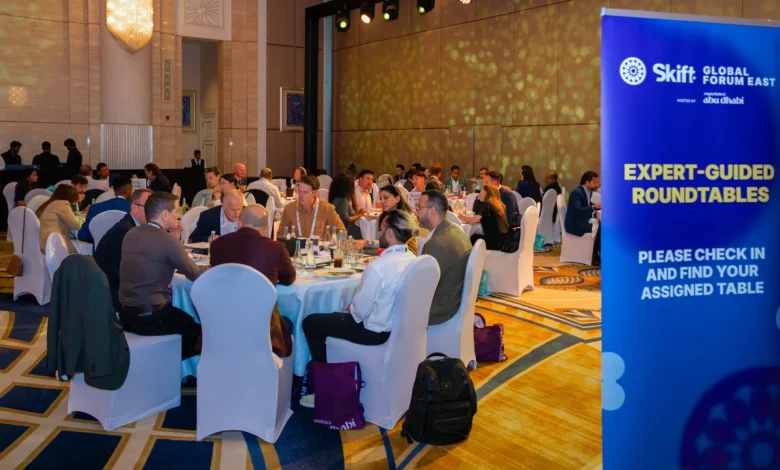
Against this backdrop of financial recalibration and operational uncertainty, top industry executives, institutional investors, and asset owners are converging to address the future of the sector. The Skift Global Forum East is scheduled to take place at the Grand Hyatt Abu Dhabi, featuring an opening reception hosted by Experience Abu Dhabi.
High-profile aviation and hospitality figures—including Etihad Group CEO Antonoaldo Neves, Emirates Deputy President and Chief Commercial Officer Adnan Kazim, Rotana CEO Philip Barnes, Minor Hotels Amir Golbarg, alongside senior executives from Accor and Radisson—are slated to take the stage. These leaders will engage directly with the investors and owners currently tasked with navigating regional risk, recalibrating underwriting models, and charting the strategic course for Middle East tourism through 2027 and beyond.