American Airlines Pilots And Flight Attendants Unite To Demand New Leadership—Say They’re Done Asking Management To Do Better

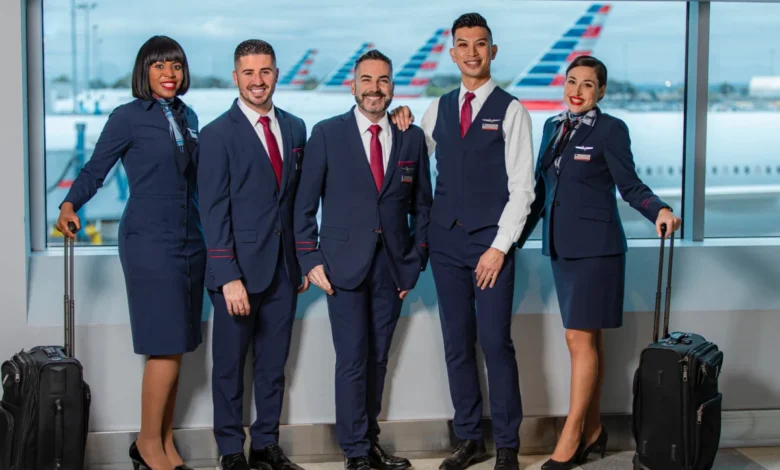
Just five days after American Airlines announced a shakeup in its C-suite, including the replacement of its Chief Operating Officer, the airline’s labor organizations are signaling that these personnel changes are insufficient to address the carrier’s systemic operational challenges. The Allied Pilots Association (APA) and the Association of Professional Flight Attendants (APFA) have issued a joint, stinging rebuke of current management, arguing that the company’s inability to recover from a recent FAA-mandated nationwide ground stop proves that the airline’s leadership remains fundamentally out of touch with the realities of frontline operations.
The joint letter, signed by Captain Nick Silva of the APA and Julie Hedrick of the APFA, marks a significant escalation in the tensions between the workforce and the executive offices. By explicitly stating, "We have spent years asking you to do better. Those days are over," the unions have effectively declared an end to the era of collaborative patience. Their core demand is clear: American Airlines requires a total shift in strategic direction and a leadership team capable of executing that vision.
A Chronology of Operational Instability
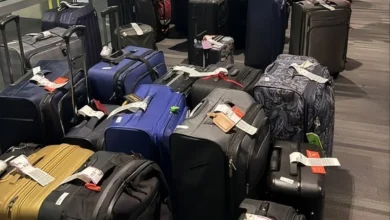
The catalyst for this latest confrontation was a period of intense instability in mid-November 2026. Following a nationwide ground stop issued by the Federal Aviation Administration, American Airlines struggled to restore its schedule at a pace significantly slower than its primary competitors.
On Saturday, November 14, American Airlines canceled 42% of its mainline flights, a figure that stood in stark contrast to the performance of its peers. By comparison, Delta Air Lines and United Airlines canceled 28% and 26% of their respective schedules that same day. While other carriers managed to stabilize their operations within 48 hours—with Delta’s cancellation rate plummeting to 5% by Sunday—American’s recovery remained sluggish, leaving thousands of passengers stranded and crews displaced.
This event is not an isolated incident but rather the latest in a series of operational disruptions that have plagued the carrier throughout the year. Earlier this year, during a weather event dubbed "Winter Storm Fern," reports emerged that American Airlines’ logistics failed to support its own staff. Internal union minutes from that period detailed instances where flight attendants were directed to service centers that were incapable of booking necessary hotel rooms, leading to hundreds of crew members being forced to sleep in airports.
The Financial and Human Cost
The fallout from these operational failures has exacerbated the divide between management and labor regarding financial distribution. In 2025, American Airlines reported profit-sharing payouts that many employees found insulting. While the airline distributed 0.3% of eligible earnings—amounting to approximately $150 for an employee earning $50,000—competitors like Delta offered significantly more robust profit-sharing structures, with comparable payouts reaching as high as $4,450.
Labor leaders argue that these financial discrepancies are compounded by management’s strategic priorities. Both the APA and APFA have criticized the airline for prioritizing capital expenditures on luxury amenities, such as premium seating and airport lounges, at the expense of investing in the operational infrastructure required to maintain a reliable schedule. Captain Nick Silva has previously noted that while these investments are necessary for revenue generation, they have come at the cost of long-term operational resilience, a point he raised as early as September.
The Dynamics of Union Leadership and Negotiation
The current posture of the unions reveals a complex power dynamic. The APFA board previously issued a unanimous vote of no confidence in CEO Robert Isom in February. While the current joint letter does not explicitly name Isom, its demand for "leadership capable of delivering" a new direction is viewed by industry analysts as a calculated move. By omitting the CEO’s name, the unions have maintained a strategic flexibility that allows them to claim a victory regardless of whether Isom remains in his post or is succeeded by an external candidate.

Industry insiders, including former Wall Street Journal aviation reporter Scott McCartney, have suggested that American Airlines is actively seeking an external president, potentially as a successor to Isom, with a hiring announcement expected by year-end. For union leaders like Silva and Hedrick, this potential transition represents a tangible goal. Silva, who began his tenure by opening contract talks a year ahead of schedule and advocating for a board seat, is under pressure to deliver measurable results for his membership. By aligning with the APFA, he strengthens the pilots’ bargaining position, framing their demands as essential for the airline’s survival rather than merely aspirational.
Broader Industry Context and Governance
The demand for a seat on the board of directors is a recurring theme in major airline labor relations, though historical precedents show mixed results. United Airlines famously granted its pilots a board seat in 1994 as part of a major employee buyout involving significant wage and work-rule concessions. Similarly, Delta pilots secured a voting seat as part of the merger agreement with Northwest Airlines.
American Airlines, however, lacks a similar transaction-based catalyst for such a move, leaving the unions to fight for influence through public pressure and operational accountability. The internal struggle within the APA—which has seen previous leadership ousted amidst debates over whether to join the larger Air Line Pilots Association (ALPA)—adds another layer of urgency to Silva’s current strategy. Demonstrating success in holding management accountable is vital for the current union leadership to maintain the trust of their members.

Analysis of Future Implications
The implications for American Airlines are profound. As the carrier looks to navigate a period of intense scrutiny from both the flying public and the regulatory community, the stability of its workforce remains a critical vulnerability. If the airline fails to address the concerns regarding crew support, scheduling reliability, and equitable profit distribution, it risks prolonged labor unrest that could manifest in future contract negotiations.
Furthermore, the "weakened" nature of the recent letter—at least in comparison to the explicit no-confidence vote issued in February—suggests a desire for a pragmatic resolution. The unions are signaling that they are prepared to be "part of the answer" if management is willing to grant them a meaningful role in the company’s future decision-making process.
As American Airlines moves toward the end of the year, the spotlight remains firmly on the executive suite. The ability of the board to identify and recruit a president who can bridge the gap between labor and management will likely determine the carrier’s competitive trajectory for the next decade. Whether the current leadership remains or is replaced, the message from the unions is clear: the status quo of operational instability is no longer a tenable business model. The upcoming months will test the resolve of both the board and the labor organizations as they attempt to reconcile competing visions for the future of the airline.