WeRoad Enters South Korea Through Strategic Partnership With NOL Universe to Capture Young Adventure Travelers

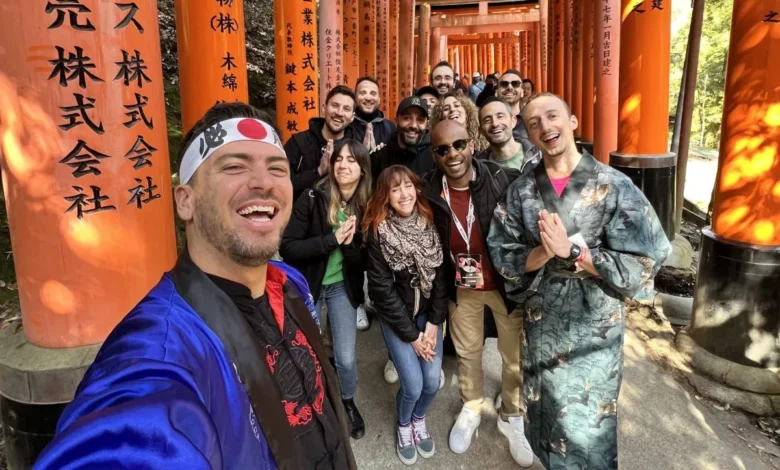
Adventure travel operator WeRoad is officially expanding its footprint into East Asia, marking its debut in South Korea through a strategic distribution partnership with travel and leisure platform NOL Universe. Best known for organizing small-group immersive adventures targeted at millennials and Gen Z travelers across Europe and English-speaking markets, the Italy-headquartered company is taking a localized approach for its entry into the highly competitive South Korean outbound tourism sector. By leveraging the digital infrastructure and massive consumer reach of NOL Universe—a subsidiary of travel tech giant Yanolja—WeRoad aims to capture a demographic of young, tech-savvy consumers seeking authentic, community-driven travel experiences abroad.
Unlike its traditional operational model, which relies heavily on direct-to-consumer digital marketing and proprietary sales channels, WeRoad is delegating customer acquisition and relationship management entirely to its local partner. This strategic shift represents a calculated pivot for the European brand, allowing it to bypass the capital-intensive process of establishing independent local operations while instantly tapping into an established digital ecosystem. As South Korea’s outbound travel market continues its robust post-pandemic recovery, the collaboration positions both companies to capitalize on a growing appetite for experiential, peer-based tourism among younger generations.
The Mechanics of the Partnership and Launch Timeline
Under the terms of the agreement, South Korean travelers will be able to seamlessly browse, select, and book WeRoad’s signature small-group itineraries directly through the NOL Universe app and website. The initial rollout will feature seven carefully curated international itineraries, slated to go live on the platform in early December. Following the digital launch, the first wave of departures facilitated through the partnership is scheduled to commence in 2027, giving the platform ample time to market the products and build consumer awareness.
The initial itineraries are expected to focus on long-haul destinations where WeRoad already holds strong operational expertise, including parts of Europe, Latin America, and Southeast Asia. These trips are designed specifically for solo travelers or small groups of friends who prefer a structured yet flexible travel style, complete with a local coordinator—known in WeRoad terminology as a "coordinator"—who facilitates group dynamics and logistics without acting as a traditional, rigid tour guide.
While WeRoad has historically maintained tight control over its customer journey, from initial web browsing to post-trip feedback, the South Korean venture introduces a decentralized model. Andrea Lamperini, chief strategy officer at WeRoad, acknowledged the unconventional nature of this arrangement in a recent interview, noting that the company is comfortable relinquishing front-end customer ownership to its local ally. Depending on the performance of the partnership, WeRoad may forego establishing a direct sales presence in the country altogether, relying indefinitely on NOL Universe to manage the local consumer base.
Navigating the South Korean Outbound Travel Landscape
South Korea represents one of the most dynamic and digitally mature outbound travel markets in the world. Prior to the disruptions of the early 2020s, South Korean citizens consistently ranked among the highest per-capita spenders on international travel, driven by strong disposable incomes, robust aviation connectivity, and a deep cultural curiosity about the world. In the wake of global travel resumptions, outbound tourism from the country has rebounded sharply, with travelers increasingly seeking out specialized, experiential journeys over traditional, high-density sightseeing bus tours.
NOL Universe, backed by the technological and market muscle of Yanolja, commands a formidable share of the domestic travel and leisure booking sector. The platform boasts a massive base of monthly active users, heavily skewed toward younger demographics who rely on mobile-first applications for all their lifestyle and travel needs. For WeRoad, securing access to this pre-existing digital audience provides an immediate shortcut to market penetration that would take years and substantial capital to replicate independently.

Industry analysts note that foreign travel brands entering South Korea frequently encounter barriers related to local consumer preferences, digital payment ecosystems, and marketing channels that heavily favor domestic super-apps. By partnering with NOL Universe, WeRoad effectively neutralizes these friction points. NOL’s platform is fully integrated with local payment gateways, customer service protocols, and social media ecosystems, ensuring that the user experience feels native and frictionless to South Korean consumers.
Strategic Implications for WeRoad’s Global Expansion
The South Korean venture is part of a broader, aggressive international scaling strategy for WeRoad. Founded in Italy, the company quickly established itself as a dominant force in Southern Europe before expanding into Spain, the United Kingdom, Germany, and France. Its business model relies on building a community of like-minded travelers, pairing individuals who have never met before based on age brackets and travel styles, thereby fostering deep social connections during the journey.
Until recently, WeRoad’s international expansion playbook centered on replicating its direct-to-consumer model in new geographic regions by launching localized websites, running targeted digital advertising campaigns, and setting up localized customer support teams. However, the decision to enter South Korea via a B2B2C distribution model signals a maturing corporate strategy—one that prioritizes capital efficiency and speed-to-market through strategic alliances over rigid operational uniformity.
Lamperini’s remarks regarding the potential permanence of the arrangement underscore a pragmatic approach to global growth. If the partnership with NOL Universe proves successful in driving consistent booking volumes and maintaining high customer satisfaction scores, WeRoad may replicate this white-label or platform-integrated model in other complex Asian markets where local digital conglomerates dominate the consumer landscape. Conversely, should the partnership yield insights that necessitate closer operational control, the foundational user base established through NOL could serve as a springboard for a future direct-market entry.
Market Response and Future Outlook
The announcement has drawn considerable attention from tourism sector analysts and investors monitoring the intersection of travel technology and experiential tourism. As traditional tour operators struggle to engage younger travelers who eschew conventional group travel packages, hybrid models that combine community-led travel concepts with localized tech platforms are increasingly seen as the future of the industry.
For Yanolja and its NOL Universe platform, the partnership adds high-margin, differentiated inventory to its existing portfolio of accommodations, flights, and domestic leisure activities. As competition among South Korean travel super-apps intensifies, offering exclusive access to unique global adventure products provides a valuable differentiator for retaining younger, highly aspirational users.
As the first cohort of itineraries goes live in December, industry observers will be closely tracking consumer uptake, pricing strategies, and the operational efficacy of cross-border coordination between the Italian adventure brand and the South Korean tech platform. If successful, the collaboration could serve as a blueprint for how European experiential travel brands can successfully scale across Asian markets without the burden of heavy local infrastructure investments.