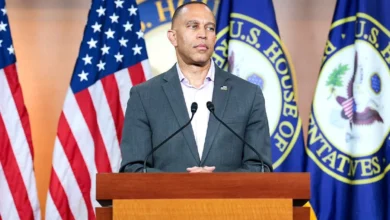
House Majority Leader Steve Scalise Declines to Commit to Full Term Following Minority Leader Defeat


House Majority Leader Steve Scalise of Louisiana, the second-ranking Republican in the House of Representatives and the longest-serving member of the chamber’s current party leadership, has declined to definitively state whether he will serve out a full term in the upcoming 120th Congress. The uncertainty surrounding his political future follows a decisive internal party vote that shifted the trajectory of House Republican leadership ahead of a Democratic majority taking power in January 2027.
Speaking to reporters on Wednesday, Scalise addressed his political future in the wake of his recent defeat in the race for House Minority Leader, where he lost to Representative Jim Jordan of Ohio. While acknowledging that significant adjustments lie ahead for the GOP caucus as it transitions to minority status, Scalise emphasized that no final decisions regarding his tenure have been finalized.
The developments arrive during a high-stakes lame-duck legislative session, leaving congressional observers and party members alike speculating about the veteran lawmaker’s next steps on Capitol Hill.
The Leadership Shake-Up and Party Transition
The question of Scalise’s future on Capitol Hill crystallized following closed-door Republican leadership elections held on Tuesday. In a 106-73 vote, the House GOP conference selected Representative Jim Jordan to serve as the new Minority Leader, choosing a hardline conservative voice to steer the party as Democrats prepare to take control of the chamber following the November midterms.
Scalise’s loss marks a watershed moment for the Louisiana Republican, who has spent over a decade guiding the House GOP through various iterations of the conservative coalition. With Democrats set to assume the speaker’s gavel and control committee gavels when the 120th Congress convenes on January 3, 2027, Scalise faces a stark choice: retire from Congress or transition into a rank-and-file minority member.
When asked if he had any regrets regarding his campaign for the leadership post or if anything could have been executed differently, Scalise remained resolute.

"There’s nothing that could have been done differently in the leadership race," Scalise remarked. He also noted a silver lining to the change in responsibility, pointing out the immense personal and professional demands of top-tier congressional leadership. "There’s clearly a lot of weight lifted now. I mean, these leadership jobs take a lot of time, a lot of focus. I love doing the work, but it takes you away from your family, from other things that you enjoy doing back home. I’ll have a little more free time there."
Despite the personal toll, Scalise insisted he has not lost his enthusiasm for public service. "I’ve got a lot more gas in the tank," he said. "Obviously, all of us know there’s some real change coming in January. We still have work to do right now."
Immediate Legislative Priorities in the Lame-Duck Session
Rather than focusing on his personal career decisions, Scalise stressed that his immediate attention remains dedicated to maximizing the final weeks of the current Republican majority. Lawmakers face a compressed timeline of less than seven weeks following the November 3 midterm elections to advance key legislative priorities before the congressional turnover.
"There’s a lot more for us to do. We have a few weeks left in the lame duck and, frankly, a few big, big issues ahead. I want to see us do as much as we possibly can while we still have this majority," Scalise said. "There’s no decision on what’s next. I’ve got to get through these next few weeks, and then we have a lot of decisions to make about what’s life going to look like in the minority. But I sure still have a great passion for this country."
The current lame-duck agenda typically includes critical housekeeping measures, such as addressing government funding, military authorizations, and outstanding policy riders that both parties seek to enact before the balance of power shifts.
A Decades-Long Career in House Leadership
To understand Scalise’s current standing, it is necessary to examine his extensive chronology within the halls of Congress. First elected to the House of Representatives in 2008 to represent Louisiana’s 1st Congressional District, Scalise quickly ascended through the ranks due to his organizational skills and steady conservative messaging.
Scalise first entered the leadership echelon in 2014 when he was selected to serve as House Majority Whip under then-Speaker John Boehner of Ohio. In that capacity, Scalise acted as a crucial bridge between the traditional party establishment and the burgeoning conservative insurgent wing that would eventually challenge the status quo.
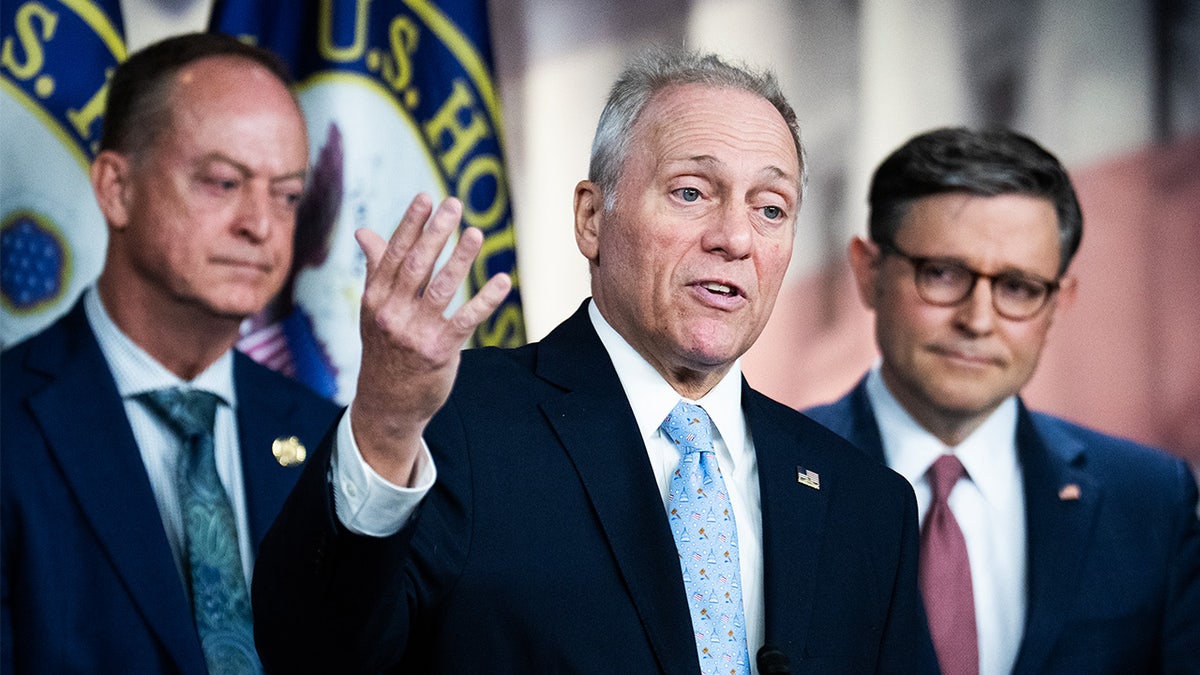
When Boehner stepped down in 2015 following intense pressure from the party’s right flank over federal spending and legislative strategy, Scalise maintained his role as whip under incoming Speaker Paul Ryan of Wisconsin. Throughout these turbulent years, Scalise earned a reputation as a pragmatic vote-counter capable of managing narrow majorities.
Resilience Through Adversity and National Profile
Scalise’s tenure in Washington was profoundly tested in June 2017, when he and several staffers and security personnel were targeted in a shooting during a congressional baseball practice in Alexandria, Virginia. The attack left Scalise with severe internal injuries that required multiple surgeries and an extended, grueling physical rehabilitation process.
The incident catalyzed an outpouring of bipartisan support and significantly elevated Scalise’s national profile. Among those expressing deep concern at the time was Donald Trump, who was serving his first term in the White House.
"Just left hospital. Rep. Steve Scalise, one of the truly great people, is in very tough shape — but he is a real fighter. Pray for Steve!" Trump posted on social media following the shooting.
Scalise returned to Capitol Hill months later, receiving a prolonged standing ovation from both sides of the aisle—a moment widely recognized as a rare display of unity in an increasingly polarized legislature.
Navigating the McCarthy and Johnson Eras
Following the 2022 midterm elections, which saw Republicans narrowly recapture the House majority, Scalise achieved the No. 2 post in the chamber, becoming House Majority Leader under Speaker Kevin McCarthy of California.
The majority was characterized by intense internal friction, narrow margins, and high-stakes fiscal standoffs. In late 2023, after McCarthy was ousted from the speakership by a motion to vacate led by conservative dissidents over spending compromises, Scalise mounted a bid for the speaker’s post. When that bid fell short, he opted to remain in his role as Majority Leader, helping stabilize the caucus under the subsequent leadership of Speaker Mike Johnson, a fellow Louisianan.

Over the ensuing years, Scalise remained a central fixture of the legislative machinery, coordinating floor votes and messaging strategies as the House wrestled with economic challenges, healthcare debates, and federal spending limits.
Broader Implications and Outlook for the 120th Congress
Scalise’s hesitation to commit to a full term in the 120th Congress underscores the psychological and strategic adjustments facing veteran lawmakers when their party loses the majority. For congressional leaders accustomed to dictating the legislative calendar, scheduling votes, and setting national policy debates, transitioning to the minority often prompts deep reflection on whether to continue service from a diminished procedural standpoint.
If Scalise ultimately decides to resign his seat rather than serve as a minority member, it would trigger a special election in Louisiana’s reliably conservative 1st Congressional District. Such a move would further alter the composition of the House and open up additional leadership dynamics within the Republican conference as Jordan takes the reins.
Political analysts note that the elevation of Jim Jordan to Minority Leader signals a more aggressive, confrontational stance by House Republicans as they prepare to act as the primary legislative opposition to the incoming Democratic majority. In contrast, Scalise’s leadership style historically leaned heavily into whip operations, coalition-building, and procedural management.
As the 120th Congress approaches its official commencement on January 3, 2027, all eyes remain on Capitol Hill to see how outgoing leaders manage the final days of the lame-duck session and what definitive announcements will emerge regarding the future paths of figures who have shaped modern conservative politics for nearly two decades.
Related posts: