Midterm elections put redrawn congressional districts to the test as Republican strategy backfires amid historic House losses

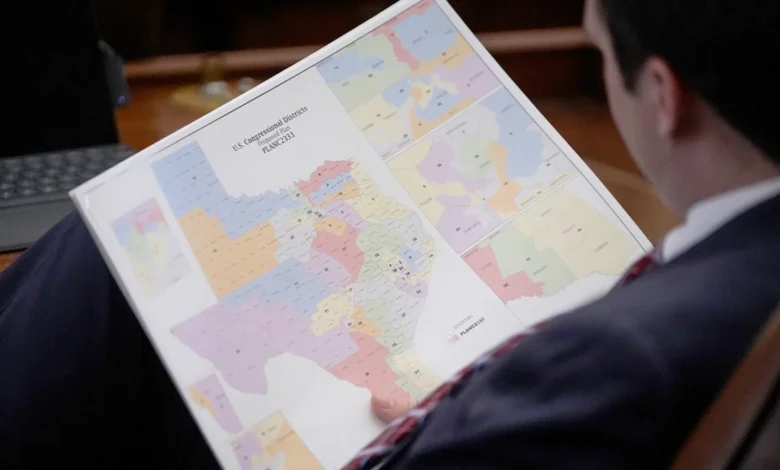
The strategy of mid-decade redistricting championed heavily by the White House and conservative leadership faced a historic reckoning during the midterm elections, revealing the severe political perils of attempting to engineer electoral outcomes through boundary manipulation. What was initially conceived by national Republican architects as a hardball maneuver to secure a durable House majority ultimately backfired across multiple states, contributing to unexpected GOP defeats, the downfall of high-ranking party figures, and a debate over the limits of political cartography.
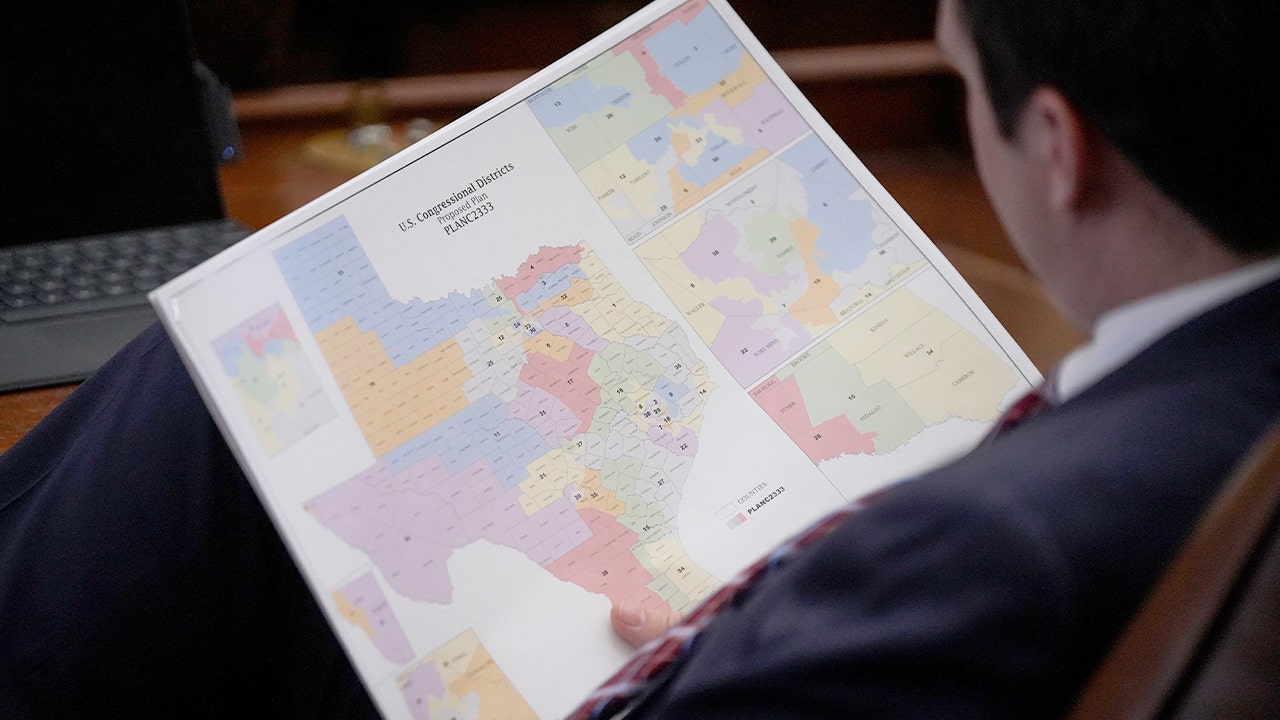
Across the country, congressional maps redesigned to favor Republican candidates were put to the ultimate test against a formidable political environment. While proponents of mid-decade redistricting argued that aggressive boundary adjustments were necessary to counter Democratic advantages in other parts of the map, political scientists and local lawmakers warned of the "dummymander"—a phenomenon where ambitious mapmakers spread reliable voters too thin across multiple districts, inadvertently transforming safe seats into competitive or heavily Democratic territory.
The Indiana Resistance and the Cost of Defiance
In Indiana, the push for a mid-decade map overhaul faced fierce resistance from within the state’s own legislative ranks, setting up a high-stakes clash between state-level pragmatism and national party pressures. President Donald Trump and Vice President JD Vance personally intervened to lobby for a redraw, with Vance traveling to Indianapolis twice to meet privately with state lawmakers. President Trump publicly singled out Indiana Senate President Pro Tempore Rod Bray, warning holdouts that they could face primary challengers backed by the MAGA movement if they refused to cooperate.
Despite intense political pressure, Bray and a bloc of state conservative lawmakers successfully blocked the redistricting effort. In hindsight, Bray argues that resisting the White House’s demands spared the Indiana GOP delegation from a catastrophic political wipeout.
"Had we made a change to redistricting, we’d’ve ended up with something like 8-1 or 7-2 favoring Democrats—I really do believe that," Bray stated in an interview following the election.
While Indiana Republicans largely maintained their footing compared to other states—with Democrats only managing to flip Rep. Victoria Spartz’s formerly solid Republican fifth congressional district—the state senators who opposed the redraw did not escape political fallout. University of Indianapolis political scientist Laura Merrifield Wilson noted that the majority of Republican state senators who defied the leadership mandate and subsequently faced primary challenges lost their seats, with exceptions including Senators Greg Goode and Spencer Deery.
National Consequences: North Carolina, Florida, and Texas
The risks of aggressive redistricting were starkly illustrated in North Carolina, where Republican mapmakers engineered a favorable map that ultimately collapsed under the weight of the election cycle. Former North Carolina House Speaker Tim Moore, a key architect of the state’s redistricting strategy, suffered a stunning defeat in his own congressional bid, losing his seat to Democratic challenger LaKesha Womack.

Compounding the losses for the national party, National Republican Congressional Committee Chairman Richard Hudson lost his Fort Bragg-area seat to former West Virginia state Senator Richard Ojeda. Meanwhile, Democratic Representative Don Davis successfully defended his seat despite Republican efforts to incorporate conservative-leaning areas into his district. Western Carolina University political scientist Chris Cooper’s pre-election warnings proved prescient, as the party’s attempt to maximize its footprint left key incumbents vulnerable to shifting voter dynamics.
Similar trends unfolded in Florida and Texas. In Florida, Republican efforts to reshape districts to foster favorable outcomes failed to prevent Democratic victories. Representatives Jared Moskowitz and Lois Frankel successfully defended their seats, while Democrat Pia Dandiya captured a redrawn district near Lake Okeechobee that had previously been classified as a "Trump +10" seat. In Texas, Democratic Representatives Henry Cuellar and Vicente Gonzalez similarly weathered challenges in border districts that the GOP had systematically sought to reconfigure.
The Debate Over "Dummymandering" and Voter Waves
Political analysts remain divided on whether the redistricting failures were primarily the result of structural overreach or an overwhelming national wave. Some experts suggest that the proposed maps, had they been enacted, would have injected sufficient Democratic voters into otherwise safe Republican areas to accelerate losses rather than prevent them.
"Given how the newly proposed maps would have added even more Democratic voters in seemingly safe Republican districts, it is possible the redistricting, had it gone through, would backfire and actually would have given Democrats more seats," Wilson explained.

Conversely, other analysts argue that the results reflect a broader electoral correction that no amount of line-drawing could insulate against. The intersection of changing demographic voting patterns—such as a notable shifting trend among Hispanic voters observed in polling data leading up to the midterms—further complicated calculations for mapmakers who relied on historical voting behaviors.
Implications for Future Electoral Strategy
The fallout from the midterm redistricting battles highlights the persistent tension between national political imperatives and local legislative independence. For lawmakers like Bray, the ordeal serves as a cautionary tale against treating voter alignment as a controllable science.
"You can get far too cute with redistricting if you want to, and some folks think that they have the means or the science to just draw maps and come up with a result that they can guarantee," Bray remarked. "That is not the case. We continue to hold elections for a reason. Because sometimes the results are not exactly what we expect."
As both political parties evaluate the long-term viability of mid-decade redistricting, the recent cycle demonstrates that aggressive boundary adjustments carry substantial political risk. Whether viewed as a strategic miscalculation or collateral damage in a broader partisan tide, the failure of these engineered maps to deliver anticipated legislative gains has fundamentally altered the strategic playbook for future congressional elections.
Related posts: