Portable Charger Fire Forces KLM Boeing 777 Turnaround Over Atlantic and Prompts Safety Probe

The aviation industry is facing renewed scrutiny regarding lithium-ion battery safety after a portable charger caught fire mid-flight on a KLM Royal Dutch Airlines service, forcing a widebody aircraft to dump fuel and return to its origin airport. The September 17 incident aboard KLM Flight 735, which was bound for Curaçao from Amsterdam, highlights the ongoing operational and safety challenges posed by personal electronic devices and auxiliary power banks carried into the passenger cabin.
While the fire was swiftly contained by the trained cabin crew, the cascading consequences of the emergency generated significant financial costs for the carrier, disrupted the travel plans of hundreds of passengers, and drew intense public scrutiny following reports linking the device to a former high-ranking airline executive. The event has since triggered an independent safety investigation by Dutch authorities, underscoring the severity with which regulatory bodies view thermal runaway events at high altitudes.
Chronology of the Incident: Flight KLM 735
The sequence of events began on the morning of September 17, when KLM Flight 735 pushed back from its gate at Amsterdam Airport Schiphol. The aircraft operating the route was a Boeing 777-200ER, a long-haul backbone of the Dutch flag carrier’s fleet, carrying a full complement of passengers and crew across the Atlantic Ocean.
Shortly after departure, while the aircraft was still traversing the airspace over the North Atlantic, a portable charger—commonly known as a power bank—malfunctioned in the passenger cabin. The device entered a state of thermal runaway, a rapid and self-sustaining heating process typical of compromised lithium-ion cells, which quickly produced smoke and open flames.
Cabin crew members immediately responded to the emergency, utilizing specialized onboard fire containment procedures and firefighting equipment designed for lithium-ion battery fires. Their prompt actions prevented the fire from spreading to the aircraft interior, overhead bins, or adjacent seating structures.
Despite successfully extinguishing the flames, the flight crew declared an emergency. Given the unpredictable nature of lithium-ion battery fires, which can re-ignite hours after initial suppression, the captain made the operational decision to turn the aircraft around. To ensure a safe landing weight, the Boeing 777 was required to perform a routine fuel-dumping procedure over designated oceanic zones before tracking back toward Amsterdam. The aircraft landed safely back at Schiphol Airport without further incident.
Passenger Impact and Operational Disruptions
The emergency landing of Flight 735 triggered a complex web of logistical challenges for KLM. Upon arrival back in Amsterdam, the flight was officially canceled, leaving passengers stranded at the terminal.
Under European Union passenger rights regulations (EU 261/2004), KLM was obligated to provide care, assistance, and rebooking options for the affected travelers. This required arranging overnight hotel accommodations for hundreds of passengers, issuing meal vouchers, and coordinating alternative travel arrangements to Curaçao over the subsequent days.
The physical toll of the incident was limited but notable; one person sustained injuries during the emergency, requiring medical attention upon the aircraft’s return to Amsterdam.
The operational footprint of the event extended well beyond the passengers on board. The Boeing 777 involved in the incident was immediately grounded for mandatory safety inspections, engineering assessments, and cabin remediation. Because widebody aircraft are heavily utilized across intercontinental schedules, taking the jet out of service until September 20 caused a ripple effect of knock-on delays and downstream cancellations across KLM’s long-haul network, straining crew scheduling and fleet utilization.
The Identity Controversy and Media Attention
An intriguing twist emerged weeks after the incident when prominent Dutch media outlets reported that the portable charger in question allegedly belonged to Camiel Eurlings, the former chief executive officer of KLM and a former Dutch government minister.
The unverified reports sparked a wave of international media interest, transforming a standard aviation safety incident into a high-profile news story. Tabloids and mainstream publications alike seized upon the alleged connection between the device’s owner and the historic leadership of the airline.
Despite the widespread reporting, KLM maintained a policy of passenger privacy, declining to publicly identify the individual associated with the device. When contacted by aviation and travel publication Skift, Camiel Eurlings declined to comment on the allegations.
Aviation safety experts and industry analysts have pointed out that while the identity of the passenger adds a layer of corporate intrigue, it remains legally and operationally irrelevant to the core safety implications of the event. Whether a lithium-ion battery belongs to a frequent flyer, a leisure traveler, or a former airline executive, the physical chemistry of the device and the associated safety risks remain identical.
Official Investigation by the Dutch Safety Board
Recognizing the gravity of the incident, the Dutch Safety Board (Onderzoeksraad voor Veiligheid) officially opened an independent investigation into the fire on November 4. The multidisciplinary safety agency is tasked with determining the exact root cause of the thermal runaway, examining the regulatory standards surrounding lithium-ion batteries in passenger cabins, and evaluating the effectiveness of the airline’s emergency response.
The investigation will likely scrutinize several technical factors:
- The exact specifications, capacity (watt-hours), and manufacturing origin of the portable charger.
- Whether the device suffered physical damage, overcharging, or exposure to external heat sources prior to the flight.
- The adherence of the passenger to existing safety regulations regarding the carriage of lithium-ion batteries.
- The performance of the cabin crew and the deployment of onboard fire suppression kits.
The findings of the Dutch Safety Board are expected to be published upon the conclusion of their inquiry, potentially offering new recommendations for international aviation authorities.
Broader Implications for Aviation Safety and Lithium-Ion Batteries
The KLM incident is far from an isolated occurrence; rather, it reflects a systemic challenge facing global commercial aviation. As modern society becomes increasingly reliant on personal electronics, the volume of lithium-ion batteries brought into aircraft cabins has grown exponentially.
Passengers routinely carry smartphones, tablets, laptops, e-readers, and portable power banks. While these devices are generally safe, the dense energy storage of lithium-ion cells makes them inherently vulnerable to thermal runaway if manufacturing defects are present, if they are physically crushed in seat mechanisms, or if they suffer electrical short circuits.
International civil aviation authorities, including the International Civil Aviation Organization (ICAO) and the Federal Aviation Administration (FAA), have long enforced strict regulations regarding lithium-ion batteries:
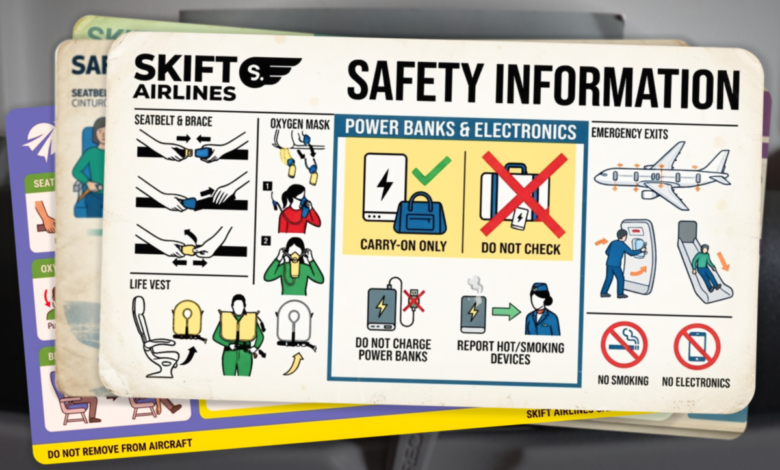
- Spare lithium-ion batteries and power banks are strictly prohibited in checked luggage due to the risk of an uncontained cargo hold fire.
- Passengers are required to carry power banks in their carry-on baggage, where cabin crew can detect smoke or fire immediately and intervene.
- Many airlines prohibit the use or recharging of power banks using aircraft USB ports during flight to prevent overheating caused by simultaneous charging and discharging.
Despite these rules, incidents involving smoking or burning devices in passenger cabins occur with troubling regularity. Major carriers worldwide report multiple minor thermal runaway events each year, typically managed successfully by flight attendants using specialized containment bags and water or fire extinguishers. However, incidents that escalate to the point of forcing an intercontinental flight to turn around remain relatively rare and exceptionally costly.
Airline Industry Responses and Best Practices
In the wake of events like the KLM Flight 735 emergency, airlines continue to refine their internal safety protocols and passenger communication strategies. Modern flight attendant training programs now place heavy emphasis on the rapid identification and containment of lithium-ion fires.
Airlines increasingly equip their aircraft with thermal containment bags—heavy-duty, fire-resistant pouches designed to withstand extreme temperatures. Once a burning power bank or laptop is placed inside one of these bags, it can off-gas safely without threatening the aircraft’s interior materials or exposing passengers and crew to toxic fumes.
Furthermore, industry stakeholders are debating whether to implement stricter capacity limits on portable chargers allowed in passenger cabins. Currently, most regulatory frameworks permit power banks up to 100 watt-hours (Wh) without airline approval, and up to 160 Wh with specific carrier permission. Some safety advocates argue that lower thresholds or enhanced screening of electronic accessories could further reduce risk.
Conclusion
The emergency landing of KLM Flight 735 serves as a potent reminder of how a miniature consumer electronic device can disrupt massive global logistics. While the sensationalized headlines surrounding the former CEO’s alleged involvement quickly dominated public discourse, the true significance of the event lies in its stark illustration of aviation’s ongoing battle against lithium-ion battery hazards.
As the Dutch Safety Board pursues its independent investigation, airlines, manufacturers, and regulators will closely monitor the findings to determine whether current cabin safety measures require bolstering. For travelers, the incident reinforces the critical importance of handling portable power banks with care, ensuring devices are protected from physical damage, and cooperating fully with the rigorous safety protocols enforced by flight crews at 35,000 feet.
Related posts: