The Midterm Blue Wave and Its Seismic Aftershocks for the Tech Industry and Data Center Expansion


The recent midterm elections have delivered a historic victory for the Democratic Party, creating a political landscape that is already sending profound shockwaves through the United States technology sector. Beyond the traditional debates over taxation, social policy, and economic regulation, this election cycle highlighted a burgeoning grassroots backlash against the physical infrastructure powering the artificial intelligence boom: data centers. As local ballot measures overwhelmingly rejected new facility proposals and voters swept candidates into office who campaigned explicitly on restricting data center developments, the tech industry finds itself confronting an unprecedented intersection of environmental activism, local politics, and regulatory hurdles.
The implications of this political shift extend far beyond state legislatures and municipal zoning boards. Major tech corporations, hyperscalers, and artificial intelligence developers now face a complex web of opposition that threatens to slow down the rapid expansion required to train and run next-generation AI models. This emerging friction point raises critical questions about how the industry will balance its insatiable demand for computational power with mounting public concern over resource consumption, energy grids, and community transparency.
The Political Landscape and the Irony of Silicon Valley Donations
The tension between the tech sector’s infrastructural ambitions and the new political reality was vividly illustrated during the recent election cycle. High-profile figures within the technology industry poured unprecedented financial resources into political campaigns, often backing candidates aligned with deregulation and business-friendly policies. Notably, billionaire entrepreneur Elon Musk reportedly donated half a billion dollars to support Republican candidates and causes.
However, the election results produced a striking geographic and political irony. Despite massive financial contributions from industry leaders to conservative campaigns, many of these investments yielded little tangible political alignment. Musk now finds his primary corporate headquarters situated in a state that has experienced a dramatic and unexpected political shift toward the Democratic Party. This sudden realignment leaves prominent tech companies navigating an administrative and legislative environment starkly different from the one anticipated by their financial backers.
In key states such as Texas, voters elected leaders like governor-elect Gina Hinojosa, who placed restrictions on data center expansion and environmental oversight at the center of her campaign platform. The defeat of incumbent Republican leadership in these traditionally conservative strongholds signals a broader voter appetite for tighter controls over commercial development. Consequently, tech companies accustomed to swift approvals and minimal oversight are now anticipating significant roadblocks from newly empowered state and local officials.
The Rise of Grassroots Opposition to Data Centers
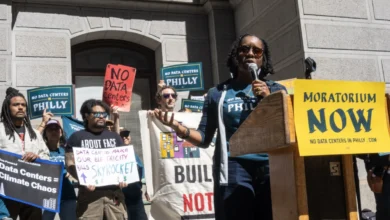
While the broader national narrative of the midterm elections focused on traditional partisan issues, local ballot measures revealed a powerful, cross-partisan resistance to data center construction. Across the country, voters rejected initiatives that would have streamlined facility approvals, while simultaneously passing measures that imposed strict moratoriums or new zoning restrictions on large-scale computing hubs.
This backlash is not merely a partisan phenomenon; it represents a deep-seated grassroots movement fueled by legitimate community concerns regarding environmental impact and resource depletion. Hyperscalers and AI firms have historically pursued aggressive expansion strategies characterized by high levels of secrecy. Developers frequently required local and state officials to sign non-disclosure agreements (NDAs), withholding vital information regarding the true scale of proposed projects, energy consumption estimates, and water usage from the public.
In environmentally sensitive regions, particularly across the American Southwest where water scarcity is an acute and perennial crisis, the massive cooling requirements of modern data centers have sparked intense local opposition. Residents, regardless of their political affiliation, have grown increasingly alarmed by the strain these facilities place on local electrical grids and municipal water supplies. This widespread community mobilization transformed data centers into a potent political issue, allowing candidates who championed environmental protection and local autonomy to successfully rally voters.
Corporate Adaptation and the Pivot in Public Relations
Faced with mounting regulatory threats and shifting political winds, major technology companies have begun altering their strategies to mitigate public backlash. The realization that heavy-handed secrecy and opaque approval processes are no longer tenable has forced industry leaders to rethink their community engagement models.
A prime example of this reactive pivot is OpenAI, which recently released a comprehensive policy blueprint governing its infrastructure development, termed a "compute campus policy." Under this new framework, the company aims to move away from the controversial practices of the past by abandoning the requirement for NDAs and committing to greater transparency regarding its infrastructure plans. By sharing project details openly with local communities and regulators, these firms hope to rebuild trust and preempt legislative crackdowns.
Simultaneously, the industry has engaged in deliberate linguistic rebranding, attempting to shift public perception away from the politically charged terminology of "data centers" toward the more benign concept of "compute campuses." Industry analysts note that this rebranding effort is designed to soften the image of massive, energy-intensive facilities by associating them with educational or research environments. However, skeptics within and outside the tech sector question whether cosmetic vocabulary changes will be sufficient to appease communities grappling with the tangible realities of heavy power and water consumption.
Financial Pressures and Wall Street’s Shifting Calculus
The regulatory hurdles presented by the midterm election results arrive at a delicate time for the technology sector, compounding existing financial pressures from Wall Street. Over recent quarters, investors and financial analysts have grown increasingly cautious regarding the astronomical capital expenditures required to build and maintain the infrastructure underpinning the generative AI boom.
For months, institutional investors have voiced skepticism over whether the massive spending on specialized hardware and expansive facilities will yield immediate or sustainable returns. This financial hesitancy, combined with the new wave of political and regulatory resistance, creates a formidable double-edged sword for hyperscalers. On one hand, capital markets are demanding fiscal restraint and greater capital efficiency; on the other hand, the political landscape is making physical expansion increasingly difficult and costly.
Despite these headwinds, the foundational demand for computational capacity remains robust. AI developers and cloud providers require vast arrays of servers to maintain their competitive edge, forcing them to devise strategies that reconcile financial prudence with regulatory compliance. The challenge moving forward will involve identifying jurisdictions willing to accommodate these projects while adhering to strict environmental standards and transparent community engagement protocols.
Broader Implications and Future Outlook
The aftermath of the midterm elections marks a watershed moment for the relationship between the technology industry and American governance. The success of anti-data center ballot measures and the election of candidates pledged to environmental and infrastructure oversight demonstrate that local communities are no longer willing to serve as passive hosts for digital infrastructure.
As the political landscape stabilizes around these new power dynamics, the tech industry must adapt to an era of heightened scrutiny. The coming years will likely witness prolonged legal battles, more rigorous environmental impact reviews, and increased demands for community benefit agreements before a single shovel breaks ground. For hyperscalers and AI developers, navigating this complex terrain will require a fundamental shift from aggressive, secretive expansion to collaborative, transparent partnership with the communities they seek to inhabit. Ultimately, the ability of the tech sector to sustain its infrastructural growth will depend not just on technological innovation, but on its capacity to earn and maintain public trust in a newly blue-shifted political reality.