Democrats Push to Bypass Electoral College Sets Up High-Stakes Legal Battle for 2028 White House Race

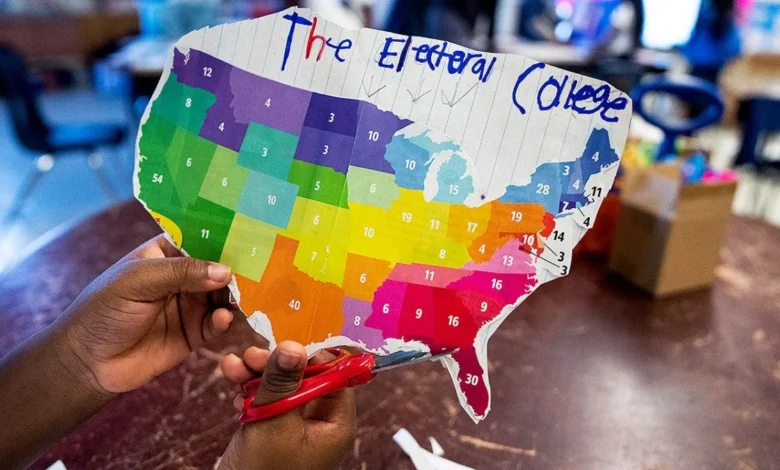
Recent midterm election gains by the Democratic Party have breathed new life into a long-running national debate over how the United States elects its president, potentially setting the stage for a dramatic constitutional showdown ahead of the 2028 White House race. With legislative majorities secured in several key battleground states, proponents of the National Popular Vote Interstate Compact (NPV) believe they now have a viable, albeit controversial, pathway to fundamentally alter presidential elections without passing a constitutional amendment.
Under the current mechanism of the Electoral College, 48 states and Washington, D.C., award all of their respective electoral votes to the candidate who secures a plurality of the vote within that specific state. Maine and Nebraska are the sole exceptions, utilizing a congressional district method. However, the proposed interstate compact seeks to bypass this state-by-state allocation system. Once activated, participating states would legally bind their slate of electors to vote for the winner of the national popular vote, regardless of how their individual state citizens voted.
While the Electoral College would technically remain intact on paper, the national tally would become the sole deciding factor, effectively neutralizing the traditional battleground map that has dictated American presidential politics for generations.
A Shifting State-Level Landscape
The viability of the compact shifted dramatically following recent midterm elections. Democrats successfully captured unified control—holding the governorship alongside both chambers of the state legislature—in Michigan, Pennsylvania, Wisconsin, and Nevada.
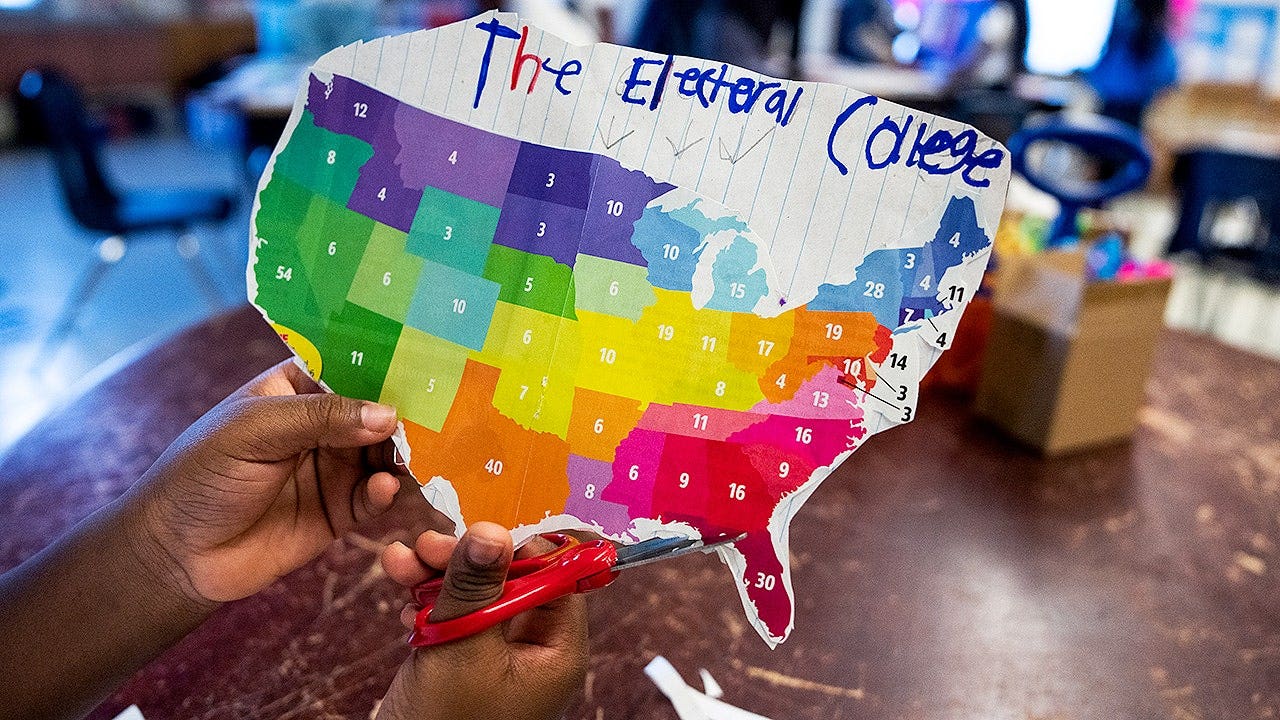
Currently, the National Popular Vote Interstate Compact has been formally enacted by 18 states and the District of Columbia, accounting for a collective 222 electoral votes. To trigger the compact into law, a threshold of 270 electoral votes is required. The addition of Michigan, Pennsylvania, Wisconsin, and Nevada would inject 50 new electoral votes into the compact, pushing the cumulative total to 272 and activating the system ahead of the 2028 election cycle. Furthermore, if Democrats ultimately consolidate control over both legislative chambers in Arizona, that state’s 11 electoral votes could elevate the total to 283.
National Popular Vote (NPV), the nonpartisan or progressive-aligned nonprofit organization that authored and has spearheaded the multi-state legislative campaign, reports that it has already identified willing legislative sponsors across all five targeted states. Organizers anticipate that bills will be formally pre-filed or introduced early during the 2027 state legislative sessions.
"I am confident we have multiple paths to secure the 48 electoral votes required to deliver what 63 percent of Americans want," said Patrick Rosenstiel, a senior consultant for NPV, referencing public polling metrics frequently cited by the organization regarding voter preferences for a national popular vote.
Constitutional and Legal Battles Ahead
Despite the optimism from proponents, legal scholars and conservative advocates are raising immediate constitutional red flags, promising a fierce courtroom battle should the compact cross the 270-vote threshold.
Hans von Spakovsky, an election law expert with the conservative think tank Advancing American Freedom and a former commissioner on the Federal Election Commission (FEC), argued that states cannot unilaterally band together to upend the structure of federal elections established by the Founding Fathers.
"This is unprecedented," von Spakovsky stated. "In the past, the only kind of compacts that have been agreed on between states have been things like water sharing—when rivers run between states, they enter into compacts to agree on that. But a compact that changes a fundamental structural given in the Constitution, I think the Supreme Court would say you can’t do that."
At the heart of the legal debate are two competing interpretations of the U.S. Constitution:
- Article II, Section 1: Proponents of the compact rely heavily on this section, which grants state legislatures plenary power to direct how their respective presidential electors are chosen. NPV argues that because states have historically held absolute authority to allocate electors—ranging from direct legislative appointment in early American history to the modern winner-take-all models—they possess the legal latitude to tie those electors to a national tally.
- The Compact Clause (Article I, Section 10): Critics counter that the Constitution explicitly requires congressional approval for any interstate agreements that tend to increase the political power of the states in a way that encroaches upon federal supremacy or alters the constitutional balance of power.
Von Spakovsky noted that while a newly configured Congress might theoretically pass the compact via simple majorities in the House and Senate, non-participating states would possess immediate standing to challenge the maneuver in federal court. Such a lawsuit would almost certainly escalate to the U.S. Supreme Court, where justices would be tasked with deciding whether a coalition of states can legally override the federalist design of the Electoral College through legislative contracts.
A Tight Timeline for 2028
Time is already working against lawmakers and litigators alike. According to NPV guidelines, the interstate compact will only apply to a presidential election if the 270-vote threshold is reached and finalized at least several months prior to voters heading to the polls. Specifically, participating states must formally enact the legislation before July 20 of the presidential election year to impact that cycle.
This leaves state legislatures, federal lawmakers, and the judicial branch a window of less than two years following the 2027 legislative sessions to pass bills, navigate potential vetoes, and resolve the inevitable constitutional challenges in the court system.

If the compact successfully navigates these hurdles, the 2028 presidential election could look radically different from any contest in modern history. Rather than focusing campaign resources exclusively on a handful of pivotal swing states like Pennsylvania, Michigan, and Wisconsin, future presidential nominees would theoretically need to campaign for every single vote across urban, suburban, and rural America, as a vote cast in a deep-blue or deep-red stronghold would carry the exact same weight as one cast in a traditional battleground.
Conversely, opponents warn that eliminating the Electoral College would disenfranchise smaller states and rural populations, reducing the incentive for candidates to address issues unique to less-populated regions of the country. Critics also express deep concern over the logistical nightmare of conducting a nationwide recount in a tightly contested presidential race, noting that inconsistent state-level voting rules, provisional ballot timelines, and varied audit procedures could plunge the nation into an unprecedented electoral crisis without a clear state-by-state certification framework.
For now, the Electoral College remains firmly in place, and the rules governing American presidential selections have not changed. However, with legislative gears already turning in key state capitals, the debate over the future of the American presidency has officially entered a new, highly volatile phase.