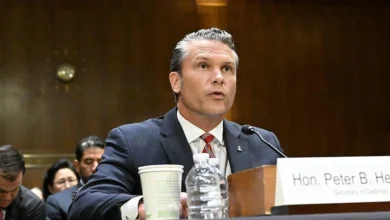
Sen. Chris Van Hollen urges colleagues to avoid rushing to select their next Senate majority leader


Following a historic midterm election cycle that saw a seismic shift in the balance of power on Capitol Hill, Democratic Sen. Chris Van Hollen of Maryland has issued a firm call for restraint regarding the upcoming leadership selection process. As Democrats prepare to command a majority of at least 54 seats in the U.S. Senate when the new Congress convenes in January, the internal dynamics of the party are under intense scrutiny. Van Hollen’s warning against a "coronation" underscores a broader tension within the caucus between the established leadership of Senate Minority Leader Chuck Schumer and a cohort of incoming senators eager to pivot toward a new strategic direction.
Speaking at the Crooked Con political conference in Washington, D.C., Van Hollen emphasized that the party’s dominant performance—a result of unexpected gains across diverse battleground states—necessitates a deliberative, rather than reactive, approach to selecting the next majority leader. "We need to have a discussion in the Democratic Caucus," Van Hollen stated. "We need to understand what the Democrats are going to do with this new responsibility and these new powers, and that nobody should get a blank check without a full understanding from the caucus as to where we’re going to go."
A Landscape Transformed: The 2026 Midterm Results
The 2026 midterms proved to be a political watershed, characterized by high voter turnout and widespread dissatisfaction with the status quo, which effectively dismantled the Republican Senate firewall. Exit polls conducted by CBS News in the immediate aftermath of the election revealed that President Trump’s job approval ratings were underwater across nearly every key battleground state, even in regions where he had previously secured double-digit victories in 2024.
The "blue tsunami," as termed by Republican Sen. Ted Cruz during a recent podcast, resulted in significant losses for the GOP. Democrats successfully flipped seats in states like Texas, North Carolina, and Kansas, while managing to hold onto competitive territory. This wave of victories fundamentally altered the legislative map, placing the party in a position to exert significant influence over the final two years of the current presidential term.
The Mississippi Senate Race: A Final Point of Contention
While the broader control of the Senate has been decided, the contest in Mississippi remains a high-stakes point of friction. As of mid-November, the race between incumbent Republican Sen. Cindy Hyde-Smith and Democratic challenger Scott Colom remains a statistical toss-up. With Colom maintaining a razor-thin lead of approximately 2,500 votes, the focus has shifted to the meticulous—and increasingly litigious—process of counting outstanding mail-in and affidavit ballots.
The Mississippi Secretary of State, Michael Watson, has confirmed that roughly 3,600 mail-in ballots and an undisclosed number of affidavit ballots are currently being processed. The deadline for county certification is set for November 13, a date that looms large for both camps. The National Republican Senatorial Committee (NRSC) has officially requested that all counties preserve and separate affidavit ballots, a move the Colom campaign has characterized as a "desperate stunt." Conversely, the Democratic Senatorial Campaign Committee (DSCC) has deployed legal teams to the state to ensure compliance with election procedures.
This uncertainty mirrors the high-tension atmosphere of the 2026 cycle, where every seat has been treated as a critical component of the national mandate. Mississippi, which has not sent a Democrat to the U.S. Senate since 1982, serves as a poignant example of the electoral volatility that defined these midterms.
Leadership Dynamics and Internal Reform
The call for a leadership review is not limited to the Senate floor. Within the Democratic caucus, the victory has triggered a reassessment of the party’s platform and operational style. While Chuck Schumer has led the caucus since 2017, several incoming senators have publicly signaled a desire for fresh leadership that reflects the priorities of the voters who returned them to Washington.

Van Hollen, who has clarified through his staff that he will not pursue the majority leader position himself, argues that the urgency of the moment should not bypass the need for institutional introspection. His insistence that members "withhold any commitments" until they have synthesized the feedback from constituents is indicative of a caucus that is newly empowered but also acutely aware of its need to deliver on promises of economic stability and institutional reform.
Republican Reconfiguration and Legislative Hurdles
For the Republican Party, the results have triggered an immediate period of soul-searching and personnel shifts. In the House of Representatives, Speaker Mike Johnson has already indicated he will not seek the role of minority leader, and in the Senate, GOP leadership is navigating a landscape where their legislative power has been severely curtailed.
Senate Majority Leader John Thune, who has engaged in recent conversations with President Trump regarding the party’s path forward, is expected to maintain his position as the leader of the Senate GOP conference. However, Thune faces a difficult task: managing a caucus that is at odds over its relationship with the White House and its response to the Democrats’ new majority. Thune has publicly vowed to oppose the "worst impulses of Democrat extremism," yet he acknowledges that the party must reckon with the losses of key incumbents and the shifting priorities of the American electorate.
Fact-Based Implications for the New Congress
The shift in Senate control carries profound implications for the federal government. With a Democratic majority, the Senate will serve as a definitive check on executive branch appointments and judicial nominations. Senate Minority Leader Schumer has been explicit about this shift, pledging to entangle the executive branch in "legislative razor wire" should it defy the will of the people. This suggests that the next two years will be defined by rigorous oversight, frequent investigations, and a likely increase in judicial and executive confirmation battles.
Furthermore, the "K-shaped economy," which Sen. Ted Cruz identified as a major factor in the GOP’s defeat, remains a central challenge for the incoming Congress. The Democratic caucus is under immense pressure to address cost-of-living concerns and the affordability crisis that resonated so strongly with voters across the heartland.
Timeline of the 2026 Midterm Cycle
The road to this political realignment was paved over months of intense campaigning:
- Summer 2026: Increased focus on regional economic issues and the impact of tariff policies on the American middle class.
- Late October 2026: Surge in interest in battleground states as both parties realized the possibility of a total shift in Senate control.
- November 3, 2026: Election Day results reveal a significant Democratic sweep, with multiple GOP-held seats flipping.
- November 4, 2026: Initial victory speeches and concessions; focus turns to the remaining toss-up races in Alaska and Mississippi.
- November 7, 2026: Sen. Chris Van Hollen publicly calls for a deliberative approach to the leadership selection process, signaling a desire for internal party debate before finalizing the Senate’s new organizational structure.
Conclusion: The Path Forward
The 2026 midterm elections have effectively closed the chapter on the previous legislative alignment and opened a new, more uncertain one. As the dust settles, the focus on the Senate majority leader position is more than a contest of personalities; it is a battle for the soul of the Democratic Party’s legislative agenda.
Sen. Van Hollen’s plea for restraint serves as a reminder that victory at the ballot box is only the beginning. The responsibility now lies with the senators-elect and incumbents alike to define what this new majority will accomplish. Whether they choose to maintain the existing leadership framework or move toward a new, more reform-oriented structure, the decision will dictate the legislative trajectory of the United States for the next two years. With the nation facing significant economic and foreign policy challenges, the Senate’s ability to function as a deliberative body will be tested in ways that will shape the American political landscape for years to come.