Trump Orders DOJ Investigation Into Democratic Lawmakers Following Midterm Shifts and Impeachment Threats

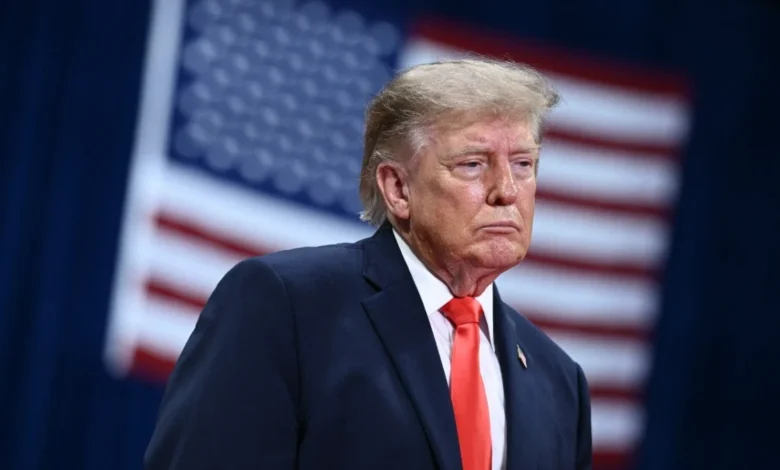
President Donald Trump announced on Saturday that he has formally directed the United States Department of Justice to launch an immediate criminal investigation into several Democratic lawmakers. The president’s directive, issued via a social media statement on Truth Social, stems from what he characterizes as coercive tactics, including public threats of impeachment targeting high-ranking administration officials such as Attorney General Todd Blanche.
The announcement follows a significant political shift in Washington, D.C., resulting from the recent midterm elections. In those contests, the Democratic Party successfully recaptured majorities in both the House of Representatives and the Senate, altering the legislative landscape and setting the stage for heightened institutional conflict between the executive branch and Capitol Hill.
The Catalyst: Impeachment Threats and Congressional Shifts
The immediate friction centers on public statements made by House Democrats following Election Day. Representatives Hank Johnson of Georgia and Deborah Ross of North Carolina both voiced public support for initiating impeachment proceedings against Attorney General Todd Blanche.
During an interview on SiriusXM’s "The Dan Abrams Show," Rep. Johnson stated his belief that the alleged offenses committed by the attorney general warranted formal impeachment, conviction, and removal from office. Shortly thereafter, Rep. Ross appeared on the same program, echoing support for Blanche’s impeachment while suggesting that the legislative body should begin its oversight efforts by targeting Secretary of War Pete Hegseth.
Compounding the legislative tension, Representative Thomas Massie, R-Ky., has indicated plans to independently reintroduce articles of impeachment against Secretary Hegseth, highlighting an environment where both major political parties are utilizing or contemplating heavy constitutional mechanisms.
In his Truth Social statement, President Trump pushed back strongly against these legislative maneuvers, asserting that neither Attorney General Blanche nor any other member of his administration has engaged in impeachable conduct. Trump contended that the rhetoric from Democratic lawmakers constitutes an unwarranted form of political pressure and intimidation designed to hobble the executive branch.
Focus on Senator Elissa Slotkin and Deterrence Rhetoric
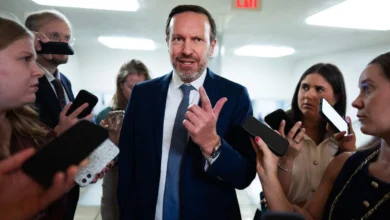
While Trump did not explicitly name Representatives Johnson or Ross in his post, he directly targeted Democratic Senator Elissa Slotkin of Michigan. The president accused Slotkin of making statements aimed at deterring qualified professionals from participating in Republican administrations.
Trump’s critique traces back to remarks made by Slotkin on October 13 at the University of Chicago. During that appearance, the Michigan senator discussed intentions to pursue high-profile investigative cases targeting individuals who enabled the policies of the Trump administration. Slotkin explicitly noted a desire to send a deterrence message to younger professionals considering public service within the administration, suggesting that such career choices could invite substantial legal and professional entanglements.
"I want young people coming out of school to say, ‘Should I go work for the Trump administration? Like, that sounds fun, I might get an opportunity.’ I want them to be like, ‘Lord, that might be buying myself a ton of problems that I don’t want, and so let me avoid participating in that,’" Slotkin said during the university event. "I want that deterrence message sent."

President Trump interpreted these comments as an aggressive effort to blacklist and penalize citizens based on their political affiliations and beliefs, elevating the dispute from a policy disagreement to an alleged civil liberties violation.
Allegations Involving Political Donors and Corporate Oversight
Beyond legislative threats directed at cabinet officials, Trump’s directive to the Department of Justice encompasses broader concerns regarding political donors and corporate contributors associated with the Republican Party. The president alleged that Democratic lawmakers have engaged in campaigns threatening major GOP donors with imprisonment and punitive legal scrutiny because of their financial support for conservative causes.
Although Trump did not specify individual donors in his statement, recent reports from outlets such as Reuters indicate that incoming Democratic congressional leadership is preparing to launch sweeping oversight inquiries into major corporations and high-net-worth individuals who financed various Republican initiatives, potentially including private contributions tied to infrastructure projects like the White House ballroom construction.
Characterizing these planned inquiries as extortionate, Trump called upon federal law enforcement to treat the alleged threats as criminal acts, arguing that political fundraising and participation in the democratic process should be shielded from retaliatory investigations by legislative majorities.
Background and Institutional Context
The escalating standoff highlights the deep polarization defining the current political era. Midterm elections historically present challenges for sitting administrations, but the complete reversal of congressional control in this instance has accelerated preparations for aggressive oversight.

Under the U.S. Constitution, the House of Representatives holds the sole power of impeachment, while the Senate conducts trials to determine removal from office. Historically, these tools have been reserved for high crimes and misdemeanors, though recent political cycles have seen an increase in the frequency of impeachment threats used as both political leverage and genuine legislative oversight.
The Department of Justice now faces the delicate task of evaluating a presidential directive to investigate members of the legislative branch—a co-equal branch of government protected by the Speech or Debate Clause of the Constitution, which shields lawmakers from prosecution or civil liability for official legislative acts and statements. Legal analysts note that any DOJ inquiry into congressional statements regarding impeachment or oversight will likely encounter profound constitutional hurdles and separation-of-powers challenges.
Broader Implications for Governance
As the new congressional term approaches, the confrontation between the executive branch and the newly empowered Democratic majority signals a volatile period for federal policymaking and governance.
The invocation of the Department of Justice to investigate political opponents over legislative rhetoric sets a contentious precedent that is expected to draw rigorous scrutiny from legal scholars, constitutional experts, and lawmakers on both sides of the aisle. With investigations promised, legislative subpoenas anticipated, and executive pushback intensifying, the coming months will test the institutional boundaries separating law enforcement, the executive branch, and the United States Congress.