The untold story of the lost Elf sequel scripts reveals a hidden history of Hollywood’s near-misses with a holiday classic.

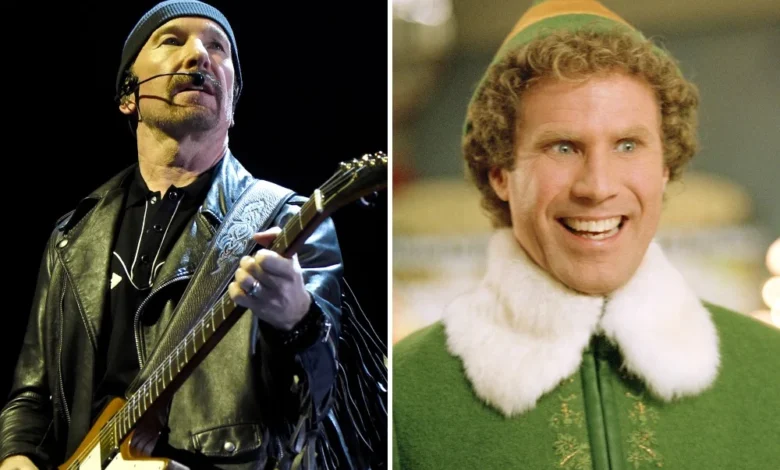
For over two decades, the 2003 film Elf has remained a cornerstone of holiday cinema, generating immense cultural capital and enduring popularity. However, the path to a potential sequel was far more complex than audiences realized, involving unexpected pitches from unlikely sources. Recent revelations from actor Andy Richter, who appeared in the original film, have shed light on the existence of at least two abandoned attempts to continue the story of Buddy the Elf, including a bizarre and largely unknown script penned by none other than David Howell Evans—the legendary guitarist of U2, known to the world as The Edge.
The Origin of the Lost Sequel Scripts
The existence of these scripts, which have never been made public, adds a new layer to the lore surrounding Jon Favreau’s 2003 hit. According to Richter, who recently discussed the matter on Obsessed: The Podcast, the attempt by The Edge to write a follow-up to the Will Ferrell-led classic reached the ears of the film’s original producer, Shauna Robertson.
Richter recounted the surreal nature of the pitch, noting that Robertson was contacted by intermediaries who claimed the U2 guitarist had developed a full-length screenplay for Elf 2. The proposal, while high-profile, failed to gain significant momentum within the industry. Richter characterized the exchange as a fleeting moment of curiosity that ultimately "petered out," leaving the screenplay in a metaphorical vault of unproduced Hollywood projects.
This was not the only attempt to extend the Elf franchise. Richter also disclosed that Scot Armstrong, a writer known for his work on Old School and The Hangover Part II, had been tasked with drafting an alternative sequel. Armstrong’s version took a darker, more action-oriented approach, reportedly centering on a plot involving "evil South Pole elves" who kidnap Santa Claus. Notably, Armstrong had been involved in the original production of Elf, though his contributions went largely uncredited due to the intricacies of the Writers Guild of America’s credit determination processes.
Chronology of a Holiday Phenomenon
To understand why these sequel pitches failed to gain traction, one must look at the trajectory of Elf itself. Released in November 2003, the film was a critical and commercial success, grossing approximately $220 million worldwide against a budget of roughly $33 million. Directed by Favreau, the film benefited from a unique confluence of factors: Will Ferrell’s star power following his departure from Saturday Night Live, a tightly scripted narrative that avoided the cynicism typical of early 2000s comedies, and a nostalgic, practical-effects-driven aesthetic.
In the years following its release, the film became an annual television staple. By the mid-2010s, the Elf brand had expanded into a Broadway musical, an animated television special, and an array of merchandise that solidified its status as a modern Christmas essential. Despite this success, the core cast—particularly Will Ferrell—remained notably resistant to a sequel. Ferrell famously turned down a reported $29 million offer to return for an Elf sequel, citing a desire to protect the integrity of the original film.
The Economic and Creative Logic of Sequels
The internal debate over whether to produce an Elf 2 mirrors a broader industry tension regarding the "legacy sequel." In recent years, Hollywood has leaned heavily into nostalgia, reviving franchises such as Ghostbusters, Top Gun, and Beetlejuice. While these films have proven lucrative, the risk of "tarnishing" a beloved original remains a primary concern for filmmakers.
Richter’s perspective reflects a growing sentiment among industry professionals that not every successful film requires a multi-part saga. "I’m on the side of ‘Let it stand,’" Richter noted. "You don’t have to use every part of the animal." This philosophy highlights the distinction between a film’s commercial potential and its artistic lifespan. From a studio perspective, a sequel to Elf would have almost certainly guaranteed a high opening weekend gross. However, from a creative perspective, the lack of a compelling narrative hook—beyond the standard "fish out of water" tropes that defined the original—likely contributed to the abandonment of the drafts by The Edge and Scot Armstrong.
Fact-Based Analysis: Why the Scripts Remained Unproduced
Several factors contributed to the dormancy of these projects:
- The Will Ferrell Factor: As the primary engine of the film’s success, Ferrell’s reluctance was the single greatest hurdle. Without the lead actor, a studio would be forced to pursue a reboot or a spin-off, both of which carry higher risks of audience rejection.
- Narrative Stagnation: The story of Buddy the Elf concludes with a satisfying resolution: he finds his biological father, secures his place at the North Pole, and brings the spirit of Christmas back to New York City. Extending this narrative often risks undermining the character growth achieved in the first film.
- Creative Mismatch: The proposed plots—particularly the concept of "evil South Pole elves"—suggest a significant tonal shift. The original Elf succeeded because of its sincerity and whimsy; introducing an antagonist-driven action plot might have alienated the very audience that cherished the film’s heart.
- Guild and Procedural Hurdles: As noted by Richter regarding Scot Armstrong, the behind-the-scenes world of screenwriting is heavily regulated. Projects often stall when the creative vision of a writer fails to align with the studio’s desire for a franchise-friendly narrative.
The Broader Impact on the Industry
The revelation that The Edge once wrote a script for Elf 2 serves as a reminder of the "shadow industry" of Hollywood—the thousands of unproduced scripts that exist in filing cabinets and digital archives. These stories, while never reaching the screen, represent the experimental nature of creative development. The fact that a globally recognized musician sought to engage in the screenwriting process for a family-friendly holiday comedy highlights how deeply the film permeated pop culture, reaching creators far outside the traditional film studio ecosystem.
Furthermore, Richter’s involvement in documenting this history through his new book, Elf Unwrapped: Behind the Scenes of a Modern Christmas Classic, serves to cement the film’s legacy. By providing insight into the challenges of the production and the subsequent failed attempts at expansion, Richter provides fans with a more nuanced understanding of why Elf remains singular.
Looking Toward the Future
As the holiday season approaches annually, the question of a sequel inevitably resurfaces in media discourse. However, the evidence suggests that the film’s perfection lies in its completeness. The efforts of writers like Scot Armstrong and high-profile figures like The Edge to continue the story underscore the difficulty of capturing lightning in a bottle twice.
In the final analysis, the "lost" Elf sequel remains a curiosity rather than a tragedy. Its existence as an unproduced work preserves the original film from the dilution that often accompanies franchise expansion. For fans, the story of the abandoned scripts serves as a testament to the fact that sometimes the best creative decision in Hollywood is the one that results in no sequel at all. The legacy of Elf will continue to rely on the 2003 original, a film that remains untouched by the commercial pressures that forced other holiday classics into the realm of redundant, and often disappointing, sequels. As Richter aptly summarized, the film is a self-contained piece of art; to attempt to add to it would be to risk the very magic that made it a classic in the first place.
Related posts: