Former Hinds County District Attorney Jody Owens Sentenced to More Than Three Years in Federal Prison Following Corruption and Bribery Conviction

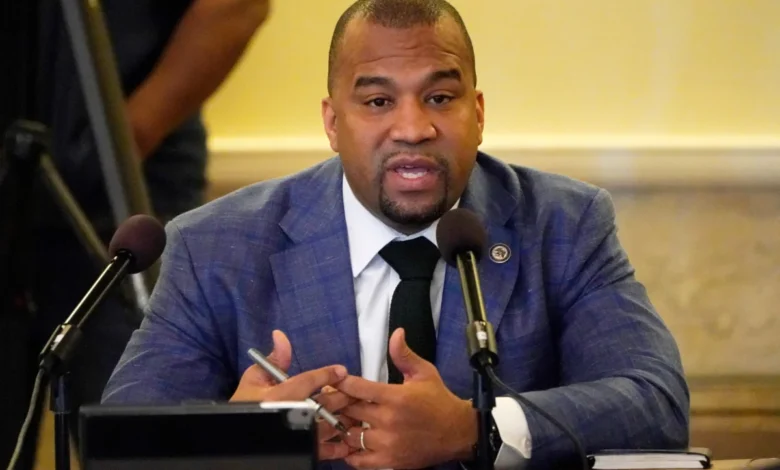
The former top prosecutor for Mississippi’s most populous county was handed a federal prison sentence of more than three years on Thursday, bringing a stark and dramatic conclusion to a sweeping public corruption scandal that stunned the state’s legal community. Jody Owens, who once commanded immense influence as the district attorney for Hinds County—which encompasses the state capital of Jackson—received his punishment in the U.S. District Court for the Southern District of Mississippi after being convicted of orchestrating a corrupt scheme to rig municipal contracts in exchange for hundreds of thousands of dollars in illicit payments.
U.S. District Judge Daniel P. Jordan III imposed the prison term, alongside a hefty $100,000 fine, condemning the former prosecutor for a profound breach of the public trust. The sentencing marks a stunning fall from grace for a prominent legal figure who had ascended to power on a progressive platform of criminal justice reform, only to be undone by backroom bribery and the subversion of the democratic process.
The Mechanics of the Corruption Scheme
According to federal prosecutors and evidence presented in court, Owens utilized his significant political influence and official position to solicit a massive $250,000 in bribes. In exchange for the illegal payouts, Owens promised to manipulate and rig the municipal contracting process, guaranteeing that specific individuals and corporate interests would secure lucrative city contract bids.
The illicit enterprise extended far beyond Owens alone, ensnaring a wider web of municipal officials and power-brokers in what federal investigators described as a systemic betrayal of the taxpayers of Jackson and Hinds County. Rather than ensuring that public funds were distributed through a transparent, competitive, and fair bidding process, Owens allegedly treated public office as a personal marketplace, trading government work for personal financial enrichment.
During the sentencing hearing, Judge Jordan minced no words when addressing the gravity of the defendant’s actions. "He took an oath to uphold the law, and yet he solicited $250,000 in bribes to rig what should have been a fair and open bidding system for city contracts," Jordan stated from the bench, emphasizing that public corruption in positions of high authority strikes at the very heart of democratic institutions.
A Stunned Defendant Expresses Remorse
Standing before the federal judge who would decide his fate, Owens addressed the court, expressing deep remorse and acknowledging the wreckage his criminal behavior had caused to both his personal life and the public institutions he was sworn to protect.
"I can’t begin to tell you the shame I feel," Owens told the court, visibly shaken. "I betrayed myself, my family, my friends and my colleagues by my foolish and repugnant actions."
Despite his public contrition and appeals for leniency, federal prosecutors maintained that a substantial period of incarceration was necessary to reflect the severity of the offense, deter future public corruption, and restore integrity to the judicial and municipal systems in Hinds County.
Rise and Fall of a Criminal Justice Reformer
The downfall of Jody Owens carries profound irony given the high-flying trajectory of his political career. When Owens initially ran for the office of Hinds County District Attorney, he positioned himself as a modern, forward-thinking criminal justice reformer. His campaign resonated with voters by promising a dual approach: aggressively prosecuting violent offenders who terrorized communities while simultaneously seeking meaningful alternatives to incarceration for nonviolent, low-level offenders to reduce mass incarceration and address root causes of crime.
Owens enjoyed substantial local support and was widely viewed as a rising star within Mississippi legal and political circles. His background as an attorney and civil rights advocate added to his credibility as a reformer committed to equity and fairness. However, federal investigators revealed a stark dichotomy between the public-facing rhetoric of reform and the private reality of backroom graft. The transition from championing integrity in the legal system to subverting its core tenets for personal financial gain ultimately destroyed a career that once held immense promise.
Chronology of the Investigation and Legal Proceedings
The federal investigation into corruption within Hinds County unfolded over several years, marked by meticulous evidence-gathering by federal agencies. While public details emerged incrementally, the case quickly accelerated as investigators uncovered financial trails, communications, and cooperative witnesses linking Owens to the bribery plot.
- Initial Election and Term: Jody Owens assumes office as the district attorney for Hinds County, Mississippi, initiating reforms and gaining statewide prominence.
- Undercover Probes and Discovery: Federal investigators uncover evidence pointing to systemic corruption and bribery involving municipal contracts, leading directly to Owens and other city officials.
- Indictment and Public Disclosure: Owens faces federal charges relating to the solicitation of $250,000 in bribes to rig city contracts, shocking local constituents and the legal community.
- Plea and Conviction Proceedings: Legal maneuvers culminate in Owens’ conviction, setting the stage for sentencing arguments regarding the abuse of prosecutorial and political power.
- Sentencing (Thursday): U.S. District Judge Daniel P. Jordan III sentences Owens to more than three years in federal prison and orders him to pay a $100,000 fine.
Broader Impact and Implications for Hinds County
The sentencing of Jody Owens reverberates far beyond a single courtroom, dealing another heavy blow to the governance and civic stability of Hinds County and the city of Jackson. The region has struggled for years with infrastructural challenges, resource allocation issues, and a persistent erosion of public trust in local institutions. When top-tier elected officials—particularly those tasked with enforcing the law and fighting corruption—are themselves convicted of criminal enterprises, the damage to civic morale is deep and long-lasting.
Legal analysts and local watchdogs note that this case highlights the persistent vulnerability of municipal and county contracting systems to insider manipulation. Contracts involving public funds are designed to benefit taxpayers by fostering competitive pricing and high-quality service delivery. When those systems are compromised by corrupt officials seeking kickbacks, the public pays twice: once through inflated or substandard public projects, and again through the degradation of trust in democratic governance.
Furthermore, the prosecution serves as a stark warning to elected officials across the state of Mississippi and the broader United States. Federal authorities have repeatedly signaled that public corruption remains a top priority, utilizing robust investigative tools to root out graft at every level of local government.
As Owens prepares to report to federal custody to begin serving his multi-year prison sentence, the legal community in Mississippi is left to pick up the pieces and reflect on a cautionary tale of ambition, betrayal, and the ultimate accountability of the law. The office once held as a beacon of progressive reform now stands as a symbol of the vital necessity for rigorous oversight, transparency, and ethical leadership in public service.