Melat Kiros makes history as the first Generation Z woman elected to the United States Congress

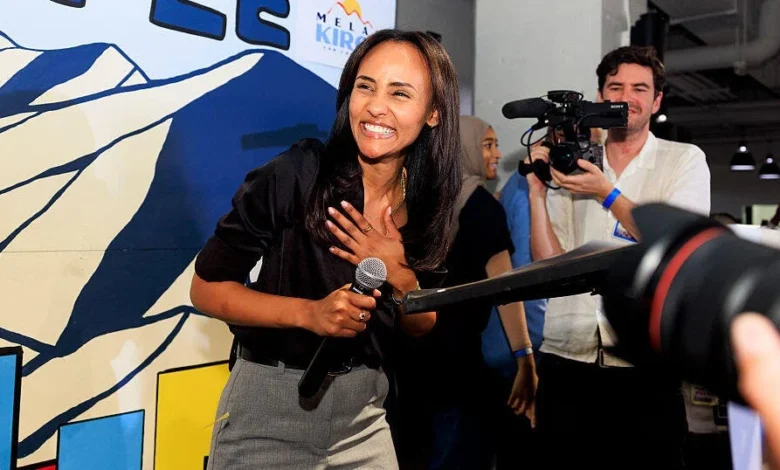
In a political landscape long dominated by veteran incumbents and multi-generational power brokers, the 2026 midterm elections have yielded a historic shift. On Tuesday, November 4, 2026, 29-year-old Melat Kiros secured victory in Colorado, cementing her status as the first Generation Z woman to be elected to the United States House of Representatives. Her win marks a significant milestone for the youngest voting bloc in America, signaling an evolution in the demographic composition of federal leadership.
Kiros’ victory carries a heavy symbolic weight. She defeated incumbent Democratic Representative Diana DeGette—who had served in Congress since 1997, the very year Kiros was born—in a primary contest that sent shockwaves through the Democratic establishment. By successfully navigating the transition from a primary challenger to a general election victor, Kiros has signaled a desire among voters for a generational passing of the torch.
A Path Defined by Activism and Upheaval
The trajectory of Melat Kiros’ life before her entry into the halls of power is marked by personal and professional turbulence. Born in Addis Ababa, Ethiopia, Kiros immigrated to Denver, Colorado, as an infant. Her academic background is rooted in law and political science, having graduated from Washington College in 2018 and later earning a law degree from the University of Notre Dame in 2022.
Her political awakening was accelerated by a high-profile professional setback in 2023. While working at a prominent New York City law firm, Kiros became embroiled in a controversy regarding the conflict in the Middle East. After law school deans faced pressure to address campus protests, Kiros authored an open letter criticizing firms that she believed were conflating legitimate political dissent with antisemitism. Her refusal to retract the letter led to her termination, an event she later described as a defining moment that pushed her toward public service.
Moving back to Colorado, Kiros immersed herself in local political organizing. She served as the communications director for John Padora’s 2024 congressional campaign, a role that allowed her to witness the mechanisms of modern campaigning from the inside. Following the reelection of President Donald Trump in 2024, Kiros concluded that the Democratic Party had drifted away from the concerns of its core working-class constituency. This realization prompted her to launch her own bid for office, centered on a platform of radical economic reform and foreign policy restructuring.
The Dynamics of the 2026 Midterms
Kiros’ rise is not an isolated event but rather part of a broader, albeit difficult, surge of young candidates attempting to break into federal politics. According to data provided by the Future Caucus, a non-partisan organization that monitors youth representation, 117 candidates from the Gen Z cohort filed to run for congressional seats in the 2026 cycle. However, the data reveals a stark reality: the barrier to entry remains incredibly high. Only 24 of those candidates survived the primary processes to appear on the general election ballot in November.
The hurdles for young candidates are largely systemic. Under the United States Constitution, a candidate must be at least 25 years old to serve in the House and 30 to serve in the Senate. Beyond age, the logistical requirements—fundraising, name recognition, and the ability to navigate party hierarchies—often favor entrenched incumbents. Kiros herself noted the financial strain, sharing that she had to rely on friends for affordable housing and reduce her hours as a barista while pursuing a doctoral degree in public policy during her campaign.
Policy Agenda and Legislative Priorities
As she prepares to take her seat in the 119th Congress this January, Kiros has outlined an ambitious and aggressive policy agenda. Her priorities are directly informed by the economic pressures facing young Americans and her own left-leaning political ideology.
Her immediate legislative goal is the reversal of the sweeping cuts to Medicaid and the Supplemental Nutrition Assistance Program (SNAP), which were enacted under the "One Big Beautiful Bill Act" passed during President Trump’s second term. Beyond reversing those austerity measures, Kiros has pledged to advocate for:
- Medicare for All: A universal, single-payer healthcare system.
- Foreign Policy Reform: A total cessation of U.S. military aid to Israel.
- Civil Rights and Governance: The abolition of Immigration and Customs Enforcement (ICE).
- Social Infrastructure: The implementation of universal childcare and eldercare programs.
Kiros has acknowledged that the learning curve for a freshman representative is steep. She has reportedly sought counsel from Representative Maxwell Frost, the Florida Democrat who became the first Gen Z member of Congress in 2022. Frost has served as a mentor of sorts, helping Kiros navigate the complexities of congressional operations, from logistical concerns like housing near the Capitol to the intricacies of legislative maneuvering.
Implications for the Democratic Party
The victory of a self-described democratic socialist in Colorado highlights the ongoing internal struggle within the Democratic Party. The party continues to grapple with a divide between the institutional establishment—often represented by long-tenured members like the defeated Diana DeGette—and a progressive wing that demands more urgent action on climate change, income inequality, and international human rights.
Political analysts suggest that Kiros’ win validates the strategy of "insurgent" campaigning. By focusing on the "lived experience" of the current economy, Kiros successfully framed her opponent’s long tenure not as an asset of experience, but as a liability of detachment. Whether this strategy can be replicated in more moderate districts remains a subject of intense debate within the party leadership.
A New Era of Congressional Representation
As a representative of the generation born between 1997 and 2012, Kiros enters Congress with a perspective that is fundamentally different from that of her predecessors. She views her youth as a strategic advantage, characterizing herself as unburdened by the traditional norms and political stalemates that have characterized the last several decades of congressional history.
"I’m not burdened by the traditions and the norms of the past," Kiros said in an interview with CBS News. This philosophy is likely to put her at odds with senior leadership, but she maintains that the American electorate is signaling a desire for a new direction.
Her arrival in Washington is expected to amplify the conversation regarding the "affordability crisis" and the long-term sustainability of the U.S. social safety net. Furthermore, her presence will likely increase pressure on the Congressional Progressive Caucus to push for more aggressive policy stances on global issues, particularly as the debate over the U.S. role in Middle Eastern affairs continues to intensify.
Challenges Ahead
The road ahead for the freshman representative is fraught with obstacles. As a member of the minority party in the House, and as a member of a progressive wing that often finds itself at odds with the party’s center-left leadership, Kiros will face significant challenges in passing legislation. Her ability to build coalitions with veteran lawmakers—who may be skeptical of her platform—will be tested almost immediately upon her swearing-in.
Furthermore, Kiros must balance her role as a voice for generational change with the realities of constituent service. In a district that has historically favored more moderate candidates, she will need to demonstrate that her "bold issues" approach can yield tangible results for the people of Colorado.
Ultimately, Melat Kiros’ election is a bellwether for the future of American politics. It demonstrates that the generational transition is not merely a demographic inevitability but a political process that is actively being contested. As the first of her generation to step into the House, all eyes will be on her performance in the upcoming session, where she will attempt to bridge the gap between grassroots activism and the slow, deliberate machinery of federal lawmaking. Her tenure will likely set the tone for how subsequent Gen Z candidates approach the national stage in the years to come.
Related posts: