The Uncertain Promise of Three-Parent IVF: Reassessing the Safety and Ethics of Mitochondrial Replacement Therapy

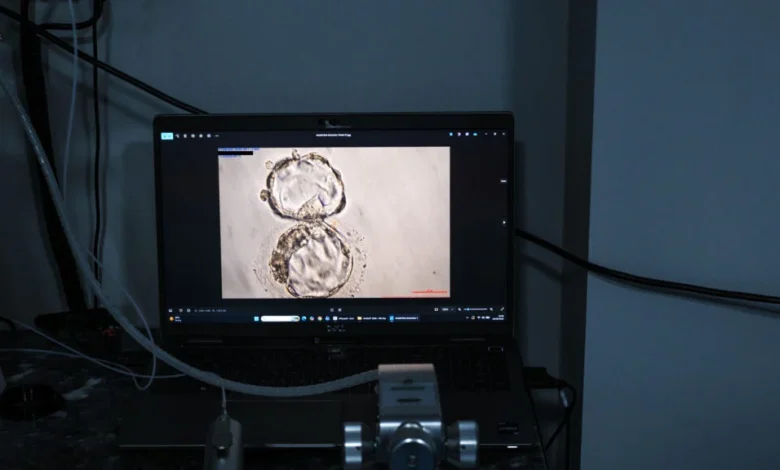
The emergence of eight healthy children born in the United Kingdom to mothers carrying severe mitochondrial disease-causing mutations has served as a landmark achievement in reproductive medicine. These births, reported last year, provided the first clinical validation of mitochondrial replacement therapy (MRT)—a technique colloquially dubbed "three-parent IVF." By combining the nuclear DNA of two parents with the healthy mitochondrial DNA of a donor, clinicians aimed to eliminate the risk of passing down often fatal, incurable conditions. However, as the global medical community grapples with the long-term implications of these successes, a growing body of data suggests that the procedure is not the panacea it was once envisioned to be. Instead, researchers and ethicists are increasingly concerned about a biological phenomenon known as "reversion," which threatens to undermine the efficacy of the technique and has sparked a fierce debate over its application in treating infertility versus preventing genetic disease.
A Technological Breakthrough and Its Preclinical Origins
Mitochondrial replacement therapy was developed to address the specific problem of mitochondrial DNA (mtDNA) mutations. Unlike nuclear DNA, which is inherited from both parents, mitochondria—the energy-producing powerhouses of the cell—are passed down exclusively through the maternal egg. When these organelles contain harmful mutations, they can lead to devastating metabolic disorders affecting the brain, heart, and muscles.
The history of MRT is marked by high-stakes experimentation. In the early 2000s, scientists at Newcastle University pioneered "pronuclear transfer." This method involves creating two embryos—one from the parents and one from a donor—and transferring the nuclear DNA from the parental embryo into the donor embryo. Simultaneously, Shoukhrat Mitalipov at the Oregon Health & Science University developed "maternal spindle transfer," a technique where the mother’s chromosomes are moved into a donor egg before fertilization.
The promise of these techniques was initially bolstered by animal studies. In 2009, Mitalipov reported the birth of rhesus monkeys conceived via spindle transfer that appeared entirely healthy. However, the transition to human clinical application soon revealed that biology is rarely as straightforward as laboratory models suggest.
The Phenomenon of Reversion: A Hidden Risk
The most significant hurdle identified in the maturation of MRT is "reversion"—a process where the tiny fraction of mutated mitochondria that inevitably carry over during the transfer process begins to multiply, eventually outcompeting the healthy donor mitochondria.
In 2016, a seminal paper published by Mitalipov’s team highlighted this vulnerability. Their data indicated that in approximately 15% of cases, the few mutated mitochondria transferred alongside the nuclear DNA could replicate within the developing embryo. By the time the child is born, or even later in life, the proportion of mutated mtDNA could reach levels high enough to trigger the very diseases the therapy was designed to prevent.
This was not merely a theoretical concern confined to petri dishes. Recent clinical data has validated these fears. In a 2023 study published in Fertility and Sterility regarding the use of spindle transfer for infertility in Greece, researchers found that out of seven children born, two exhibited significant levels of maternal mitochondrial DNA—up to 51% in one instance. Similarly, the Newcastle group reported that three of the eight babies born in their program showed low levels of reversion, ranging between 5% and 16%. A separate investigation into the Nadiya Clinic in Ukraine uncovered even more concerning figures, with some children showing maternal mitochondrial levels as high as 72%.
The Ethical Dilemma: Infertility vs. Disease Prevention
The debate surrounding MRT has reached a crossroads, largely because the technology is being pushed into two distinct categories: clinical prevention of rare genetic disease and experimental treatment for age-related infertility.
For many, the risk-benefit ratio of MRT is vastly different depending on the context. Jacques Cohen, a prominent New York-based embryologist, argues that applying this technology to families with known mitochondrial disease is fraught with peril. "To do it in a family affected by mitochondrial disease is to take a very big risk," Cohen stated. He and other critics suggest a moratorium on the use of MRT for disease prevention until scientists can guarantee a mechanism to prevent the carryover of faulty mitochondria.
Conversely, some researchers advocate for moving the technology toward controlled, clinical trials for infertility. Esther Braun of Ruhr University has argued that previous ethical assessments failed to adequately weigh the profound suffering caused by involuntary childlessness. Proponents of this view argue that if clinical trials are conducted under strict regulatory oversight, they could provide the necessary data to refine the technique.
Staged Approaches and Regulatory Caution
In response to the mounting evidence of reversion, the scientific community is moving toward a more cautious, staged approach. Professor Bert Smeets of Maastricht University has been at the forefront of proposing a roadmap for the future of MRT. His framework involves three critical steps: first, identifying specific subgroups of infertility where mitochondrial dysfunction is the proven culprit; second, rigorous laboratory study; and third, small-scale pilot programs.
This measured approach is currently being mirrored in Belgium. Fertility specialist Dominic Stoop and reproductive geneticist Björn Heindryckx at Ghent University are working to categorize the "molecular culprits" behind severe infertility cases, a condition they term OZEMA (oocyte/zygote/embryo maturation arrest). Their goal is to gain regulatory approval to conduct clinical trials across three distinct cohorts: those with a history of mitochondrial disease, those with OZEMA, and women of advanced maternal age.
The Broader Implications for Global Fertility
The potential for "fertility tourism"—where clinics offer unproven, high-risk procedures to desperate patients in jurisdictions with lax oversight—remains a major concern. A recent investigation by STAT highlighted that some clinics globally are already marketing MRT to older women, despite a lack of peer-reviewed evidence that the procedure effectively addresses age-related egg quality issues.
The Human Fertilization and Embryology Authority (HFEA) in the U.K. maintains a conservative stance, limiting the use of MRT to cases involving high-risk genetic disease transmission. However, the pressure to expand these parameters is mounting. As Mary Herbert, a former leader of the Newcastle program now at Monash University, points out, the clinical community must be transparent with parents: "We have known for a decade that MRT may not work in all cases."
Looking Ahead: The Need for Longitudinal Data
The scientific consensus is shifting toward the necessity of long-term monitoring. Whether the procedure is used for genetic disease prevention or infertility treatment, the health of children born via MRT must be tracked across multiple organ systems and throughout their development.
The unresolved questions are not limited to reversion. There is also the potential for "mitonuclear mismatch"—an evolutionary incompatibility between the donor’s mitochondrial DNA and the mother’s nuclear DNA. Research in murine models has suggested this mismatch could lead to immune, behavioral, and cognitive abnormalities, though it remains to be seen if these findings will hold true in human subjects.
As the international community watches the development of these technologies in Australia, the U.K., and elsewhere, the fundamental challenge remains: how to balance the drive for innovation against the imperative of "first, do no harm." The early successes of MRT have undeniably opened a new frontier in reproductive science, but the subsequent data on reversion serves as a sobering reminder that the mastery of mitochondrial genetics is still in its infancy. For now, the path forward appears to be one of extreme caution, extensive counseling, and the recognition that the most ethical way to proceed is to admit that the risks, both known and unknown, are far from fully characterized.