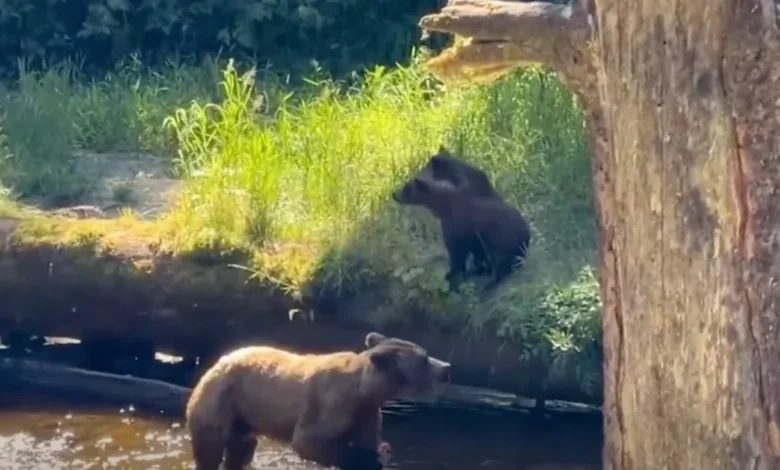
The concept of hyper-vigilant parenting is no longer exclusive to human society. Deep within the rugged landscapes of southeastern Alaska, wildlife officials have officially recognized a brown bear’s extraordinary protective instincts by bestowing her with a tongue-in-cheek yet deeply respectful accolade. Gemini, a female brown bear (Ursus arctos) frequenting the pristine watersheds of the Tongass National Forest, has been named the recipient of the 2026 Helicopter Mom Award.
The distinction, awarded by the U.S. Forest Service ranger team managing the area, highlights Gemini’s unyielding watchfulness over her cubs amid the bustling, high-stakes environment of a premier Pacific salmon fishery. While the designation borrows a colloquial term coined by child development researchers Foster Cline and Jim Fay in the 1990s to describe parents who constantly monitor, control, and hover over their offspring out of fear, wildlife biologists view Gemini’s behavior through the lens of pure evolutionary necessity.
The High Stakes of Motherhood at Anan Creek
Gemini’s recognized tendencies were on full display over the summer months at the Anan Wildlife Observatory, a world-renowned viewing destination located within the heart of the Tongass National Forest. The vast expanse of the forest covers the majority of Southeast Alaska—including the capital city of Juneau—and encompasses immense ecological diversity, from the receding Mendenhall Glacier to sprawling temperate rainforests that teem with bald eagles, wolves, and robust populations of coastal bears.
Anan Creek, specifically, serves as a focal point for both wildlife and human observation due to hosting one of the largest runs of pink salmon in the entire region. Each summer, waves of migrating salmon draw a dense concentration of predators to the cascading waters of the creek. According to data compiled by the non-profit advocacy group Friends of Anan, a documented population of 39 individual bears—comprising 31 American black bears (Ursus americanus) and eight brown bears—frequent the watershed to gorge on the calorie-rich fish.
For a mother bear, however, this congregation of apex predators represents a double-edged sword. While the salmon run provides essential nutrition needed to build fat reserves for winter hibernation, the presence of numerous adult bears—particularly large, dominant males—creates an environment fraught with peril for dependent offspring. Adult male brown bears, known as boars, occasionally pose a fatal threat to young cubs through infanticide, a phenomenon well-documented by wildlife biologists.
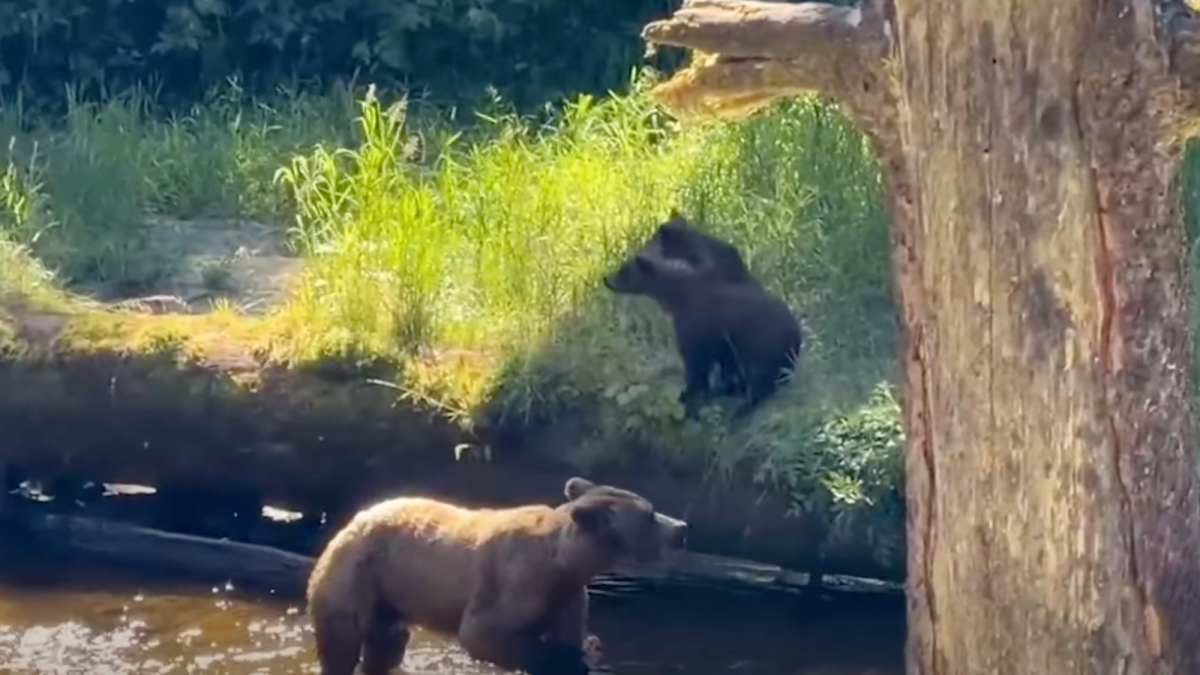
It is this constant, underlying threat that earned Gemini her metaphorical wings. Rangers monitoring the site noted her persistent proximity to her cubs, her cautious navigation of crowded fishing spots, and her immediate intervention whenever other bears approached too closely.
“We understand her choice, weighing the dangers of being around other bears at a prime fishing location,” the Tongass National Forest rangers wrote in their seasonal summary. “Still, we hope we see a lot more of them next year.”
The Brutal Mathematics of Cub Survival
Gemini’s cautious demeanor is heavily supported by broader ecological data regarding ursid survival rates in the wild. Biologists note that the first year of life is the most hazardous period for a bear cub, during which mortality rates can be alarmingly high.
According to data compiled by the National Park Service in regions such as Katmai National Park, brown bear cubs face a roughly 50 percent survival rate within their initial year of life. The challenges they encounter are manifold: harsh weather events, accidental separation from the mother, predation by wolves or other bears, and starvation if the local salmon runs underperform. Similarly, black bear cub survival rates across various habitats typically range between 51 and 88 percent depending on geographic location, food availability, and local predator density.
For a mother bear, investing energy into raising a litter requires an immense caloric and behavioral commitment. Gemini has demonstrated a consistent track record of maternal investment, having successfully birthed and raised litters in preceding years, including notable documented observations in 2023 and 2024. Each reproductive cycle requires the mother to nurse, protect, and teach her cubs how to forage, fish, and navigate complex social hierarchies—skills that are critical for their independence, which typically occurs when they are between two and four years old.
Monitoring the Bears of Anan Creek
The annual documentation of bears like Gemini is part of an ongoing, systematic effort by the U.S. Forest Service to monitor wildlife populations, ensure visitor safety, and gather longitudinal data on ecosystem health in Southeast Alaska. Rangers track individual bears by identifying distinct physical characteristics, scars, coat color variations, and behavioral traits.

Much like the famous, internet-beloved "Fat Bear Week" held further north in Katmai National Park, the bears of Anan Creek have developed distinct public profiles. Visitors to the Anan Wildlife Observatory—and a global audience tuning into live-streaming cameras operated by explore.org—have come to recognize individual animals by their unique quirks, fishing strategies, and family dynamics.
The collaborative deployment of webcams allows researchers and wildlife enthusiasts alike to observe the natural history of coastal brown and black bears in real-time. These live feeds have transformed local wildlife management into a global educational platform, fostering a deeper public appreciation for the complexities of bear behavior and the importance of habitat preservation.
Broader Implications for Conservation and Tourism
The recognition of Gemini through the Anan Bear Awards highlights a modern shift in how public land agencies communicate with the public. By injecting lighthearted humor into scientific observations, agencies such as the U.S. Forest Service are able to engage wider audiences in meaningful discussions about wildlife ecology, animal behavior, and conservation science.
At the same time, the management of sites like Anan Creek underscores the delicate balance required between eco-tourism and wildlife preservation. As human interest in wilderness webcams and remote Alaskan destinations continues to grow, agencies must carefully regulate visitor numbers to ensure that human presence does not unduly stress nursing mothers like Gemini or alter the natural foraging behaviors of the local bear population.
Ultimately, Gemini’s "Helicopter Mom" designation serves as a reminder of the fierce, universal dedication inherent in maternal care across the animal kingdom. As the 2026 season concludes and the bears of the Tongass National Forest prepare to enter their winter dens, wildlife officials and global spectators alike will look forward to the spring thaw, hoping to catch another glimpse of Gemini and her remarkably well-guarded offspring patrolling the rushing waters of Anan Creek.
Related posts: