Bernie Sanders denounces GOP rhetoric in Michigan Senate race as attacks against Abdul El-Sayed intensify

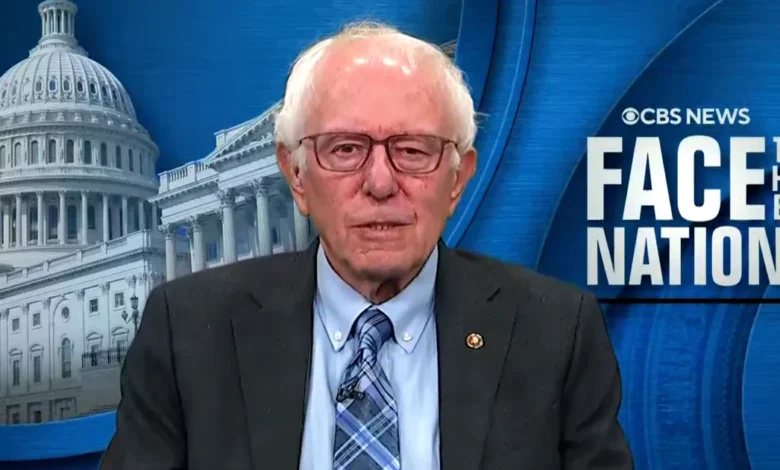
The Michigan Senate race has reached a volatile inflection point as Senator Bernie Sanders launched a sharp critique of the Republican campaign’s messaging, characterizing recent attacks against Democratic candidate Dr. Abdul El-Sayed as "overt, absolute racism." Appearing on "Face the Nation with Margaret Brennan" on November 1, 2026, the Vermont independent senator argued that the discourse surrounding the election has devolved into dangerous xenophobia, warning that such tactics threaten the integrity of the democratic process.
The controversy centers on an aggressive series of advertisements and statements from high-profile Republican figures, including former President Donald Trump and Senator Ted Cruz, which have repeatedly sought to link Dr. El-Sayed—a medical doctor and former public official—to the Muslim Brotherhood. These allegations, which El-Sayed has categorically denied, have become a cornerstone of the GOP’s effort to frame his candidacy as a security risk to the United States.
A Chronology of Escalation
The tensions in the Michigan contest began to boil over earlier this year when the Trump administration officially designated several factions of the Muslim Brotherhood as terrorist organizations. Following this policy shift, Republican surrogates began utilizing the designation to cast suspicion on El-Sayed, who would become the first Muslim to serve in the United States Senate if elected.
By mid-October 2026, the rhetoric shifted from policy disagreement to personal attacks. Independent trackers monitoring campaign spending in the Midwest noted a significant uptick in "negative-sentiment" advertising, with over 70% of Republican-funded spots in the Michigan race focusing on El-Sayed’s background rather than traditional policy platforms.
The friction reached a breaking point in late October, when Democratic Rep. Haley Stevens—who was defeated by El-Sayed in a narrow primary election three months prior—publicly criticized an outside group’s advertisement that linked U.S. military aid to Israel to rising domestic grocery costs. Stevens labeled the ad antisemitic and demanded that El-Sayed condemn the messaging. El-Sayed rejected the demand, stating that he had no involvement in the ad’s production and characterizing Stevens’ call as an attempt to "relitigate a primary that ended three months ago."
The Political Rift and the Republican Response
The divide between the moderate and progressive wings of the Michigan Democratic Party was further exacerbated on November 1, when Rep. Haley Stevens formally crossed party lines to endorse the Republican nominee, Mike Rogers.
"I don’t belong in Abdul’s campaign," Stevens stated shortly after Sanders’ television appearance. "What is on the ballot is who we are as Michiganders; it is not hate, and it is not what we are getting from our Democratic nominee right now."
This endorsement represents a rare fracture in a high-stakes midterm election year where party unity is typically prioritized. Political analysts suggest that Stevens’ move may signal a broader discomfort among traditionalist Democrats regarding the party’s leftward shift on foreign policy, particularly concerning the Israeli-Palestinian conflict.
For his part, Dr. El-Sayed has largely attempted to minimize the impact of the primary-related infighting. During a weekend campaign event, he maintained his focus on the state’s broader population, noting, "This is a state of 10 million people who deserve a lot better from their government. I’m a lot more focused on the 9,999,998 that are not the ones who are talking about [the primary]."
Sanders and the Debate on Antisemitism
The debate has increasingly centered on the definition of antisemitism, particularly in the context of U.S. foreign policy. Sanders, who is Jewish and has often spoken about his family’s experience during the Holocaust, used his national platform to clarify his position on the conflict.
"Anti-Semitism is an extraordinarily disgusting and dangerous ideology that has killed millions and millions of lives in the last century," Sanders said. "We cannot tolerate anti-Semitism, period." However, he made a sharp distinction between protecting Jewish communities and shielding foreign governments from criticism. "To be critical of a racist, extremist government in Israel, and to say that American taxpayers should not spend a nickel supporting that government, is not anti-Semitism. It is attacking a right-wing government."
Sanders argued that conflating religious identity with state policy is a dangerous precedent that risks fueling bigotry. His defense of El-Sayed is rooted in the belief that the Republican strategy is designed to distract voters from policy issues—such as the economy and healthcare—by leveraging identity politics to incite fear.
Data and Implications for the Midterms
The Michigan Senate seat is widely considered a "toss-up" by major polling outlets, making the inflammatory nature of the campaign particularly consequential. Historical data from the last three midterm cycles indicates that races involving high-intensity negative campaigning often see lower turnout among suburban voters, a demographic currently being courted by both the Rogers and El-Sayed campaigns.
Economically, the race is being fought on the backdrop of inflation and manufacturing sector instability. While Republicans like Mike Rogers have attempted to tie El-Sayed’s policy positions to broader economic anxieties, the focus on his religion and supposed affiliations has effectively overshadowed substantive economic debate.
The implications for the Democratic Party are significant. If the party fails to bridge the divide between the progressive base represented by figures like Sanders and the moderate establishment represented by Stevens, the result could lead to a permanent realignment of Michigan’s political landscape. Furthermore, the use of "terrorist" labeling in campaign ads has drawn condemnation from civil rights groups, who argue that such language increases the risk of domestic harassment against Muslim-Americans and other minority groups.
Conclusion
As the election approaches, the Michigan Senate race stands as a litmus test for the state of political discourse in the United States. The conflict between the Sanders-backed progressive wing and the established moderate faction reflects a national struggle within the Democratic Party over identity, foreign policy, and campaign strategy.
For the Republican party, the decision to lean heavily into aggressive cultural rhetoric is a gamble. While it has successfully galvanized a specific segment of the base, it has also provided an opening for Democrats to frame the election as a referendum on "decency" versus "ugliness."
Ultimately, the voters of Michigan will decide whether the focus on El-Sayed’s background serves as a legitimate critique of his candidacy or as a distraction from the fundamental challenges facing the state. With the election just days away, the rhetoric is unlikely to cool, ensuring that this race will be remembered as one of the most contentious and divisive in recent memory.
Related posts: