Hilary Duff reflects on the complex transition from teen idol to independent artist and her evolving relationship with the Lizzie McGuire legacy

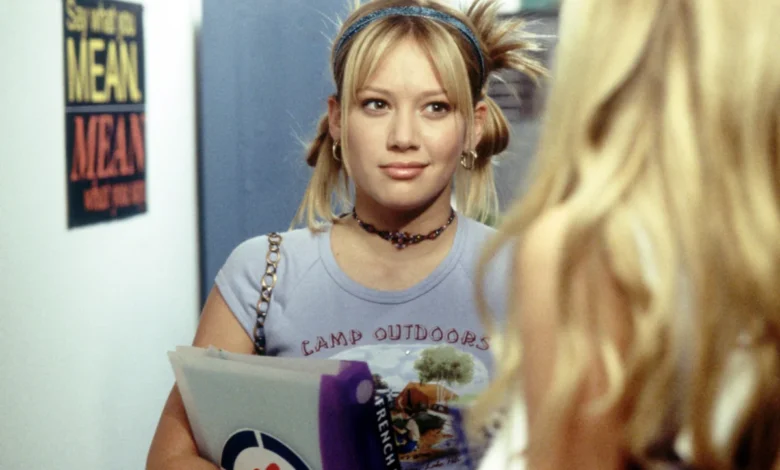
The trajectory of Hilary Duff’s career serves as a seminal case study in the challenges faced by child stars transitioning into adulthood within the high-pressure environment of the entertainment industry. For many years, the defining tension of Duff’s professional life was her struggle to reconcile the massive public success of her breakout role, Lizzie McGuire, with her desire to establish a distinct artistic identity. Recently, in a candid interview with Paper magazine, Duff provided a detailed account of the emotional and professional fatigue she experienced while filming The Lizzie McGuire Movie in 2003, a pivotal moment that forced her to confront the blurring lines between her persona and her private self.
A Legacy Forged in High-Volume Television
The phenomenon that was Lizzie McGuire began in January 2001, debuting on the Disney Channel as a cornerstone of the network’s programming strategy. Over the course of its two-season run, the series produced 65 episodes, a prolific output that required an intense filming schedule. Duff, who was only 13 years old when the show premiered, navigated a grueling production pace that saw her filming 30 episodes in a single year, followed by 35 episodes the subsequent year.
This rapid-fire production schedule was designed to maximize the show’s popularity, which peaked during the early 2000s. However, the success came at a cost to the young actress. As the show garnered a dedicated fanbase, the cultural identification between Duff and her character became nearly absolute. For millions of viewers, the actress and the character were indistinguishable, a reality that Duff describes as the primary source of her exhaustion during the production of the 2003 feature film. By the time the production moved to Italy to film the finale of the franchise, Duff felt a profound sense of alienation from the role that had catapulted her to international stardom.
The Breaking Point: Filming in Italy
The 2003 film, The Lizzie McGuire Movie, served as both a commercial triumph and a personal crucible for Duff. While the film provided a cinematic conclusion to the series and introduced the world to the song "What Dreams Are Made Of," it also marked the moment Duff decided she needed to distance herself from the brand.
"I was pretty done with Lizzie at that time," Duff noted in her recent interview. She articulated a feeling of loss of agency, explaining that as she turned into a "huge star," the public’s perception of her as Lizzie became a constraint rather than an asset. This sentiment of being "done" was not merely a reaction to the work itself, but an existential plea for autonomy. At the midway point of her early career, the pressure to maintain the image of an adolescent icon had reached a threshold where the work, in her words, "wasn’t fun anymore." This realization triggered a period of active deconstruction, where Duff sought to separate her professional output from the established character that had defined her early teen years.
Chronology of a Musical Reclaiming
The evolution of Duff’s relationship with her early work is best illustrated through the history of her musical discography. During the initial run of the show and the immediate aftermath, Duff’s involvement in the music associated with Lizzie McGuire was largely dictated by the studio system. She did not own the rights to the tracks, nor did she feel a sense of ownership over the performances themselves.
The following timeline details the shifts in this relationship:
- 2001–2003: The peak of the Lizzie McGuire era, characterized by high-volume filming and the release of music tied directly to the series.
- 2003: The release of The Lizzie McGuire Movie. Duff describes this period as one of dissociation, where she felt "not in her body" during performances.
- 2004: The conclusion of the series after 65 episodes. Duff shifts focus toward her solo pop career, aiming to establish a sound independent of Disney’s teen-pop formula.
- 2025–2026: A period of retrospection. Duff releases the (Mine) EP, featuring seven re-recorded versions of her greatest hits. These tracks, originally featured as bonus material on vinyl variants of her album Luck… or Something, represent a deliberate attempt to reclaim her catalog.
- 2026: The Small Rooms, Big Nerves tour, which marks the first time Duff has performed "What Dreams Are Made Of" in a live setting that feels authentic to her own artistic vision.
The Significance of Re-recording and Re-performance
The decision to re-record songs from her early repertoire is a strategic move that aligns with a broader industry trend of artists reclaiming their masters or updating their catalogs to better reflect their mature vocal capabilities and artistic sensibilities. For Duff, the re-recording process has been therapeutic. By revisiting songs like "What Dreams Are Made Of," she has transitioned from a position of resentment to one of celebration.
"So now when I sing it, it feels so much better, and I get to join the celebration of what it meant to people, and what it means to me now," she explained. This shift is not merely a matter of nostalgia; it is an act of empowerment. By re-recording these tracks for the (Mine) EP, Duff has effectively integrated her past into her present, viewing the songs not as studio-mandated obligations, but as milestones in a career that she now fully owns.
Fact-Based Analysis: The Implications of Post-Disney Transitions
Duff’s experience highlights the systemic pressures placed on child stars within the 2000s-era media landscape. The "Disney Pipeline" often created a paradox for young performers: while the platform provided unparalleled reach and industry training, it also imposed rigid brand requirements that often stifled personal growth.
From an analytical perspective, the fatigue Duff describes—filming 65 episodes while simultaneously building a music career—is reflective of a high-burnout model that was common in the early 2000s. The industry has since seen a shift in how young talent is managed, with greater emphasis placed on mental health and the sustainability of long-term careers. However, Duff’s ability to pivot and remain relevant two decades later is a testament to her adaptability.
The successful reception of her re-recorded tracks suggests that the audience’s relationship with her has also matured. Fans who grew up watching the show are now at a life stage where they can appreciate the nuance of her professional evolution. When Duff says, "Back then, I just feel like I wasn’t in my body yet," she is providing a post-hoc assessment of the disconnect that many child actors feel when the demands of a public-facing role outpace their psychological development.
Broader Industry Context
Duff is not alone in her attempt to reframe her early career. The entertainment industry has seen a notable increase in "legacy acts" and former teen stars reclaiming their identities through retrospection. By acknowledging her initial exhaustion and her subsequent acceptance, Duff has provided a level of transparency that resonates with both long-term fans and industry observers.
The release of the (Mine) EP and the success of the Small Rooms, Big Nerves tour indicate that there is a significant market for artists who can successfully bridge the gap between their origins and their current creative output. By officially "owning" the songs she once felt alienated from, Duff has closed a chapter on the narrative of the "struggling child star." Instead, she has replaced it with a narrative of professional endurance and artistic reclamation.
Ultimately, the transformation of Hilary Duff from a reluctant vessel for a corporate character to an artist who embraces her entire history underscores the complex, often arduous journey of self-actualization in the public eye. As she continues to perform and produce new material, her ability to reconcile with the Lizzie McGuire era serves as a definitive marker of her evolution, proving that while one cannot erase the past, one can certainly redefine its meaning.