Justice Department intervenes in Alaska Senate race as controversy grows over sham candidate allegations

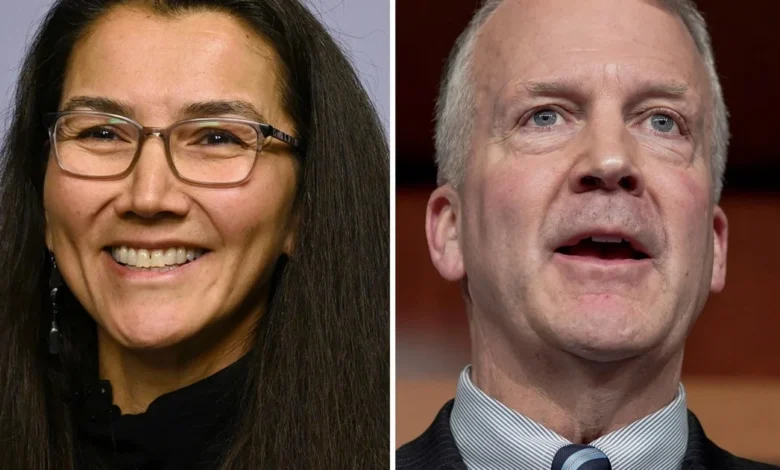
The U.S. Department of Justice has significantly ramped up its presence in Alaska as federal investigators probe allegations of a sprawling conspiracy to manipulate the state’s high-stakes Senate election. U.S. Attorney for the District of Alaska Michael Heyman announced that new investigative leads, spurred by recent media reports, have necessitated a surge in federal law enforcement resources. At the heart of the controversy is the presence of Daniel J. Sullivan on the ballot—an independent candidate who shares both the first and last name of the incumbent Republican Senator, Dan Sullivan.
The emergence of this "spoiler" candidate has triggered a legal and political firestorm, with federal authorities now seeking to segregate ballots in a move that officials in Juneau argue is both logistically impossible and legally baseless. As Election Day approaches, the integrity of the voting process in one of the nation’s most competitive races has been thrust into the national spotlight, raising questions about election security, voter intent, and the reach of federal oversight in state-run contests.
The Origins of a Contentious Candidacy
The saga began months ago when Daniel J. Sullivan, a man with no prior political profile, filed to run for the U.S. Senate. Republican observers and state officials quickly flagged the candidacy as a calculated effort to siphon votes from the incumbent senator by exploiting voter confusion. Initially, Alaska election officials attempted to block the candidate from appearing on the ballot, citing a "deliberate attempt" to deceive the electorate. However, the state’s judicial system intervened, ruling that election officials lacked the statutory authority to disqualify a candidate based on an interpretation of "good faith."
The controversy remained a simmering local issue until a recent report by The New York Times alleged that operatives linked to the campaign of Democratic incumbent Mary Peltola and the Democratic Senatorial Campaign Committee (DSCC) were instrumental in recruiting and funding the second Sullivan’s campaign. These allegations have provided the basis for a rapid escalation in federal activity, with the Justice Department issuing subpoenas to various Democratic officials as part of a broader criminal investigation.
Chronology of Escalation
The timeline of this investigation reveals a pattern of increasing federal scrutiny:
- Initial Filing: Daniel J. Sullivan qualifies for the ballot, sparking immediate objections from state election officials.
- Judicial Ruling: Alaska courts overturn the state’s attempt to disqualify the candidate, allowing the name to remain on the ballot.
- The Media Report: A major investigative report in late October 2026 links the candidate’s recruitment to Democratic political operatives, providing new impetus for federal action.
- DOJ Intervention: U.S. Attorney Michael Heyman announces that his recusal from the case has been rescinded, and he confirms that federal assets are being deployed to investigate potential criminal activity.
- Civil Litigation: The federal government files for a preliminary injunction in district court, requesting the segregation of ballots containing the name "Daniel J. Sullivan."
- State Pushback: The Alaska Attorney General’s Office files a motion to dismiss, characterizing the DOJ’s lawsuit as a meritless and intrusive effort to undermine state election sovereignty.
The Legal Battle Over Ballot Segregation
The Justice Department’s request to isolate ballots has created a direct conflict between federal prosecutors and state officials. In a court filing submitted on Friday, federal lawyers argued that the presence of a "frivolous" candidate is designed to create confusion, thereby violating the National Voter Registration Act. The government requested an expedited ruling to ensure that any ballots marked for the second Sullivan can be identified and, presumably, examined to determine if voters were misled.
The state of Alaska has reacted with sharp defiance. In a motion filed Saturday, the Alaska Attorney General’s Office argued that the request is both legally unfounded and physically impossible. State officials emphasized that ballots are commingled upon being cast in accordance with strict state laws designed to protect voter anonymity. They argued that isolating specific ballots would jeopardize the integrity of the secret ballot process, a cornerstone of Alaskan election law. Furthermore, the state noted that all ballots are currently preserved for a period of 22 months under existing state regulations, rendering the DOJ’s request for "preservation" redundant.
Reactions and Political Implications
The political fallout has been intense. Incumbent Republican Senator Dan Sullivan has consistently labeled the candidacy a "sham" designed to manipulate the outcome of the race. On the other side, Senator Mary Peltola has vehemently denied any involvement. In a public statement, she declared, "I am not interested in tricking voters," and maintained that she had no knowledge of other candidates on the ballot beyond herself and the incumbent.
The Democratic Senatorial Campaign Committee has countered by accusing the Republican establishment of hypocrisy, alleging that the GOP has historically engaged in similar efforts to manipulate ballot composition to benefit their own candidates. As of early November 2026, the rhetoric remains heated, with both parties accusing the other of undermining the foundational principles of democratic participation.
Broader Impact on Election Integrity
This case serves as a high-profile example of the challenges inherent in modern election management. The intersection of name-sharing, independent candidacy laws, and federal civil rights litigation creates a complex landscape for voters. If federal courts side with the Department of Justice, it could establish a precedent for increased federal oversight in how states manage their ballot qualifications. Conversely, a victory for the state of Alaska would reaffirm the primacy of state-level election administration.
Beyond the immediate legal questions, the incident underscores the fragility of public trust in the electoral process. The perception that a candidate is a "plant" designed to confuse voters—regardless of the veracity of that claim—can have a chilling effect on voter turnout. As the Justice Department continues its investigation, the focus will likely shift to whether any laws, such as campaign finance violations or election fraud statutes, were breached during the recruitment process.
Analytical Perspective
From an analytical standpoint, the DOJ’s decision to involve itself so close to Election Day is significant. Traditionally, the Justice Department avoids taking overt investigative actions in the final weeks of a campaign to prevent the appearance of political bias. However, the rescission of U.S. Attorney Heyman’s recusal and the subsequent surge in resources suggest that federal prosecutors have reached a threshold of evidence that they believe warrants immediate action, regardless of the electoral calendar.
The legal standard for proving "voter confusion" as a basis for overturning or altering election procedures is historically high. Courts have generally been reluctant to interfere with the outcome of an election based on the identity of candidates, provided those candidates met the administrative requirements to appear on the ballot. As the litigation moves toward a potential emergency hearing, the judiciary will be forced to balance the need for election integrity against the risk of creating a procedural precedent that could allow federal authorities to intervene in future state-level races with greater frequency.
For the citizens of Alaska, the immediate concern remains the validity of their vote. With ballots already being cast, the uncertainty surrounding the potential for litigation to delay certification or invalidate results adds a layer of instability to an already narrow Senate race. Whether the "Daniel J. Sullivan" candidacy is a legitimate exercise of independent political expression or a orchestrated attempt at electoral manipulation, the legal ramifications of this dispute are likely to resonate long after the final vote is tallied.