Federal Immigration Authorities Capture Undocumented Migrant Accused of Assaulting New York City Police Officer Following Local Release


Federal immigration enforcement agents successfully apprehended an undocumented immigrant from Guinea on Friday afternoon, ending an intensive manhunt triggered by his controversial release from local custody. The suspect, identified as Alpha Bah, was taken into custody in New York City after allegedly assaulting a local police officer—an incident that ignited a fierce public debate over local municipal governance, law enforcement coordination, and sanctuary city protocols.
The operation, executed by officers with U.S. Immigration and Customs Enforcement (ICE) Enforcement and Removal Operations (ERO), concluded at approximately 3:25 p.m. on Friday. Federal officials tracked Bah to a temporary residential location within the city following intelligence-gathering operations that pinpointed his whereabouts. The successful apprehension resolves a high-profile search that intensified after local authorities discharged Bah despite multiple federal requests to maintain his detention.
Chronology of Events and the Surveillance Operation
The sequence of events leading to Bah’s capture began early Friday afternoon when ICE ERO personnel established strategic surveillance around a suspected temporary dwelling based on newly developed intelligence. At approximately 2:22 p.m., surveillance teams observed an individual matching Bah’s physical description exiting the building and interacting briefly with several unidentified individuals on a public thoroughfare.
Rather than executing an immediate arrest, federal officers exercised tactical patience. Because several school-aged children were present in the immediate vicinity, agents opted to maintain continuous observation to ensure public safety and minimize potential collateral risks in the densely populated area.
Approximately one hour later, as the surrounding street cleared, officers observed Bah walking alone. Approaching the suspect, agents immediately identified themselves as law enforcement personnel representing both police and immigration agencies. They verified his identity using standard biographical questioning, a matching physical photograph, and Mobile Fortify, an advanced biometric identification tool designed for field operations.
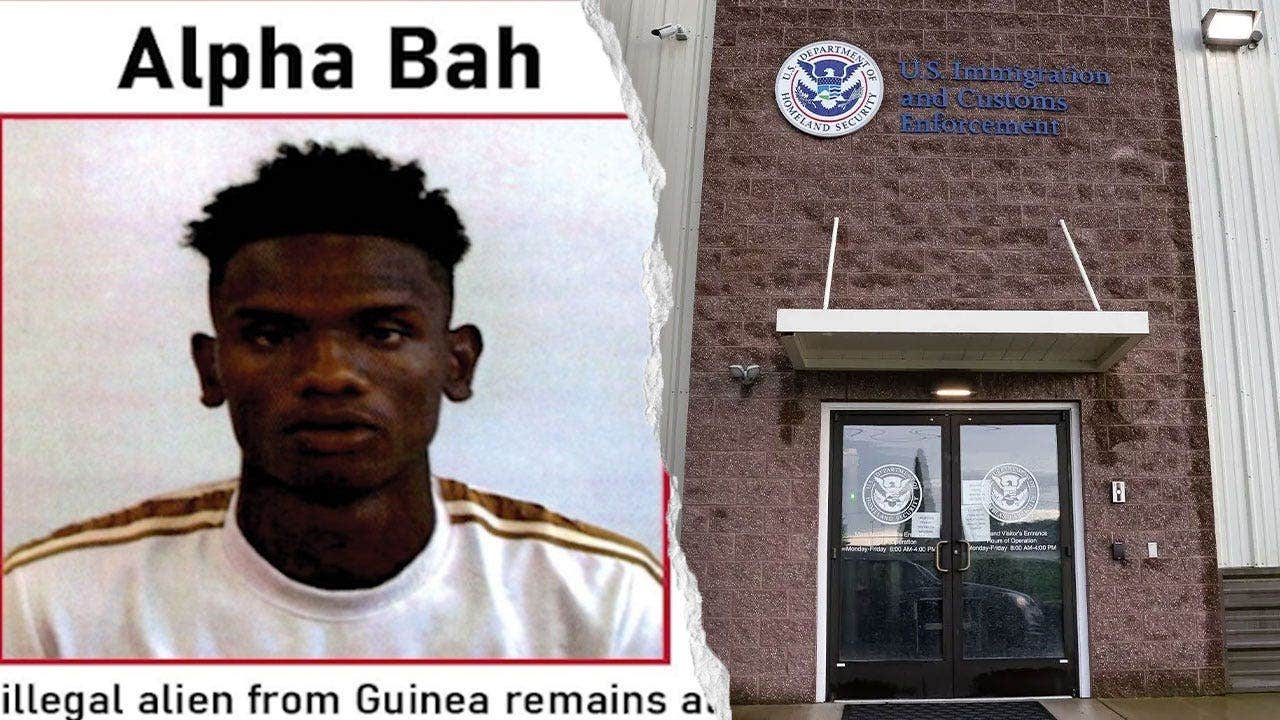
Bah was formally notified of an outstanding administrative immigration arrest warrant and taken into custody without incident. Following the apprehension, he was transported to the federal building located at 26 Federal Plaza in Lower Manhattan for formal post-arrest processing and subsequent detention procedures.
The Initial Arrest and Sanctuary Policy Controversy
The catalyst for the multi-agency manhunt occurred weeks prior. On October 7, Bah was initially arrested by local law enforcement officers on a series of serious criminal charges, including aggravated assault of a police officer with a deadly weapon, resisting arrest, obstructing governmental administration, and theft of service for attempting to evade public transportation fare.
Following that initial arrest, ICE lodged a formal immigration detainer with Queens Central Booking, requesting that local corrections facilities maintain custody of Bah long enough for federal authorities to assume jurisdiction for removal proceedings. However, due to local municipal sanctuary policies, Bah was released from local custody without federal immigration officials being notified in advance, according to the Department of Homeland Security (DHS).
The decision by local corrections and judicial authorities to release an individual facing violent felony charges sparked immediate condemnation from federal officials, who argued that such policies directly compromise public safety. The case quickly drew national attention, underscoring ongoing friction between federal immigration mandates and local jurisdictions that limit cooperation with federal detainer requests.
Official Statements and Political Fallout
The fallout from Bah’s release prompted sharp rebukes from high-ranking federal officials directed at state and local leadership in New York. Prior to Friday’s arrest, DHS leadership issued stern warnings regarding the practical consequences of local non-cooperation policies.
"This illegal alien from Guinea was arrested for assaulting a police officer with a deadly weapon. Despite these violent charges, New York City sanctuary politicians refused to honor ICE’s detainer and released him back onto the streets," DHS leadership stated during the height of the manhunt, directly calling out state and municipal executives. "DHS is calling on state and local leadership to reevaluate these policies before another American gets hurt, or worse."

The controversy surrounding Bah is part of a broader, systemic debate involving the application of sanctuary laws across major metropolitan areas in the United States. Proponents of sanctuary policies argue that local law enforcement agencies should not act as an arm of federal immigration enforcement, maintaining that such separation encourages undocumented immigrant communities to cooperate with local police, report crimes, and act as witnesses without fear of deportation.
Conversely, critics and federal law enforcement agencies contend that restricting communication and information sharing between local jails and federal immigration authorities creates unnecessary risks. They argue that releasing individuals accused of violent crimes back into communities undermines public safety and strains inter-agency cooperation. Recent congressional reports and executive oversight initiatives have frequently highlighted instances where plea agreements or local release protocols allegedly shielded individuals facing deportation from immigration consequences, further intensifying the legislative and political battlegrounds surrounding immigration enforcement.
Broader Implications for Immigration Enforcement and Local Governance
The apprehension of Alpha Bah highlights the complex logistical and legal challenges facing immigration enforcement agencies operating within jurisdictions that limit compliance with federal detainers. While federal operations like the one executed on Friday successfully remove targeted individuals from communities, they require significant expenditure of investigative resources, manpower, and intelligence coordination—resources that officials argue could be conserved if standard inter-agency notifications were routinely practiced.
As the legal proceedings against Bah advance—moving from federal administrative processing back toward state-level criminal prosecution and eventual immigration review—the incident remains a prominent touchstone in the ongoing national conversation regarding federalism, public safety, and the boundaries of local autonomy in immigration enforcement policy.